Guide: storm prep
Nor'easter and hurricane prep for city homes and buildings
Most storm damage in the city comes through the roof, the windows or the floor drain. Here's what to check before the next big one.
By Wallace Blackwell, Restoration Guides Editor
Quick answer
Before a nor'easter or hurricane, New York City homes and buildings should clear roof drains and gutters, check windows and doors, protect basements from sewer backup and move valuables off the floor. Ida put 3.15 inches of rain on Central Park in one hour, more than city sewers are built to carry.
Why city storms flood from both directions
Heavy rain overwhelms the sewers: on September 1, 2021, Ida put 3.15 inches of rain on Central Park in one hour (source), and much of the city drains rain and sewage through the same pipes (source). Water comes up through basement drains while wind-driven rain comes in through roofs and windows above.
Coastal storms add surge: Sandy's water reached deep into Lower Manhattan and the West Village (source).
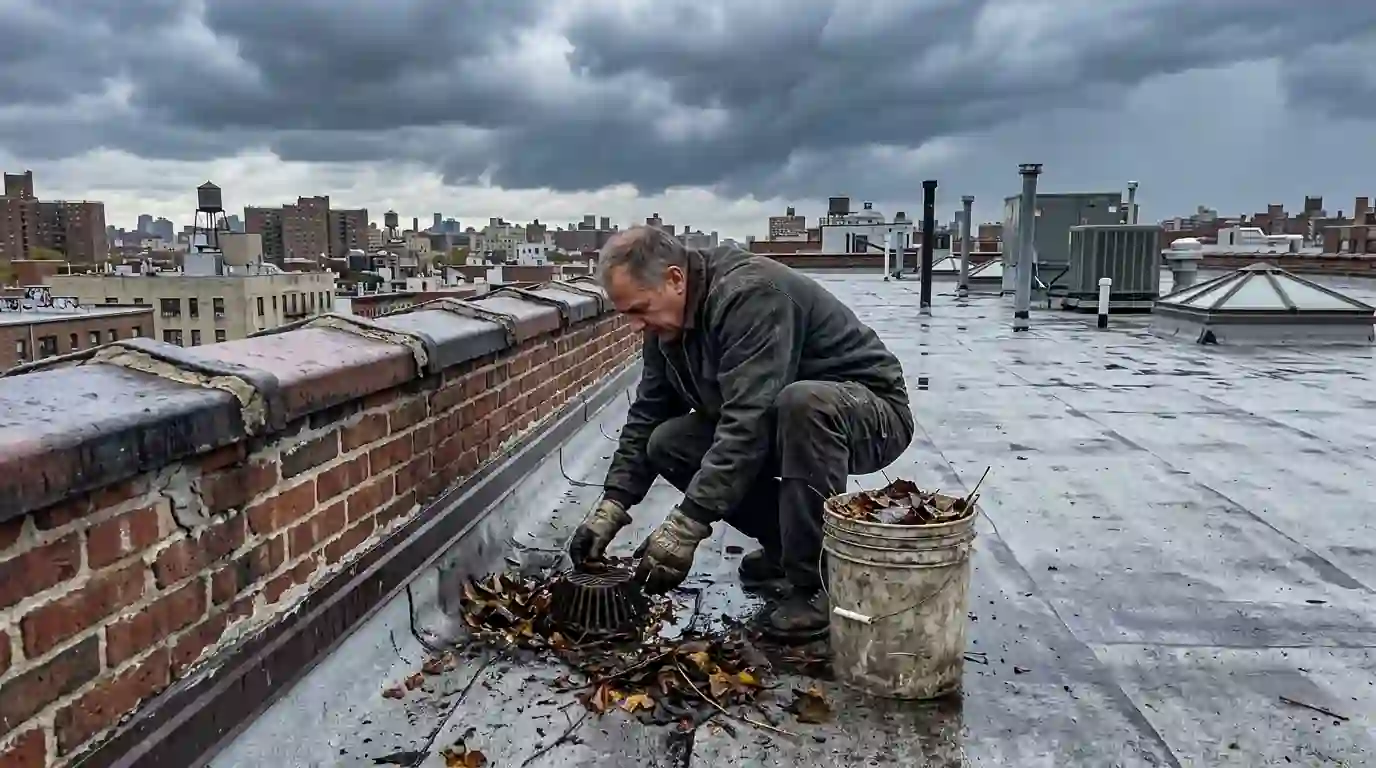
Roofs, drains and gutters
Flat city roofs drain through a few roof drains and scuppers. If leaves or debris block them, water ponds and finds every weak seam. Clear roof drains, scuppers and gutters before the storm, and check that downspouts aren't disconnected at the bottom.
Look at flashing around bulkheads, skylights and chimneys; that's where most top-floor leaks start.
Windows, doors and air conditioners
Wind-driven rain gets past window seals, through gaps around window air conditioners and under ground-floor doors. Close and latch windows, pull or seal around window units if you can, and keep towels ready at doors that face the wind.
Bring in anything loose on balconies, terraces and fire escapes; it becomes debris in a strong wind.
Basements and floor drains
Move belongings off basement floors, especially anything stored in cardboard. If the building has a backwater valve, make sure it's clear; if it doesn't and backups have happened before, ask a plumber about one (source). Our guide on sewer backups explains why basements back up in cloudbursts.
In apartment buildings
Supers should check roof drains, areaway drains, sump pumps and the boiler room before the storm and know where the main water and power shutoffs are. Residents on top floors and ground floors are the most exposed; ask them to report leaks quickly so the building can act before water spreads.
Records before the storm
Take photos of your rooms and belongings before storm season. It takes ten minutes with a phone and makes any claim easier. Keep your policy number, your insurer's claims line and the building's emergency contacts somewhere you can reach without power.
Ground-floor stores and restaurants
Businesses on the ground floor take water from the street and from backups in the building's line. Move stock off the floor, protect electrical equipment and know where the building's shutoffs are. Our commercial restoration page covers how we dry and clean a business in stages so it can reopen sooner.
Power outages and pumps
Storms often cut power, and a sump pump without backup power stops when it's needed most. Buildings with pumps in basements or elevator pits should check backup power before storm season. Residents should keep phones charged and flashlights handy rather than candles.
Top floors and roof leaks
Top-floor apartments are where wind-driven rain and roof leaks show up first, often as a stain along the wall or around a light. Report it right away; a leak that runs through a storm can soak insulation and ceilings across the whole floor. Our ceiling leak page explains the drying.
Cars, stoops and areaways
Street-level flooding reaches ground-floor doors, areaways and cars parked in low spots. Move cars to higher ground if flooding is forecast, clear areaway drains, and keep sandbags or door barriers ready if your entrance has flooded before.
After the water goes down, photograph the high-water mark on walls and doors before cleaning; it shows how deep the flooding was.
After the storm
Check ceilings, walls under windows and the basement once the rain stops, even if nothing looked wrong during the storm. Photograph any damage before cleaning up, cover openings to stop more water getting in, and call for extraction if water is standing. Our storm damage page explains the job.
Storm prep questions
What city residents and supers ask before a big storm.
If it's safe to do so, yes; if not, make sure it's secured and seal the gaps around it.
Wind-driven rain through windows and around window units, then roof leaks on top floors.
Keep things off the floor and ask a plumber whether a backwater valve fits your line.
Taping doesn't stop glass breaking. Closing and latching windows helps more.
The building's super or maintenance staff. Ask before storm season.
Wind and rain through storm damage are often covered; flooding from outside usually needs a flood policy.
As soon as water is getting in or standing. We answer 24/7.
Storm damage in your building?
Call and we'll cover the opening and dry what got wet. We answer 24/7.