Crawl spaces, answered 24/7
Crawl space water removal and drying in New York, NY and Long Island
Water under the house, or a damp smell coming up through the floor? We pump the crawl space, pull wet insulation, dry the framing and check for mold before it spreads.
- Answering 24/7
- Pump-out and drying
- Wet insulation removed
Quick answer
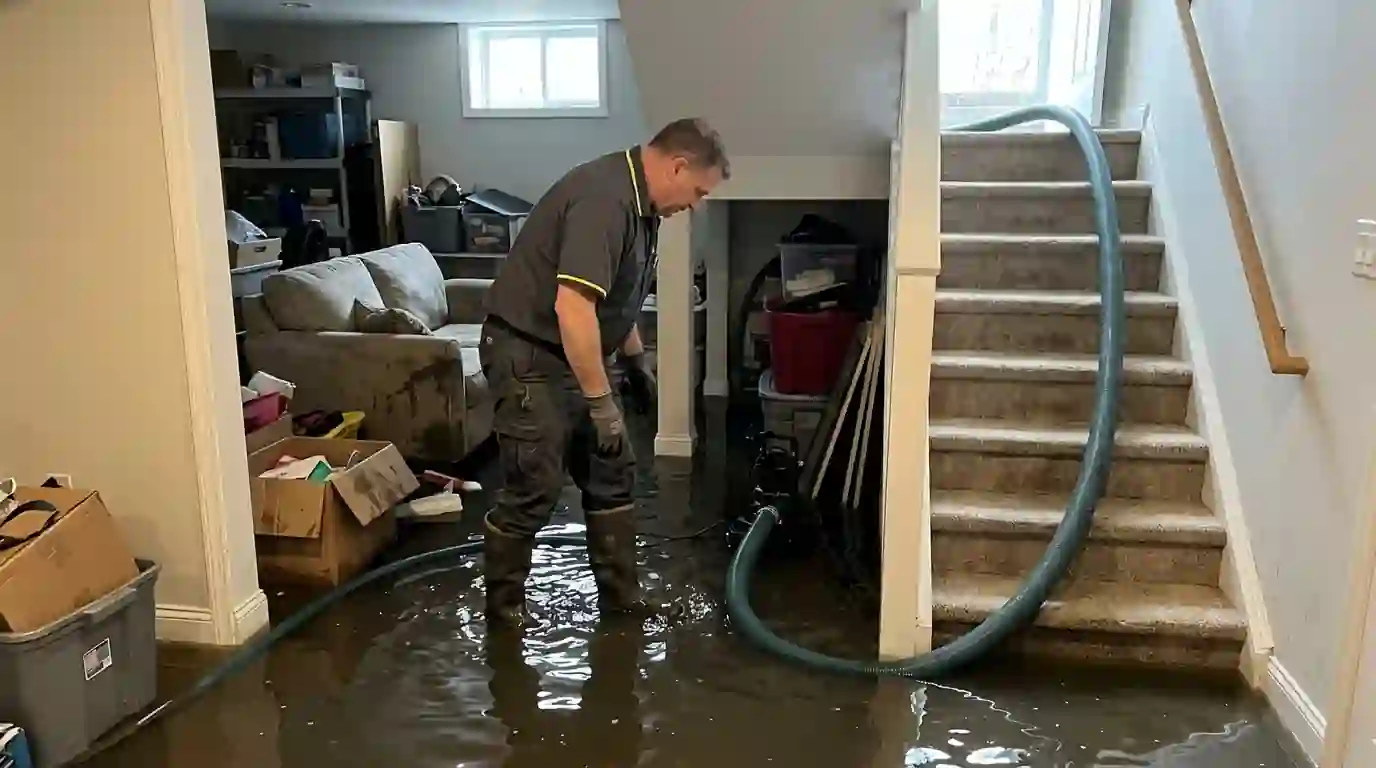
A wet crawl space under a New York, NY or Long Island house needs pumping and drying quickly, because wet materials can start growing mold within 24 to 48 hours and the damp air rises into the rooms above. We pump out standing water, remove soaked insulation, dry the joists and subfloor and check for growth, answering 24/7.
Why crawl space water matters upstairs
A crawl space is out of sight, so water there tends to sit. Storm water, a leaking supply line or a failed sump fills the space, soaks the insulation between the joists and keeps the subfloor damp. The air under the house mixes with the air in it, so the smell and the humidity come up into the rooms above.
The work is tight and physical: pumping in a space you can't stand up in, bagging wet insulation and getting air moving along every joist bay. We read the framing and the subfloor from below and the floors from above, so drying is measured on both sides. For full basements, see basement flood cleanup.
Signs your crawl space is wet
Most crawl space problems are noticed from above.
A musty smell in the rooms above
Damp air from under the house rises through gaps in the floor.
Soft, cupping or cold floors
Floors over a wet crawl space can cup, feel soft or stay cold and clammy.
Condensation on ducts or pipes
Sweating ducts and pipes under the house mean the air down there is too wet.
A sump that runs constantly or never
Either one after a storm is a sign the crawl space is taking water.
Insulation hanging down
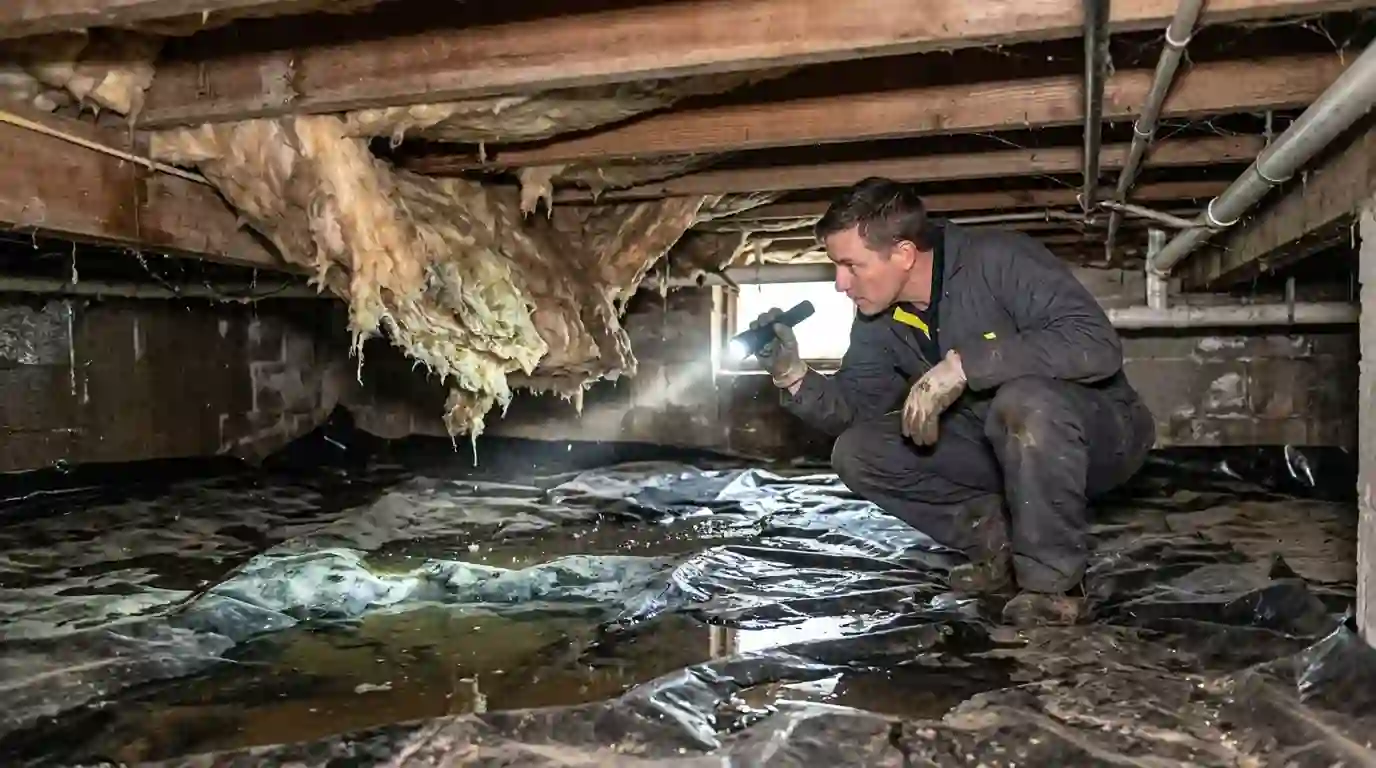
Insulation that sags or drops out of the joists is usually wet.
Standing water under the house
Heavy rain, a high water table or a downspout emptying against the foundation can leave standing water on the crawl space floor. We pump it out, pull back and replace a damaged vapor barrier where needed and set drying equipment to move air along the whole space. Where the water came in is usually visible once the space is dry.
Wet insulation and subfloor
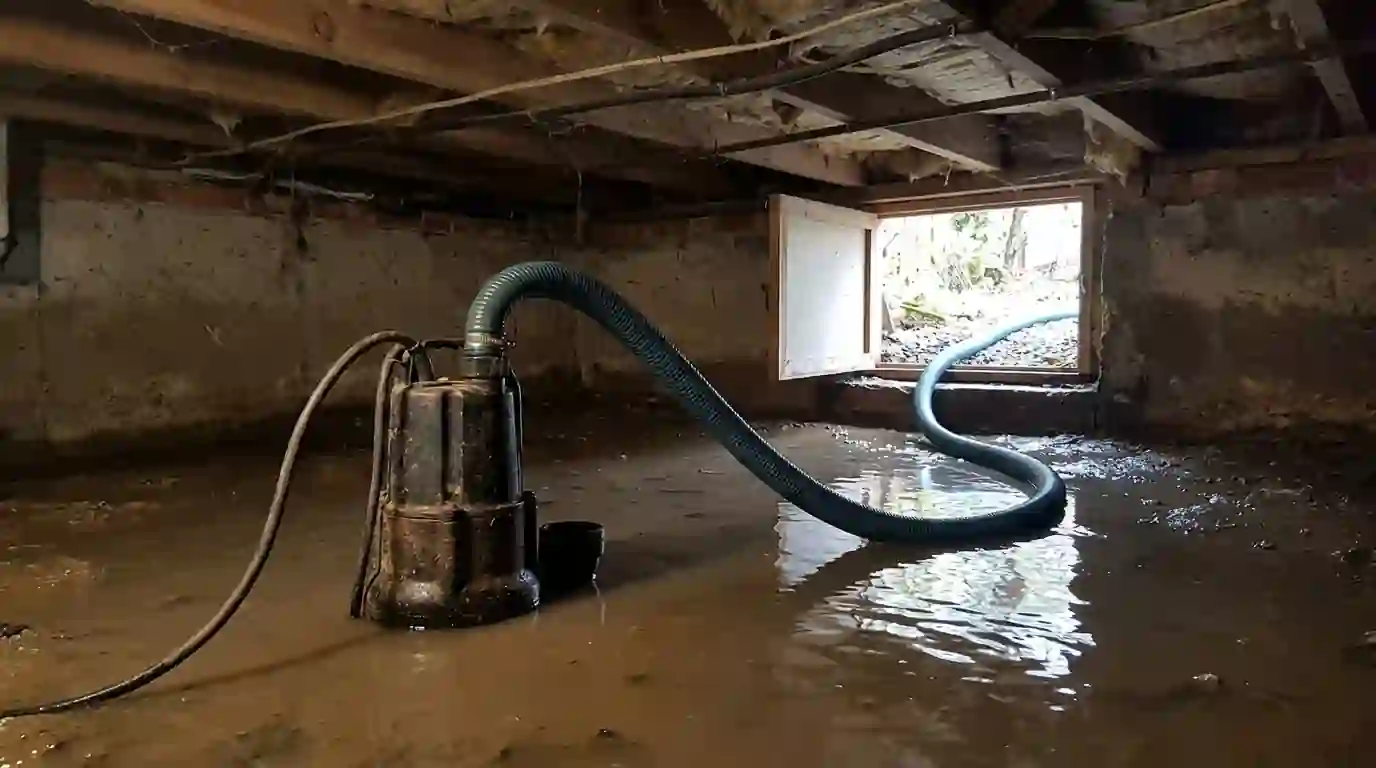
Fiberglass insulation soaked by water or by months of damp air loses its value and holds moisture against the subfloor. We bag it and take it out, dry the joists and subfloor to their reference readings and replace the insulation once the space stays dry.
Crawl space mold
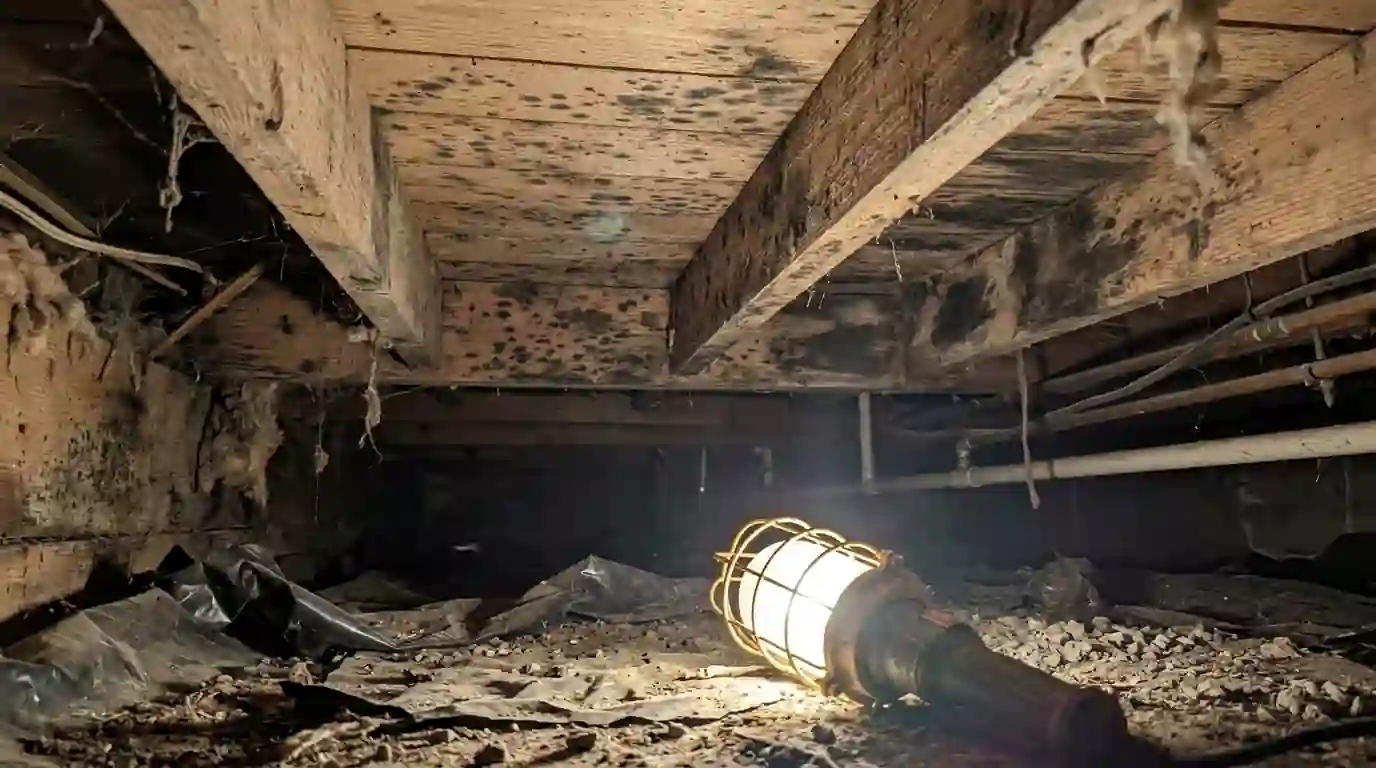
Joists and subfloor that stayed damp often grow mold on their undersides. It's removed and the wood cleaned under containment, then the cause, water or damp air, is dealt with so it doesn't come back. See mold remediation for the full process.
How a crawl space job runs
Make it safe
Power to any equipment in or near the crawl space is checked before anyone goes in.
Pump and extract
Standing water is pumped out and the floor extracted.
Remove wet material
Soaked insulation and a torn vapor barrier come out and are bagged.
Dry and check for mold
Air movers and dehumidifiers run along every joist bay, with readings above and below.
Close up
New insulation and vapor barrier go in once the space tests dry.
How long a crawl space takes to dry
With standing water pumped out and air moving, joists and subfloor often dry in several days. A crawl space with a dirt floor or poor ventilation takes longer, because moisture keeps coming up from the ground until a barrier is in place.
We don't close up the space until the framing matches its dry reference readings, or the smell comes back upstairs.
Crawl spaces under postwar and shoreline houses
Much of the housing in places like Levittown went up in the postwar decades, and some of those houses and their additions sit over crawl spaces rather than full basements. Closer to the water, coastal storms like the March 2018 nor'easter that flooded Lindenhurst push water under houses near the bays. In both cases the crawl space is where water sits longest, because nobody sees it.
What crawl space water cleanup costs
Area, access and what has to come out set most of the price.
| Job | Typical range | Source |
|---|---|---|
| Extraction and drying, per square foot | $4 to $12 | HomeGuide |
| Mold remediation | $15 to $30 per sq ft, or $1,500 to $15,000+ total | HomeGuide |
These are planning ranges from published national cost guides, not a quote and not our price. We give you a written scope after we have measured the damage.
Access
Low, tight crawl spaces take longer to work in.
Standing water
Water that has to be pumped adds equipment and time.
Insulation
Wet insulation removal and replacement adds material and labor.
Vapor barrier
A torn or missing barrier needs replacing.
Mold
Growth on joists or subfloor adds containment and cleaning.
Water source
Floodwater from outside is handled as contaminated.
Area
Larger footprints need more drying equipment.
Crawl space questions
What homeowners ask about the space under the house.
It can raise humidity and smell in the rooms above, and mold under the house can affect the air inside.
No. There may be electrical equipment and contaminated water. Wait for us.
Wet insulation usually does. Dry, undamaged insulation can stay.
Move roof water away from the foundation, fix the grading and keep a vapor barrier in good shape.
Water from outside usually needs a flood policy. A burst pipe under the house is more often covered.
Readings on the joists and subfloor match a dry reference.
Related flood and moisture services
Basement Flood Cleanup
Pump-out, tear-out and drying for basements that took on water.
Flood Damage Restoration
Floodwater from storms and surge, handled as contaminated water from the start.
Mold Remediation
Containment, removal and cleaning of mold, following an independent assessor's plan.
Structural Drying
Dehumidifiers, air movers and daily readings until the structure is dry.
Storm Damage Restoration
Wind-driven rain, fallen limbs and ice dam leaks, dried and repaired.
Water under your house?
Stay out of the crawl space and call. We answer day and night.
Updated September 2026