Attic mold, removed and kept away
Attic mold removal and ventilation fixes in New York, NY
Dark stains on the roof boards or a musty smell upstairs? Attic mold comes from warm, wet air with nowhere to go. We remove it and fix the airflow so it doesn't come back.
- Answering 24/7
- Sheathing and rafters
- Venting fixed
Quick answer
Attic mold in a New York area house almost always grows on the roof sheathing from warm, wet air that reached the attic, most often a bath fan venting into it or a roof leak. Published guides put mold remediation at about $15 to $30 per square foot. We remove the growth and fix the airflow that caused it.
Where attic mold comes from
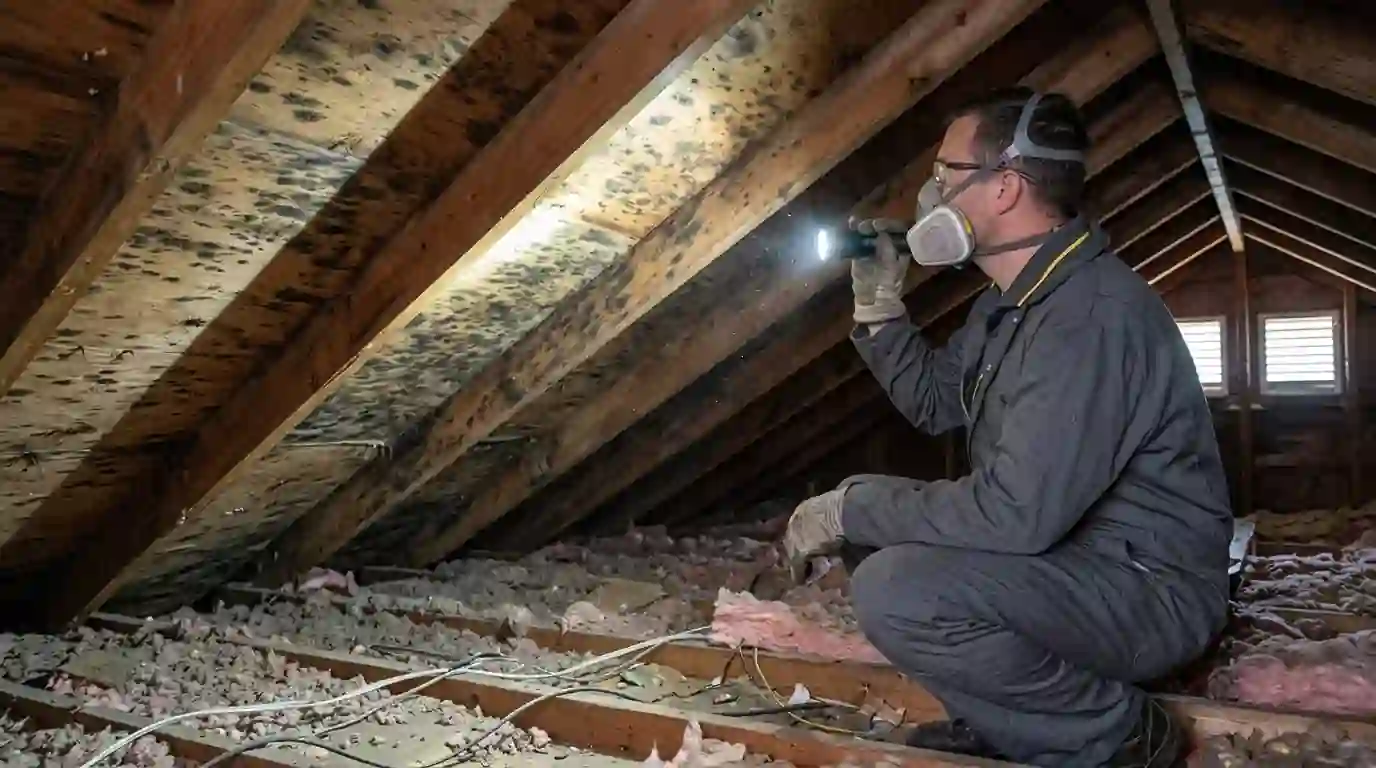
An attic should be cold and dry in winter, with air moving in at the soffits and out at the ridge. When warm, damp air from the house gets in, from a bath fan dumping into the attic, an open attic hatch or gaps around pipes and lights, it condenses on the cold underside of the roof boards. Mold grows in that moisture, usually on the north side first.
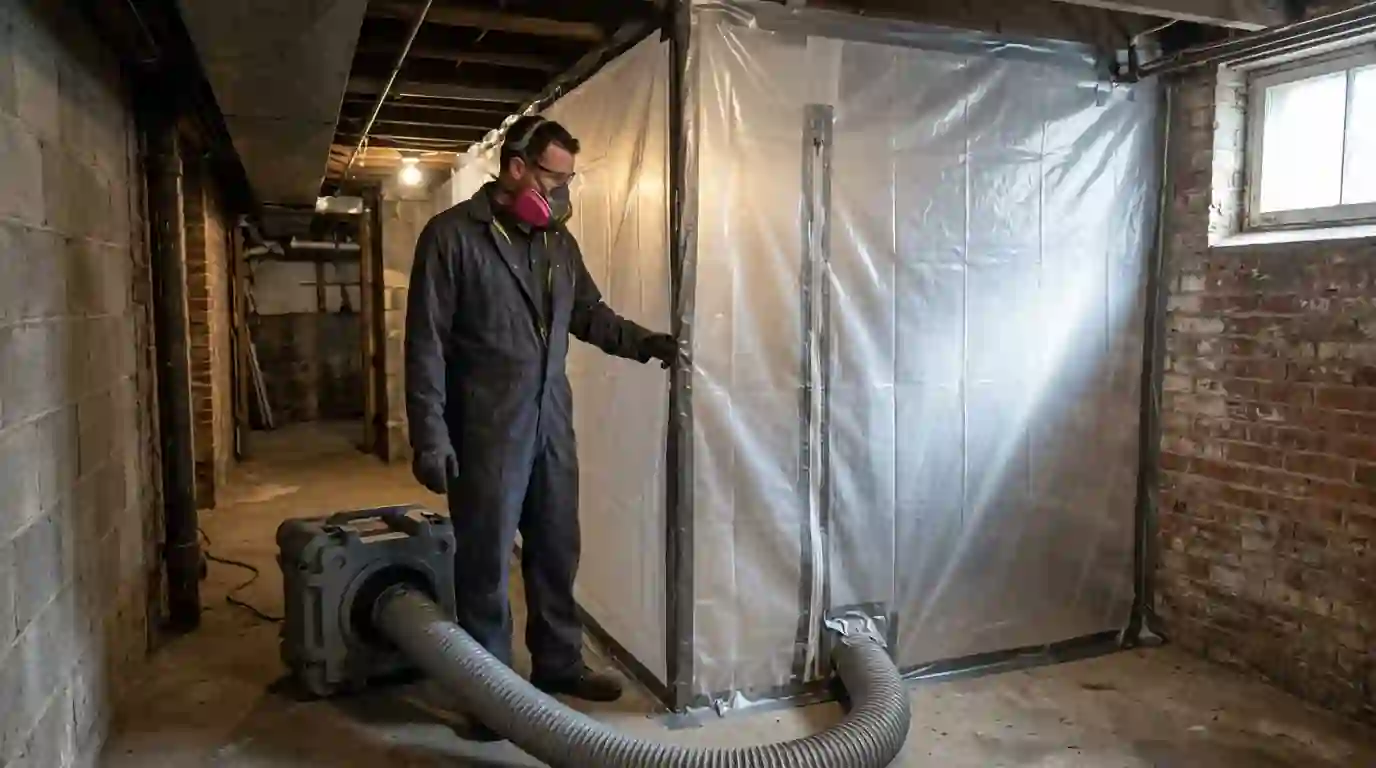
Removing the mold without fixing the air is wasted money; it grows back by the next winter. So every attic job has two parts: containment and removal on the sheathing and rafters, then venting, sealing and insulation work so the attic stays dry.
What attic mold removal costs
The area of growth and what has to be fixed around it set the price.
| Job | Typical range | Source |
|---|---|---|
| Mold remediation | $15 to $30 per sq ft, or $1,500 to $15,000+ total | HomeGuide |
| Mold inspection | $300 to $650 | HomeGuide |
These are planning ranges from published national cost guides, not a quote and not our price. We give you a written scope after we have measured the damage.
Area of growth
A patch around a fan costs less than a whole roof slope.
Access
Low, tight attics slow the work.
Insulation
Removing and replacing insulation adds material and labor.
Venting fixes
Rerouting fans and opening soffit or ridge vents add parts and time.
Sheathing condition
Soft or rotted boards need replacement from outside.
Containment
Keeping spores out of living space needs sealing and air filtration.
Testing
Post-work testing, where wanted, adds a separate cost.
Clean the sheathing or replace it
| Clean and treat | Replace sheathing | |
|---|---|---|
| When it fits | Surface growth on sound wood | Rot, delamination or soft boards |
| Work | HEPA vacuum, clean, treat, seal | Roofing comes off, new boards go on |
| Disruption | Inside the attic only | Roof work outside as well |
| Cost | Lower | Much higher, usually with a roofer |
Most attic mold is surface growth that cleans off. Soft or rotted boards are the exception.
Bath fans vented into the attic
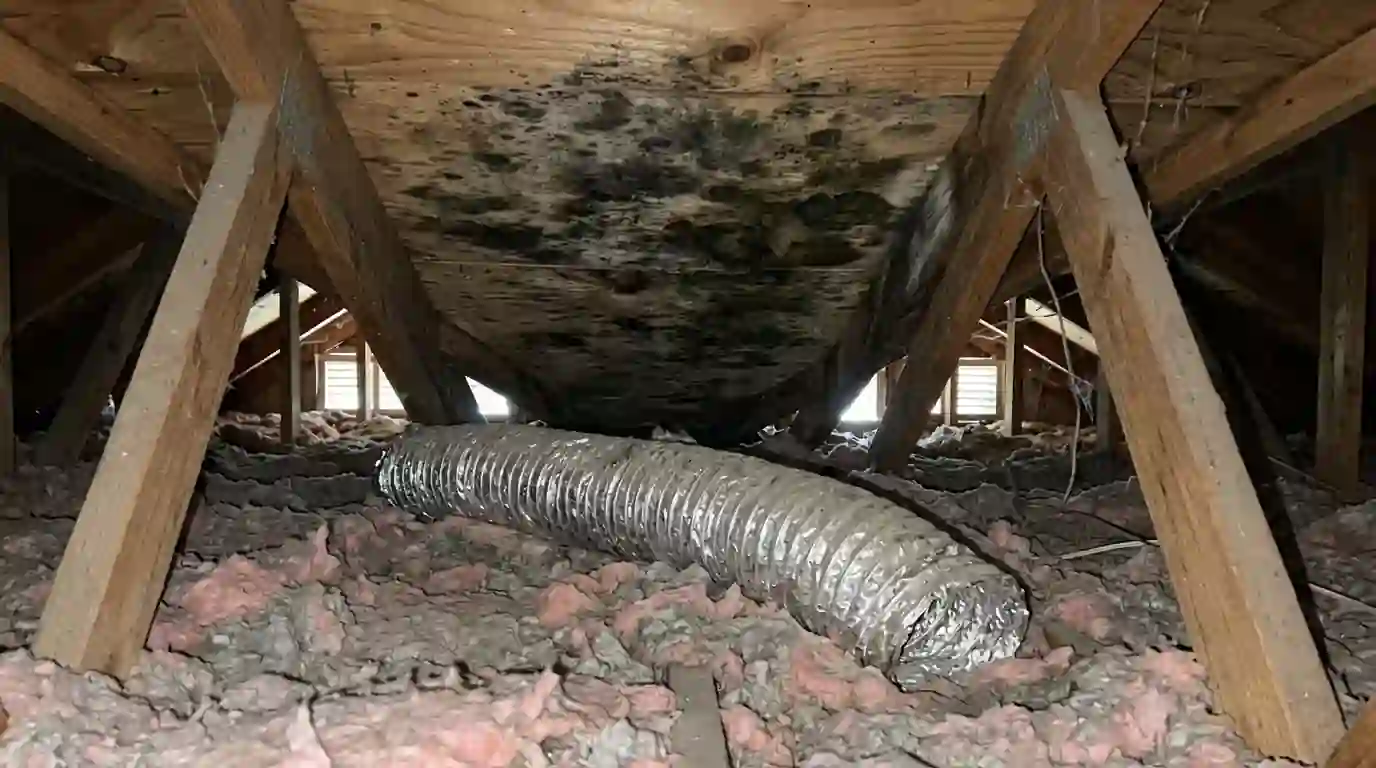
This is the most common cause we find. A bath fan that blows into the attic, or into a duct that's come loose, puts shower steam straight onto the roof boards every day. The fix is a sealed, insulated duct run to a roof or wall cap outside. Growth usually centers on the fan's outlet, which makes the cause easy to spot.
Roof sheathing mold
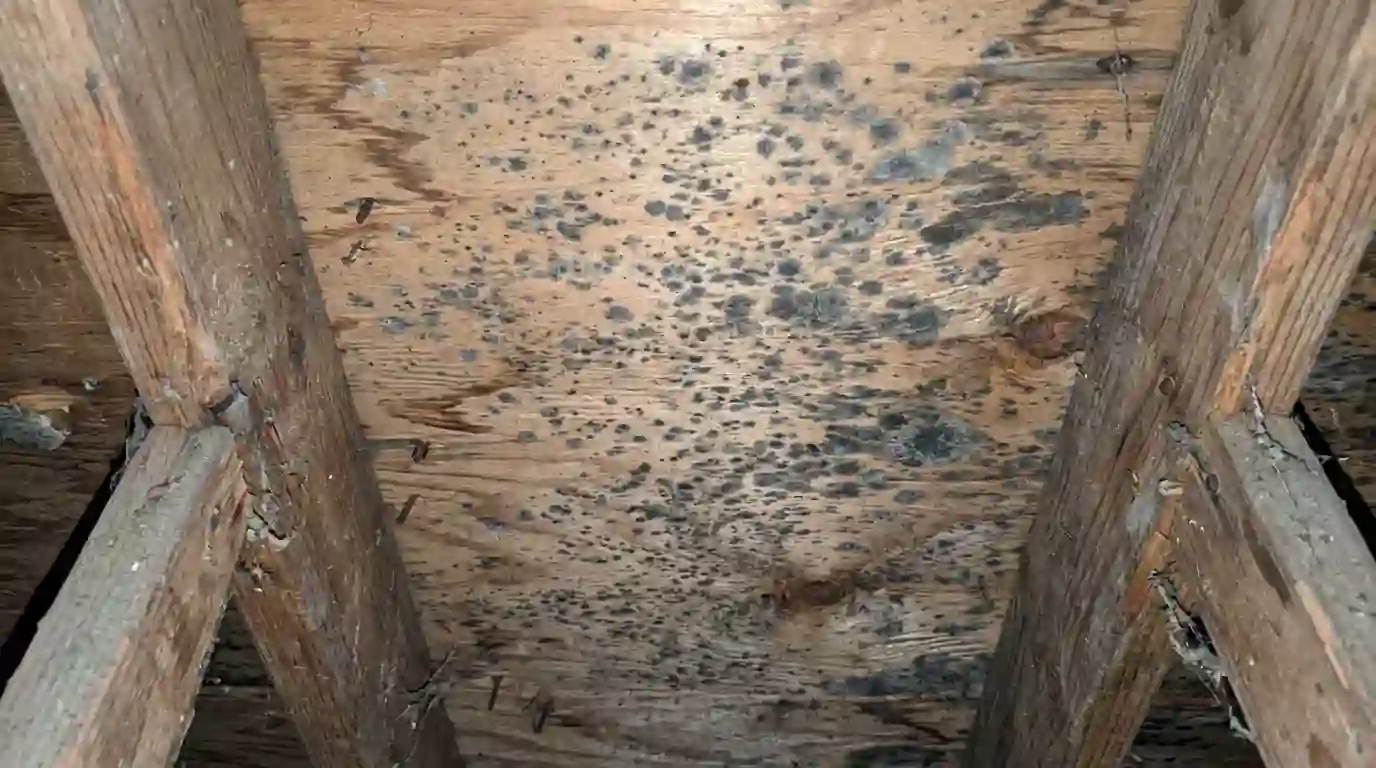
Condensation mold spreads across the sheathing as a gray-black speckle, heaviest on the north slope and near the eaves. Most of it is on the surface of sound plywood or boards and cleans off. Where boards feel soft or have delaminated, a roofer replaces them from outside while we handle the attic side.
Wet insulation replacement
Insulation that got wet from a roof leak or condensation loses most of its value and holds moisture against the ceiling below. We remove it, dry the attic floor and ceiling, and replace it once the source is fixed. If the leak came from the roof, a temporary cover keeps things dry until the roofer arrives.
What an attic mold job includes
Removal and prevention in one visit plan.
- Moisture readings on sheathing, rafters and insulation
- Containment and air filtration so spores don't drift into the house
- HEPA vacuuming and cleaning of affected sheathing and rafters
- Removal of wet or moldy insulation
- Rerouting bath and kitchen fans to vent outdoors
- Air sealing around hatches, pipes and lights into the attic
- Checking soffit and ridge venting so air can move
Attics in postwar capes and ranches
Much of the housing in places like Levittown and Baldwin went up in the postwar decades, and many of those capes and ranches have had bathrooms added or updated since. Bath fans from those renovations were often run into the attic rather than outside. That, more than roof leaks, is the pattern we see on attic jobs in those neighborhoods, and it's why the fan duct is the first thing we check.
How an attic mold job runs
Inspect
We read moisture, find the growth and trace the source of the damp air.
Contain
The attic is sealed off from the house and air filtration runs.
Remove
Growth is cleaned from sheathing and rafters, and wet insulation comes out.
Fix the cause
Fans get vented outside, gaps get sealed and venting is opened up.
Close up
New insulation goes in once the attic tests dry.
Attic mold questions
What homeowners ask when they see black on the roof boards.
It can affect air quality in the house, especially if the attic connects to living space. It should be removed and its cause fixed.
Encapsulating paint on uncleaned mold doesn't fix the moisture, and the growth continues underneath. Clean first, fix the cause, then seal.
The north slope stays colder and gets less sun, so condensation collects there first.
Not by itself. If warm, wet air still reaches the attic, mold returns under new sheathing too.
Mold from a covered sudden event, like a storm leak, may be covered. Mold from long-term condensation often isn't.
Look in the attic above the bathroom. The duct should run to an outside cap, not end in the insulation.
Related mold and moisture services
Mold Remediation
Containment, removal and cleaning of mold, following an independent assessor's plan.
Odor Removal
Smoke, sewage, pet and tobacco odors treated at the source, then deodorized.
Emergency Roof Tarping
Tarps and temporary covers on pitched, flat and parapet roofs.
Storm Damage Restoration
Wind-driven rain, fallen limbs and ice dam leaks, dried and repaired.
Leak Detection
Thermal imaging and moisture mapping to find where the water actually went.
Black stains on the roof boards?
Call and describe what you're seeing. We'll tell you what probably caused it and what fixing it involves.
Updated September 2026