Find it before you open a wall
Leak detection and moisture mapping in New York, NY
Stain keeps coming back and nobody can find the leak? We map moisture through walls, floors and ceilings with thermal imaging and meters, so the opening goes in the right place.
- Answering 24/7
- Thermal imaging
- Moisture maps for the file
Quick answer
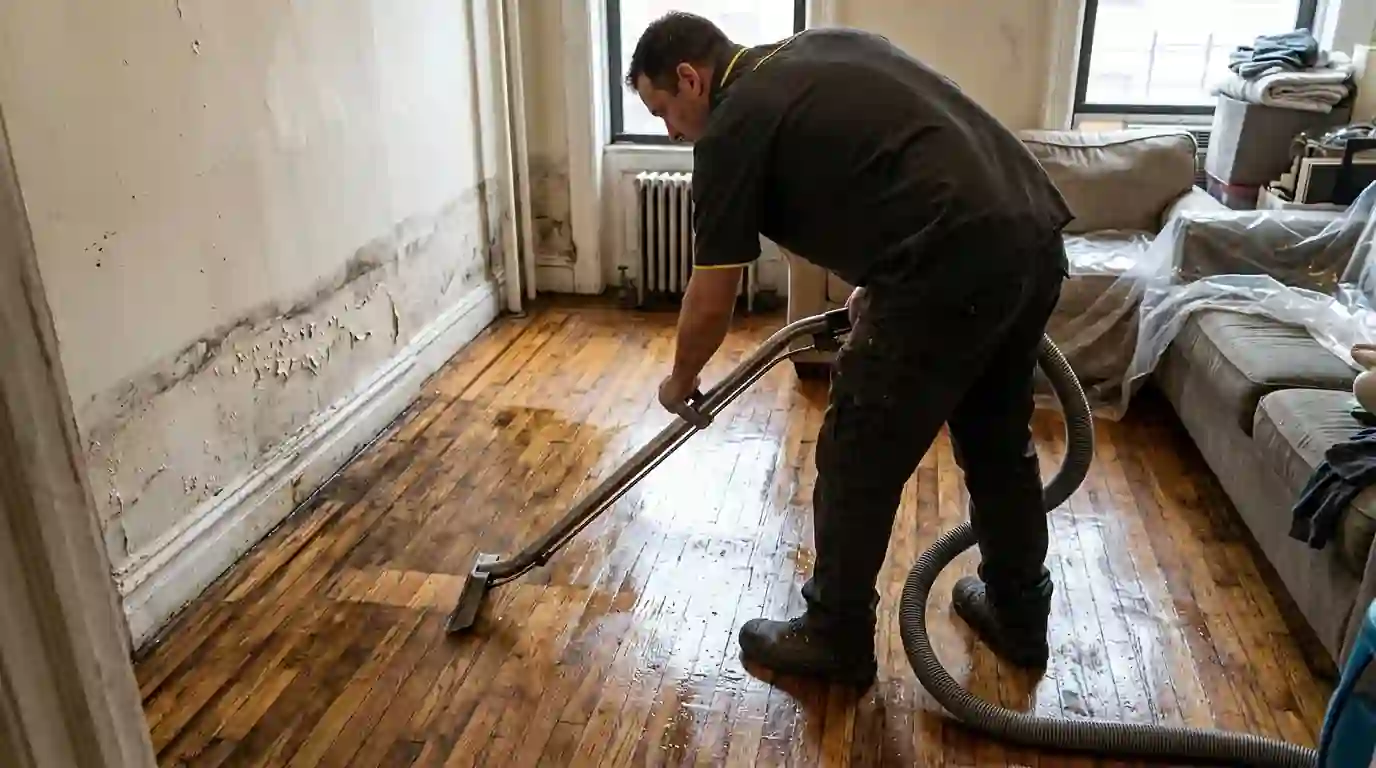
Leak detection in a New York, NY apartment uses thermal imaging and moisture meters to map where water is inside walls, floors and ceilings before anything is opened. The map shows the wet area's edges and usually points to the source. It saves unnecessary holes and gives insurers and managing agents a record.
Why we map before we open
Water inside a building travels, so the damp spot you can see is rarely the whole picture. Opening walls to hunt for a leak is expensive and messy, and in a prewar apartment it means plaster repairs you didn't need.
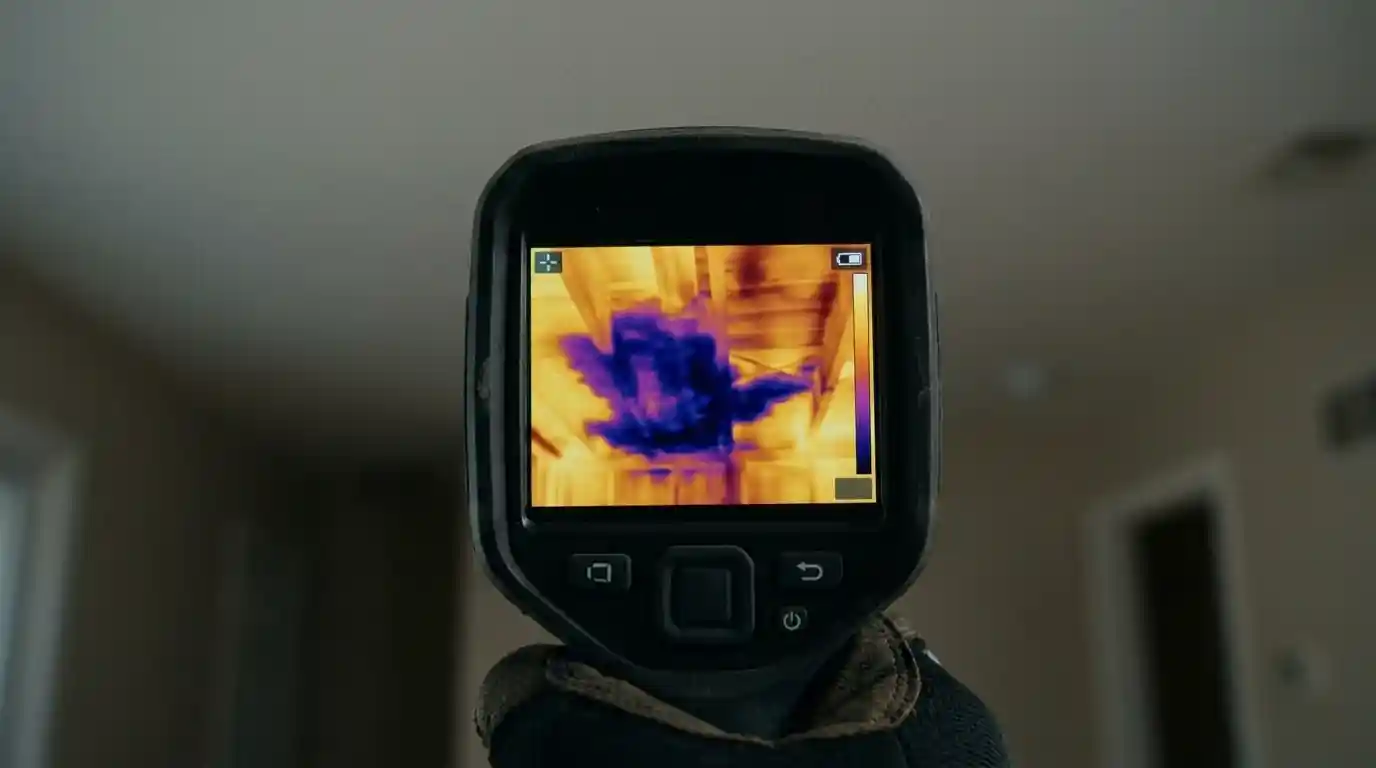
A moisture map shows where water actually is. Thermal imaging picks up the cooler patches wet materials create; pin and pinless meters confirm them and measure how wet. Put together, they show the shape of the wet area and which direction it came from.
Thermal imaging surveys
A thermal camera shows temperature, not water, so it works best alongside meters. Wet materials cool as water evaporates, and that pattern shows up clearly on a wall or ceiling. We scan the whole area, not just the stain, because the pattern tells us where the water came from.
Moisture maps for the insurance file
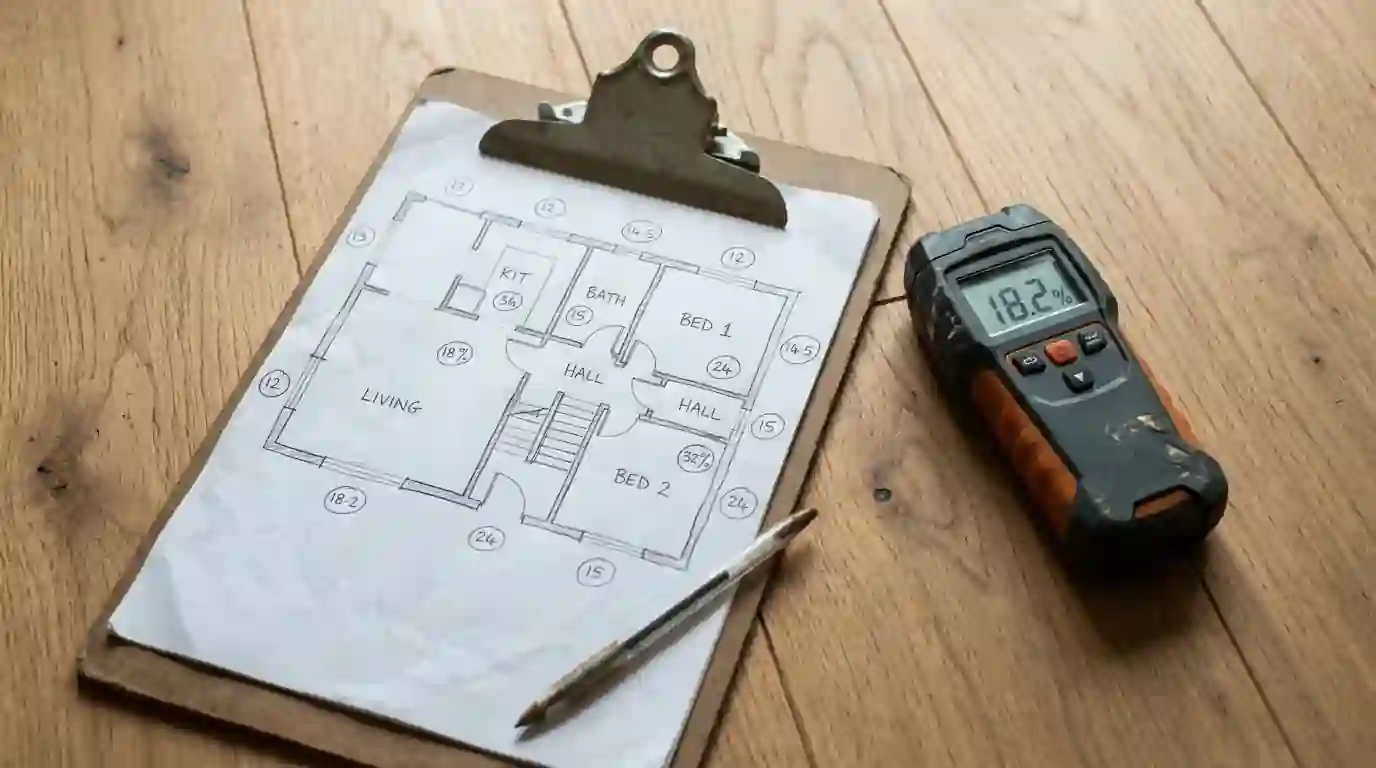
A dated map with readings is a clear record of how far water spread before drying started. Adjusters, managing agents and boards all ask for it. We mark readings on a floor plan sketch and photographs, so anyone reading the file can see where the water was.
Leaks between apartments
When water appears in one unit and the source is in another, the map settles arguments. Readings that rise toward a shared wall or a stacked bathroom show which way the water moved. With access to both units, we map both and hand the managing agent one record. For the drying side, see ceiling leaks from above.
What a leak detection visit includes
You get a map, not just an opinion.
- A thermal imaging scan of the affected walls, ceilings and floors
- Moisture meter readings to confirm and measure wet areas
- Dry reference readings from unaffected materials
- A marked-up moisture map of where the water is
- Our best assessment of the likely source and its path
- Photos and readings you can pass to a plumber, super or insurer
- A plan for drying if the building is wet
How a leak detection visit runs
Listen first
When does it show up, what's above it, what changed? The answers narrow the search.
Scan
Thermal imaging across the whole area, not just the stain.
Confirm
Meter readings on every suspect spot, compared to dry references.
Map
Readings are marked on a sketch and photographed.
Next step
You get the likely source and, if it's wet, a drying plan.
Leaks in stacked city buildings
In city buildings, bathrooms, kitchens and heating risers stack floor over floor, and walls are often plaster over brick or old lath. Water from a riser or a shower pan can travel sideways along a joist and down through two apartments before it shows. That's why the unit where the stain appears is often not where the leak is, and why a map with readings from both units ends a lot of back-and-forth.
Signs of a hidden leak
Water often shows up as something other than a drip.
A stain that comes and goes
Stains that return with showers or rain point to a leak tied to use or weather.
A musty smell in one spot
Persistent mustiness in a closet or corner can mean hidden moisture.
Peeling paint or soft plaster
Moisture behind the surface breaks down paint and plaster.
A water bill that jumps
A higher bill with no change in use can mean water running somewhere.
Warped flooring near a wall
Flooring that lifts along one wall points to water in that wall.
What leak detection costs
Leak detection is priced by the visit and the area scanned, and it usually saves more in unnecessary opening than it costs.
Area scanned
One ceiling costs less than a whole apartment or floor.
Access
Scanning both sides of a shared wall means access to both units.
Intermittent leaks
Leaks tied to showers or rain may need a water test or a second visit.
Documentation
A full moisture map and photo set for an insurer takes more time.
Building type
Masonry and plaster need more readings than drywall.
After hours
Emergency visits are answered 24/7.
Drying after
If the building is wet, drying is priced separately.
Leak detection questions
What people ask before we come out.
Usually we can find where the water is and narrow the source without opening anything.
It sees surface temperature, which shows cool patches from moisture behind the surface.
We find and document it, then dry the building. The plumber or roofer fixes the source.
With access to both, readings usually show which way the water moved.
Yes. Adjusters and managing agents use the dated map and readings.
Some leaks only show up under use or rain. We'll set up a water test or come back when it's active.
Related water services
Ceiling Leak Water Damage
Ceilings, walls and floors soaked by a leak from the unit or roof above.
Structural Drying
Dehumidifiers, air movers and daily readings until the structure is dry.
Shower Leak Damage Repair
Slow leaks from pans, grout and drains that rot subfloors and stain ceilings.
Burst Pipe Water Damage
Frozen, split and failed supply lines, and the walls they soaked.
Mold Remediation
Containment, removal and cleaning of mold, following an independent assessor's plan.
Stain that nobody can explain?
Call and describe when it appears. We'll map it and tell you what's behind it.
Updated September 2026