Measured drying, answered 24/7
Structural drying for walls, floors and ceilings in New York, NY
The water's gone but the walls are still wet? Structural drying pulls water out of framing, subfloors, plaster and masonry, and we log readings every day until they're dry.
- Answering 24/7
- Daily readings
- Walls, floors and ceilings
Quick answer
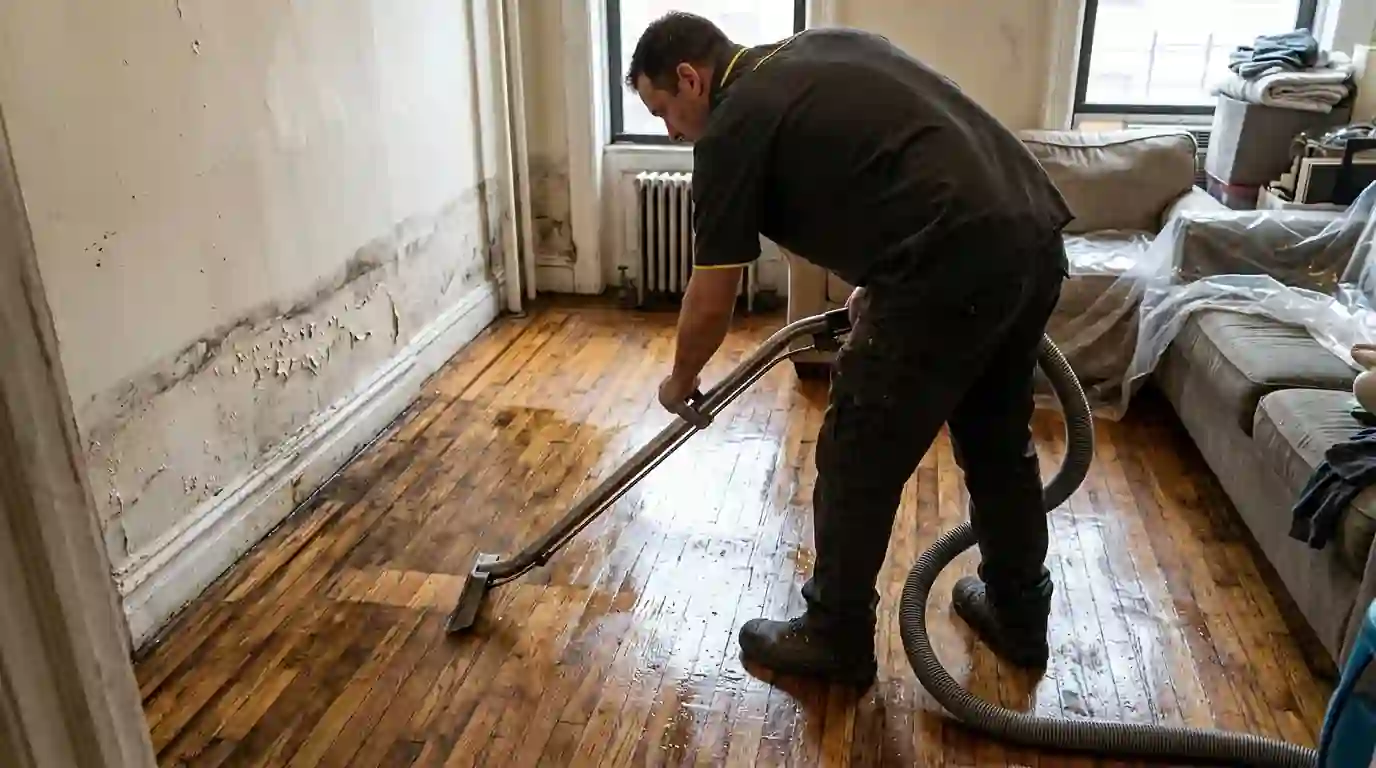
Structural drying in a New York, NY building removes water from framing, subfloors, plaster and masonry with dehumidifiers and air movers until readings match a dry reference, which can take days for drywall and longer for plaster. Wet materials can start feeding mold within 24 to 48 hours, so drying starts right after extraction.
Why surface-dry isn't dry
A wall can feel dry to the touch and still hold enough water inside to grow mold behind the paint. Framing, subfloors and plaster soak water deep, and they give it up slowly. Structural drying is the controlled process of pulling that water out and proving it's gone.
Dehumidifiers take water out of the air; air movers push dry air across wet surfaces so they release moisture faster. In cavities and under floors we direct air in where it's needed. The equipment is sized to the rooms and materials, and the readings tell us when it's done.
Wall cavity drying
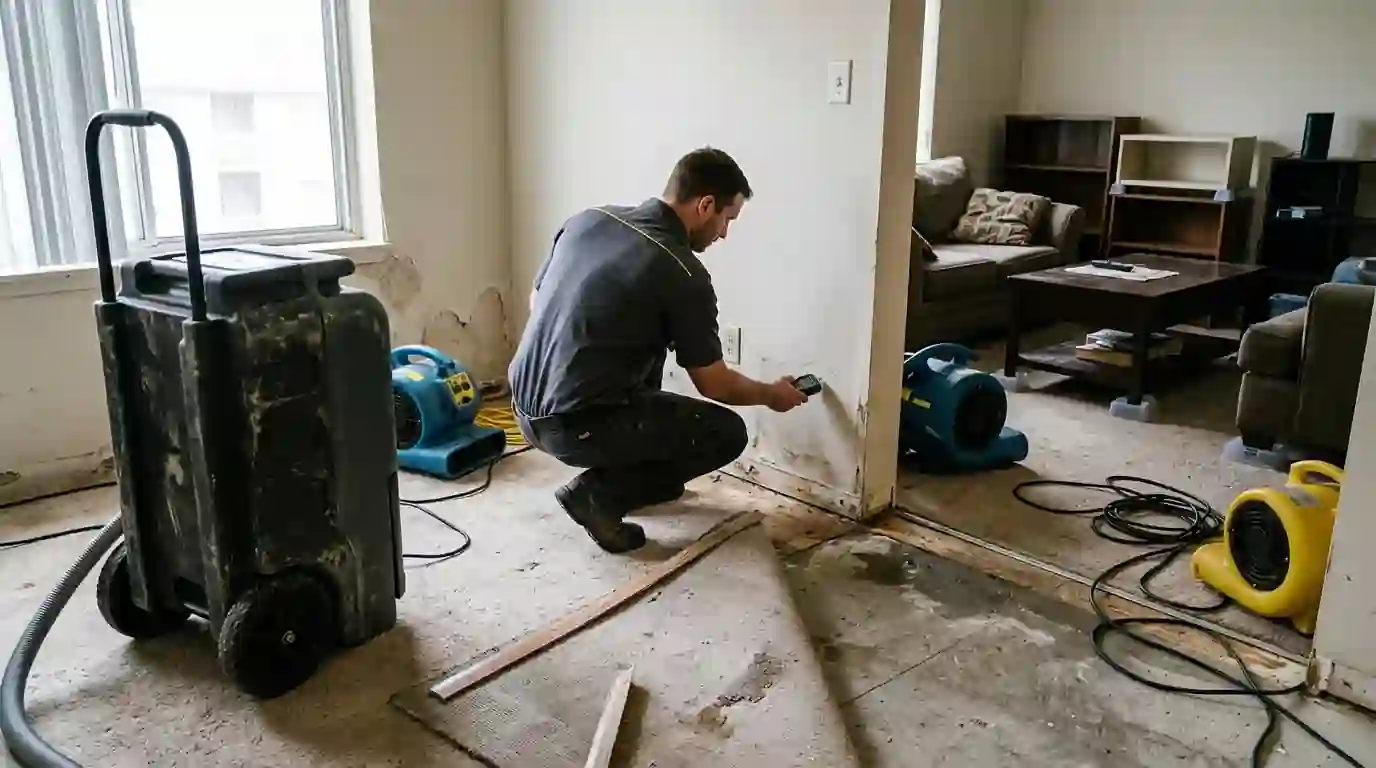
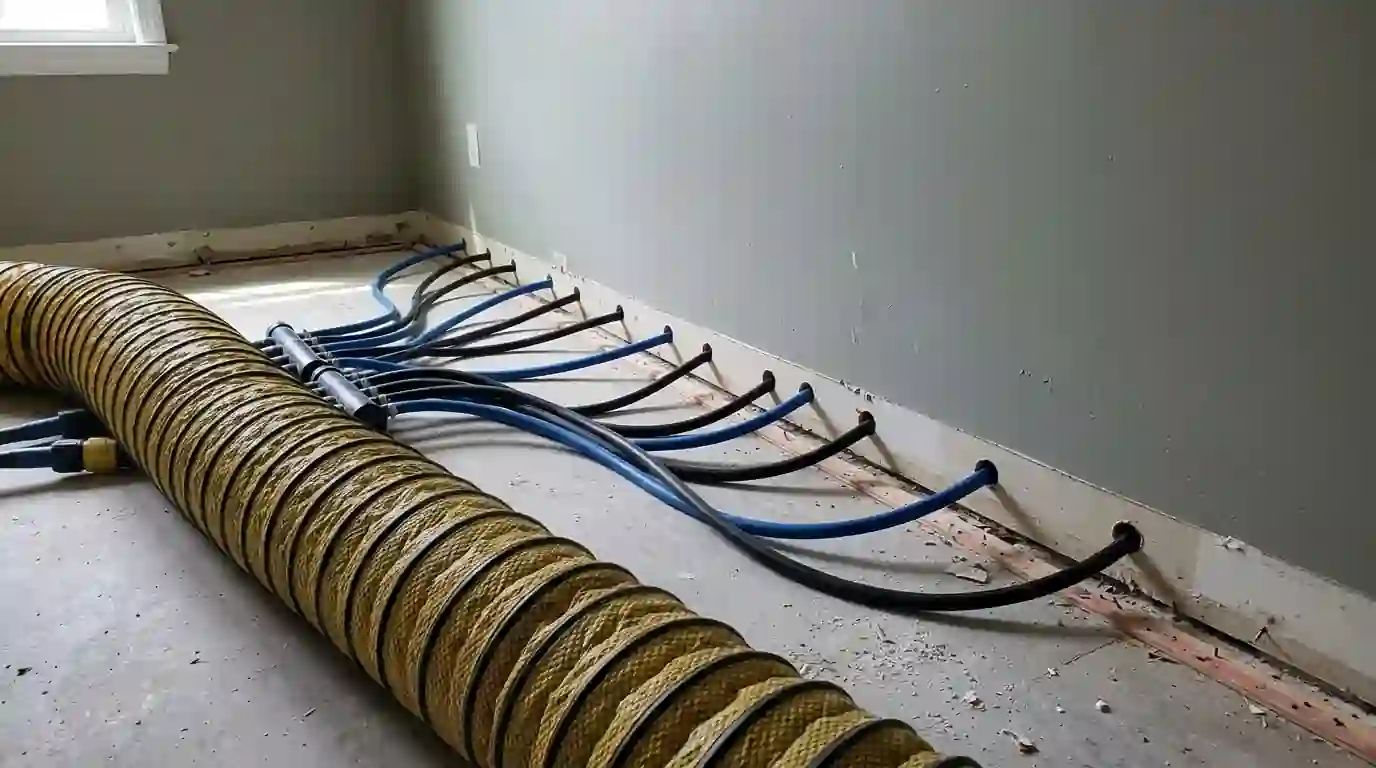
Water that runs inside a wall sits at the bottom plate and in the insulation. We read the wall from outside, then drill small holes or cut at the base to push dry air through the cavity. Wet insulation comes out. Where the wall is plaster, see drywall and plaster repair for what happens after.
Subfloor and slab drying
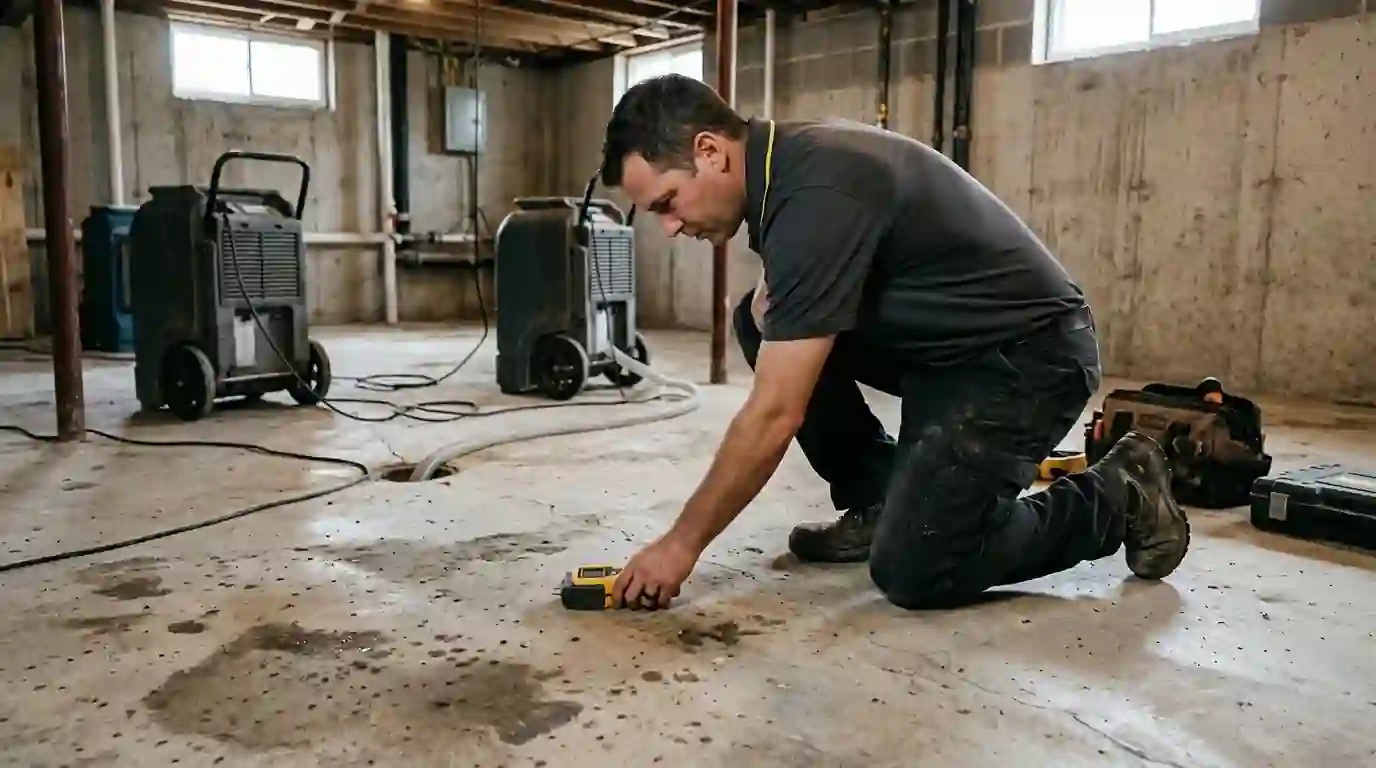
Plywood subfloors and concrete slabs hold water under the finished floor. Subfloors dry with air directed underneath or through the floor; slabs dry slowly and are checked with meters made for concrete. Flooring isn't reinstalled until the slab or subfloor reads dry, or it will fail.
Ceiling and plaster drying
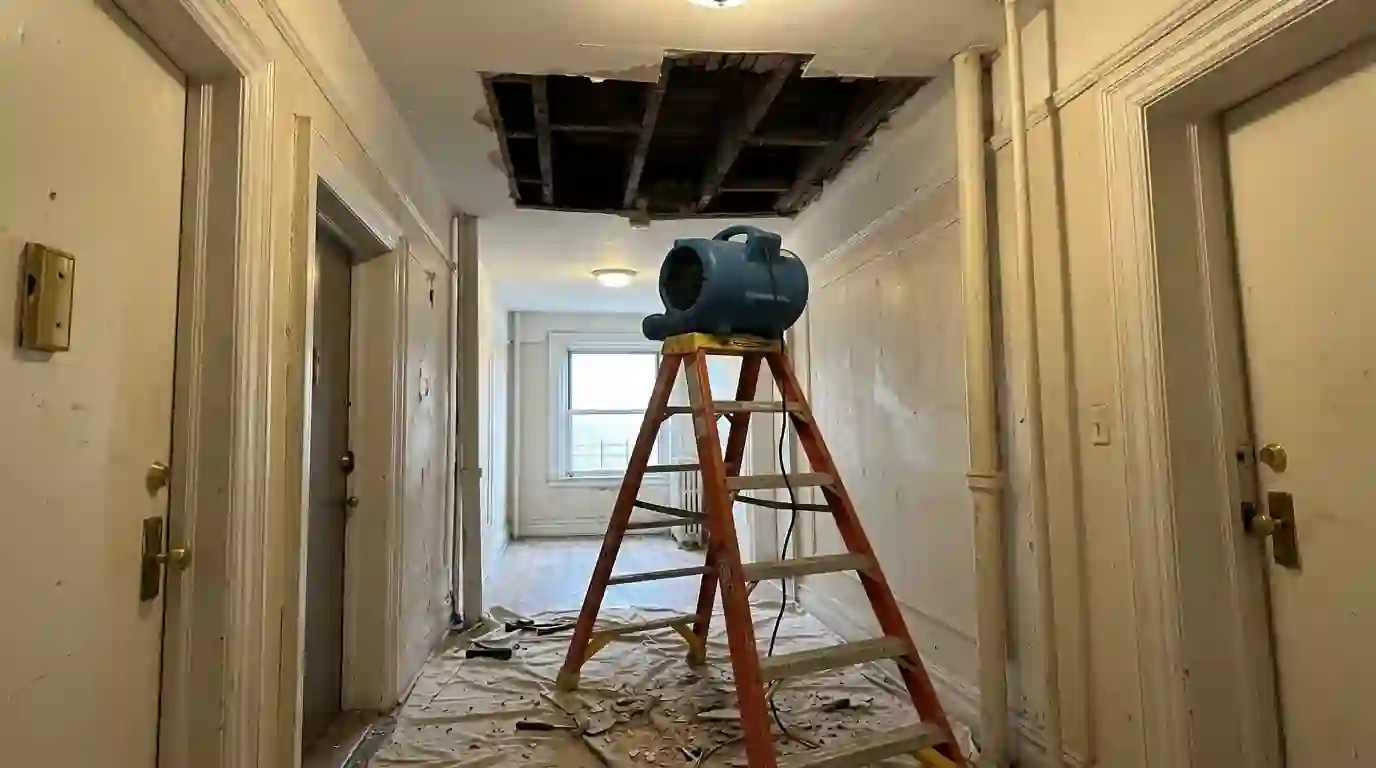
Ceilings dry from the cavity above more than from the room below. We open where readings require and move air into the joist bay. Plaster holds water much longer than drywall, so plaster ceilings and walls stay on equipment longer, and we tell you that at the start.
How a drying job runs
First readings
We read every affected wall, floor and ceiling and pick dry reference points.
Set equipment
Dehumidifiers and air movers are sized to the rooms and materials.
Open where needed
Small openings in walls, floors or ceilings let air reach trapped water.
Read daily
Readings are logged every day and equipment is moved as areas dry.
Sign off
When every point matches its dry reference, the equipment comes out.
Drying dense city buildings
City buildings are heavier than suburban houses: brick walls, plaster on lath, concrete slabs under bathroom tile. All of that holds water longer than wood framing and drywall, and summer humidity off the harbor slows drying further. We size equipment for the material, not just the room, and we tell you up front when a masonry wall is going to take longer than you'd expect.
Walls still damp days later?
Damp walls don't dry themselves. Call and we'll read them.
Box fans versus a drying setup
| Household fans | Structural drying | |
|---|---|---|
| What it does | Moves damp air around | Removes water from air and materials |
| Inside walls | Doesn't reach | Directed into cavities where needed |
| Proof it's dry | No record at all | Daily logged readings |
| Mold risk | High if walls stay wet | Lower, dried on a measured schedule |
What structural drying costs
Area, materials and how long equipment runs decide the price.
| Job | Typical range | Source |
|---|---|---|
| Extraction and drying, per square foot | $4 to $12 | HomeGuide |
| Mitigation by water class, per square foot | about $3.50 clean, $5.25 gray, $7.50 black water | Angi data as published by SERVPRO, 2026 |
These are planning ranges from published national cost guides, not a quote and not our price. We give you a written scope after we have measured the damage.
Area
More wet square footage needs more equipment.
Materials
Plaster, masonry and concrete dry slower than drywall.
Water class
Gray and black water add cleaning to the drying.
Openings
Cavities that need opening add labor and repair.
Days on equipment
Longer drying means longer equipment time.
Power
Buildings with limited circuits may need equipment spread out.
Monitoring
Daily visits and readings are part of the job.
Structural drying questions
What people ask with equipment humming in the living room.
Drywall rooms often dry in days; plaster, masonry and slabs take longer. The daily readings tell you where it stands.
Please don't. Drying stalls when it's off, and the job runs longer.
Dehumidifiers give off heat, and warm air holds more moisture, which helps drying.
Only where readings show water is trapped. Small openings usually do it.
Readings on each point match a dry reference from the same material.
Yes, it hums. We place it to keep bedrooms usable where possible.
Related drying services
Emergency Water Removal
Truck-mounted and portable extraction for standing water on any floor.
Water Damage Restoration
Extraction, drying and repairs after any indoor water loss, logged room by room.
Leak Detection
Thermal imaging and moisture mapping to find where the water actually went.
Hardwood Floor Water Damage
Cupped strip, plank and parquet floors dried in place or replaced.
Drywall and Plaster Repair
Prewar plaster, lath, moldings and drywall rebuilt after water damage.
Walls still wet after the water's gone?
Call and we'll read them and set up drying. We answer around the clock.
Updated September 2026