Leaks from the unit or roof above, answered 24/7
Ceiling leak repair and drying in New York, NY
Water coming through the ceiling from upstairs? Tell the super, move what you can and call. We trace where it came from, dry the ceiling and walls and document it for both units.
- Answering 24/7
- Both units documented
- Plaster ceilings
Quick answer
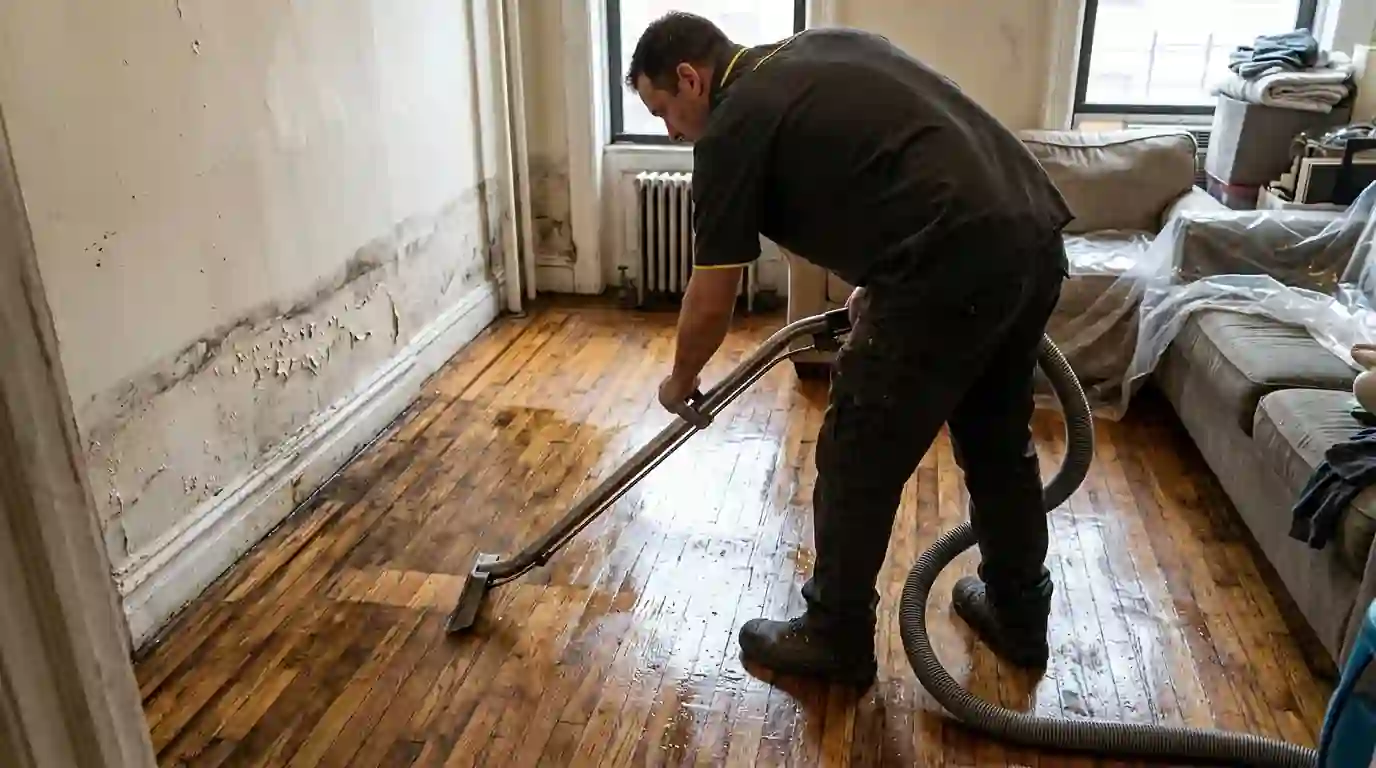
A ceiling leak in a New York, NY apartment usually starts one floor up, and the stain is rarely right under the source because water runs along joists and pipes first. Tell the super so the unit above gets checked, keep clear of any sagging area and call. We trace the path with meters and thermal imaging and dry what got wet.
Why the stain is rarely under the leak
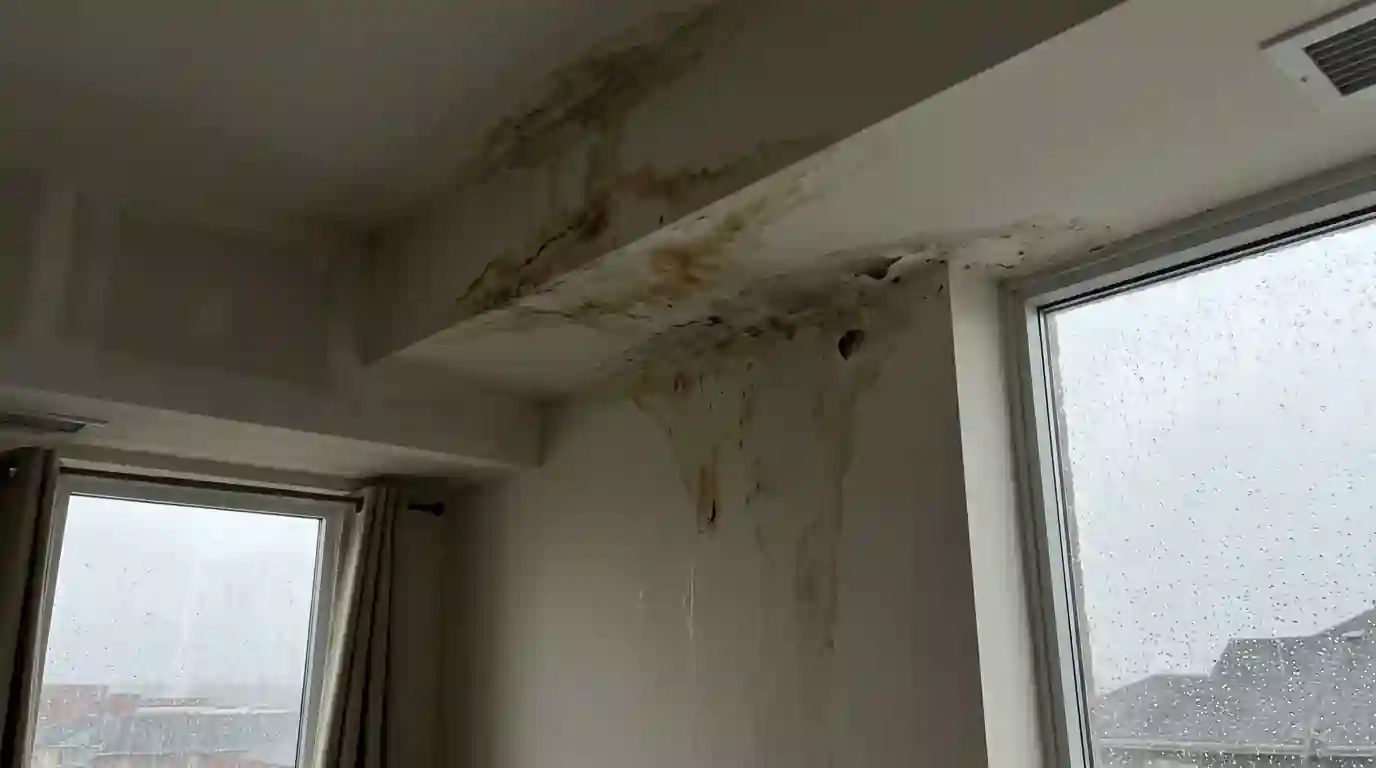
Water that escapes above a ceiling doesn't drop straight down. It runs along joists, pipes and the top of the plaster until it finds a low point or a gap, then shows up as a stain, a drip at a light fixture or a bulge. The source can be several feet away, or in a different room upstairs.
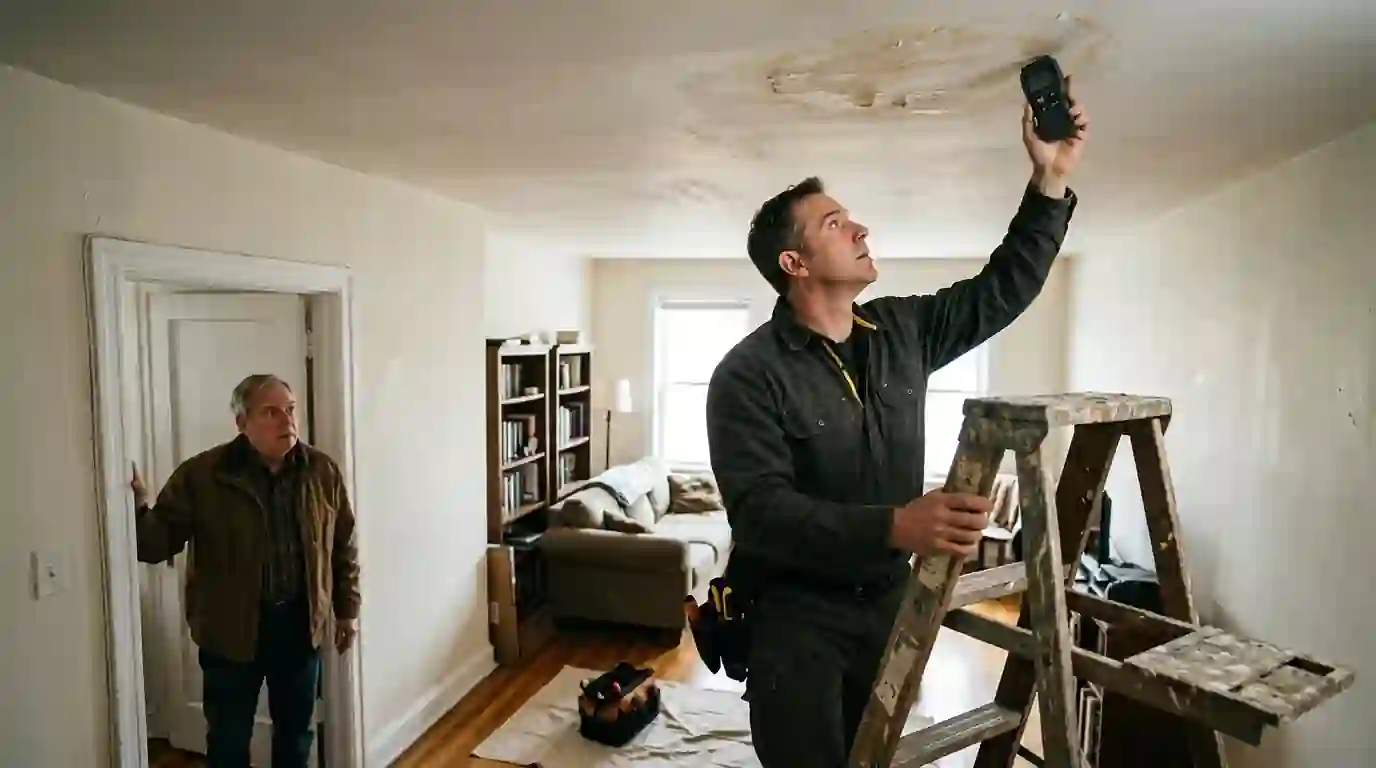
So we start with the path, not the stain. Meters and a thermal camera show how wide the wet area is above the ceiling, and we open only what we need to dry. In an apartment building the same readings tell the managing agent which unit and which fixture the water came from.
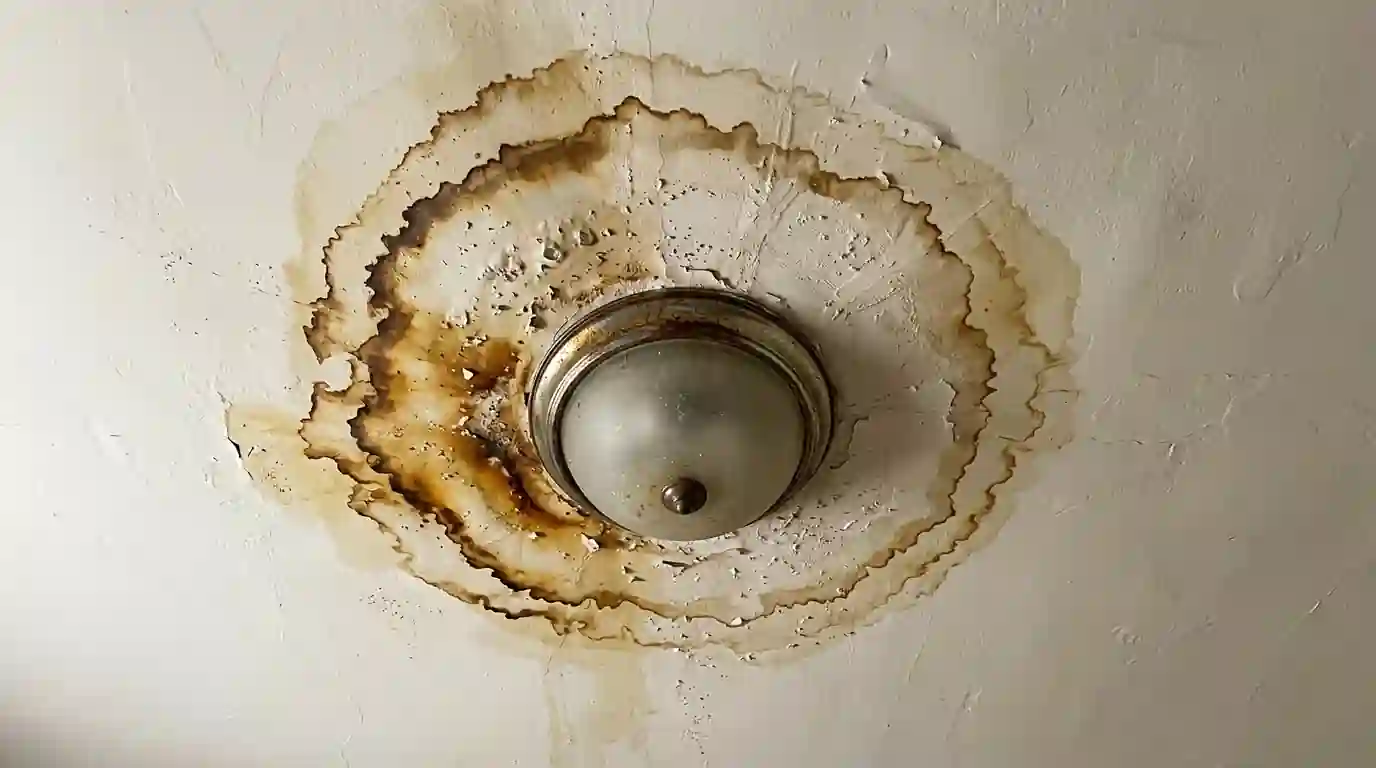
Signs your ceiling is holding water
Some of these mean stay clear until someone gets there.
A stain that grows or darkens
A spreading or darkening ring means water is still arriving or still trapped above.
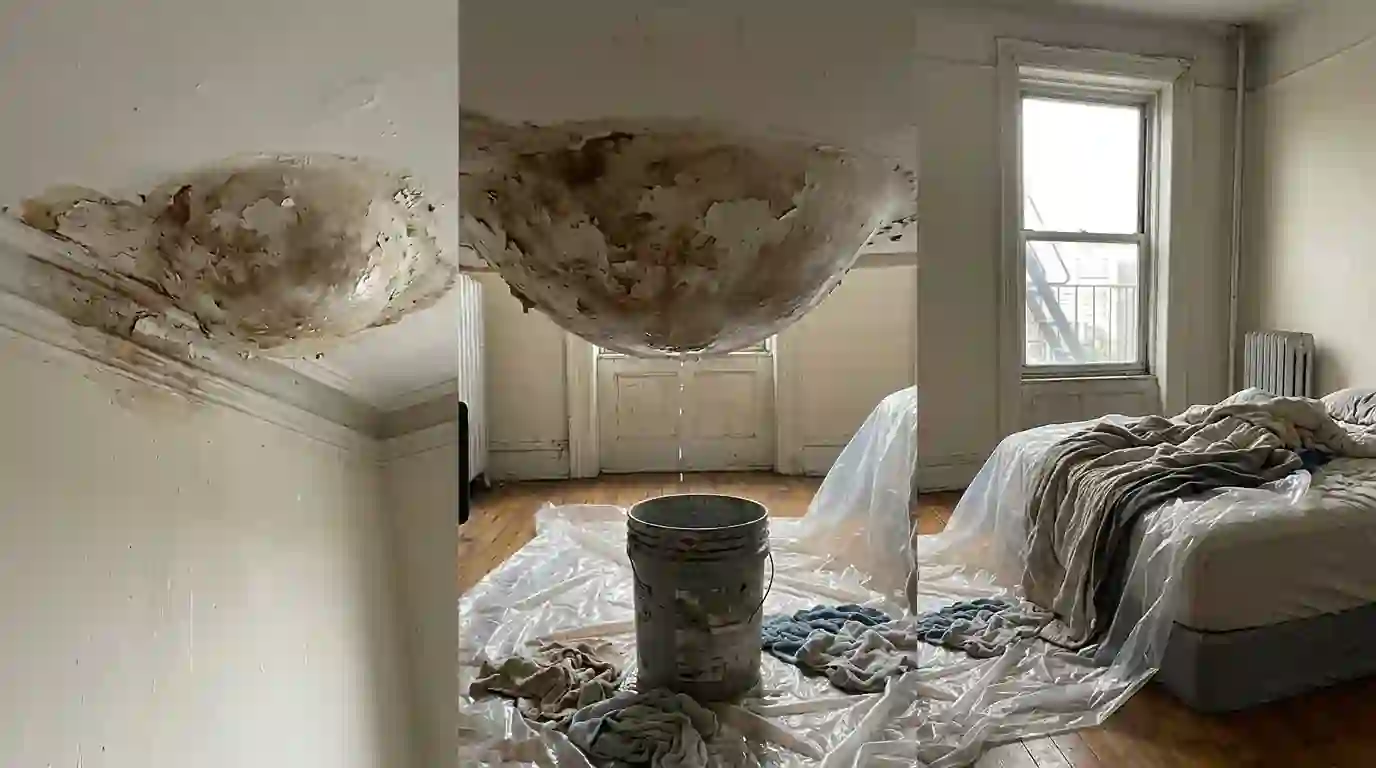
A sag or a bulge
A bulging ceiling is holding water. Keep people and furniture out from under it.
Drips at a light fixture
Water follows wiring to fixtures, so turn that circuit off at the panel.
Cracks or loose paint near the stain
Plaster that cracks or flakes near a stain has taken on water and may be losing its hold on the lath.
A musty smell after the drip stops
Wet insulation or plaster above can stay damp and start to smell long after the drip ends.
Leak from the apartment above
This is the call we get most. A dishwasher line, a toilet supply or a shower valve upstairs lets go, and the water arrives in your ceiling. We read your ceiling and, with access, the floor above, so the source is documented for both units and both insurers. The super or your neighbor handles the fixture; we handle the water in your rooms.
Bathroom overflow into the unit below
Water from an overflowing tub or toilet upstairs usually lands in the bathroom ceiling below, because bathrooms stack in most buildings. If it came from a toilet bowl, it is handled as contaminated water and the ceiling cavity is cleaned as well as dried. Our page on toilet overflow cleanup explains how that job runs.
Sagging or bulging ceilings
A ceiling that sags is holding water, and old plaster can come down in heavy pieces. Keep everyone out from under it and turn off the lights on that circuit. We release the water in a controlled way, remove the section that has let go and dry what can stay. Published guides put plaster repair at about $6 to $19 per square foot and drywall replacement at about $1.50 to $3.
Top-floor and roof leaks
On the top floor the source is often the roof: a blocked drain, failed flashing at a bulkhead or a cracked skylight. Those leaks come and go with the weather, so they are easy to miss between storms. We dry the ceiling, note where the water entered for the building's roofer and can put on a temporary roof cover if the opening is clear.
How we handle a ceiling leak from the first call
Find the source
We ask where the stain is and what sits above it, and tell you who to call to stop it.
Make it safe
Circuits to wet fixtures go off and people stay clear of any sagging section.
Trace the path
Meters and thermal imaging map the wet area above the ceiling and inside the walls.
Open and dry
We open only where readings require and set drying equipment into the cavity.
Repair and document
Plaster or drywall is repaired once dry, and both units get a record of what happened.
How long a wet ceiling takes to dry
A drywall ceiling over an open cavity can dry within days once it is opened and air is moving. Plaster on lath, and ceilings under a concrete slab, hold water much longer, and the slab under a prewar bathroom can keep feeding moisture back down.
We leave the equipment until the readings match a dry reference point, then close up. Rushing the repair on a ceiling that is still wet above is how a stain comes back a month later.
Ceiling leaks in walk-ups and steam-heated buildings
Steam boilers heat about 78 percent of the city's multifamily floor area, and prewar low-rise buildings on one-pipe steam are usually six stories or fewer. In those buildings a radiator valve or riser leaking upstairs is a common source of a ceiling stain, and it tends to come back every time the heat cycles. We check the radiator above as well as the plumbing, because drying a ceiling under a leaking riser only lasts until the next heating cycle.
Stain still spreading tonight?
A spreading stain means water is still arriving. Call and we'll help you find where it's coming from.
What ceiling leak repair costs
The ceiling material, the size of the wet area and how long it stayed wet set most of the price.
| Job | Typical range | Source |
|---|---|---|
| Plaster repair, per square foot | $6 to $19 | HomeAdvisor |
| Drywall replacement after water, per square foot | $1.50 to $3 | HomeAdvisor |
| Extraction and drying, per square foot | $4 to $12 | HomeGuide |
These are planning ranges from published national cost guides, not a quote and not our price. We give you a written scope after we have measured the damage.
Plaster or drywall
Plaster on lath costs more to open and restore than drywall.
Size of the wet area
Water that spread along joists means a wider ceiling to dry.
Height and access
Tall prewar ceilings and stairwells need taller ladders or scaffolding.
Fixtures and moldings
Light fixtures, crown molding and medallions add removal and reinstall time.
Insulation above
Top-floor ceilings with wet insulation need it removed and replaced.
Contaminated water
Toilet or waste water from above adds cleaning and disinfection.
Paint and finish
Matching paint and texture across the whole ceiling may be needed to hide the repair.
Ceiling leak questions from apartment dwellers
What people ask us with a bucket on the floor.
It depends on the source and the building's rules. Report it to the super or managing agent in writing and to your insurer. We document the source and what each unit lost.
Keep everyone away from it and turn off the lights on that circuit. Releasing the water is best left to someone who can control where it goes and how much plaster comes with it.
Only once the ceiling is dry and the source is fixed. Stain-blocking primer over a wet ceiling traps moisture and the stain comes back.
Usually only a section. Plaster and drywall that are sound after drying can stay; pieces that sagged or crumbled are replaced and blended in.
Usually. A leak that follows rain points to the roof, one that follows showers or laundry points upstairs, and the readings help confirm which.
Yes. We coordinate access with the super and the managing agent and keep a separate record for each unit involved.
More help for leaks from above
Burst Pipe Water Damage
Frozen, split and failed supply lines, and the walls they soaked.
Leak Detection
Thermal imaging and moisture mapping to find where the water actually went.
Radiator Leak Water Damage
Spitting air valves, leaking radiator valves and steam risers between floors.
Drywall and Plaster Repair
Prewar plaster, lath, moldings and drywall rebuilt after water damage.
Co-op and Condo Water Damage
Multi-unit leaks, riser failures and common areas, coordinated with management.
Water coming through the ceiling right now?
Tell the super, keep clear of any sag and call. We answer day and night and help you work out where it's coming from.
Updated September 2026