Water damage, answered 24/7
Water damage restoration in New York, NY, from extraction to rebuild
Water came in and you're not sure how bad it is? We find where it went, get it out, dry the building and put the rooms back together, with a daily log you can hand your insurer.
- Answering 24/7
- Daily drying log
- Extraction to rebuild
Quick answer
Water damage restoration in a New York, NY home costs about $3,865 on average nationally, with most jobs between $450 and $16,000, and the biggest factor is how long materials stayed wet. We extract standing water, map moisture with meters and thermal imaging, dry to measured readings and rebuild what couldn't be saved.
What water damage restoration actually covers
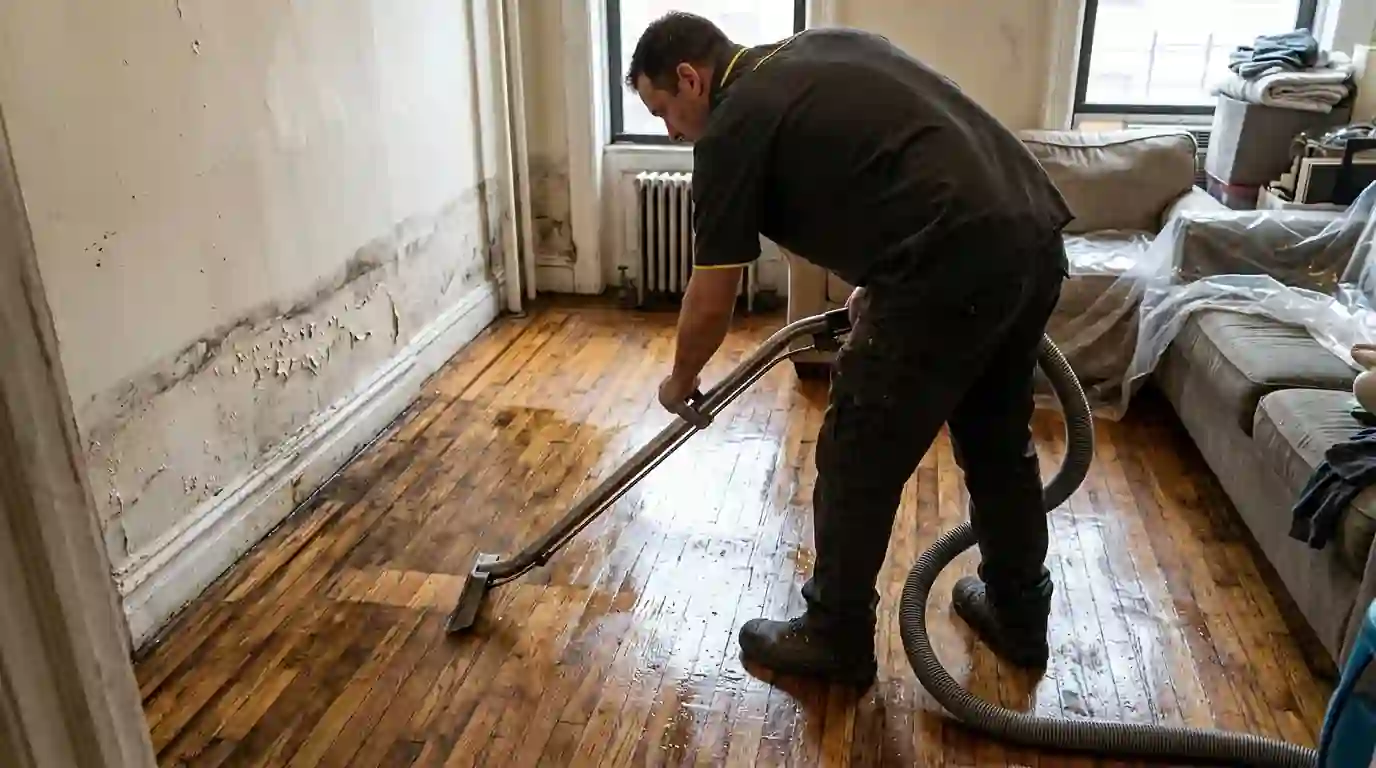
Restoration is the whole sequence after the water stops: getting it out, finding everywhere it went, drying the structure and replacing what couldn't be dried. Skipping a step is how people end up with mold behind a freshly painted wall.
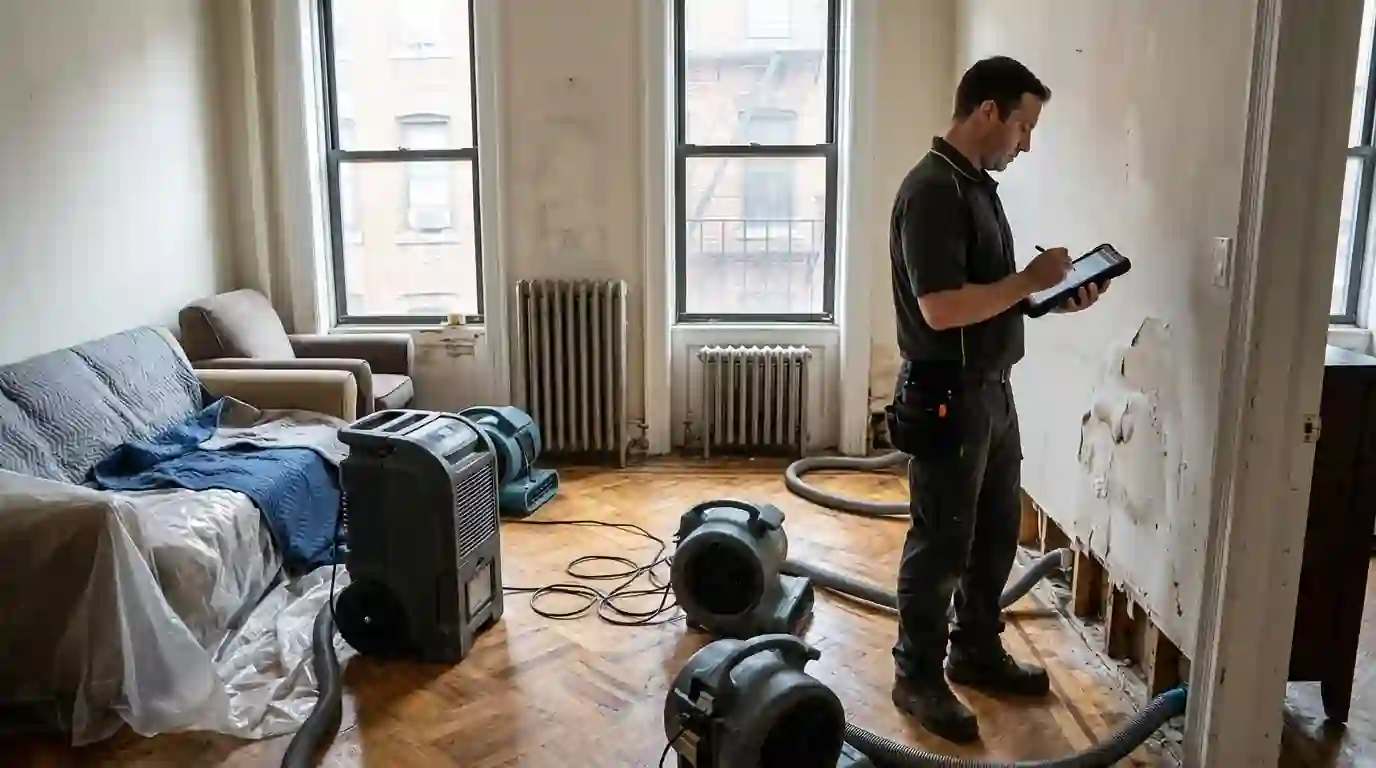
The work is measured, not guessed. We take moisture readings on day one, set equipment for the rooms and materials involved and log readings every day until each point matches a dry reference. That log, with photos, is also what your adjuster will want.
Clean water losses
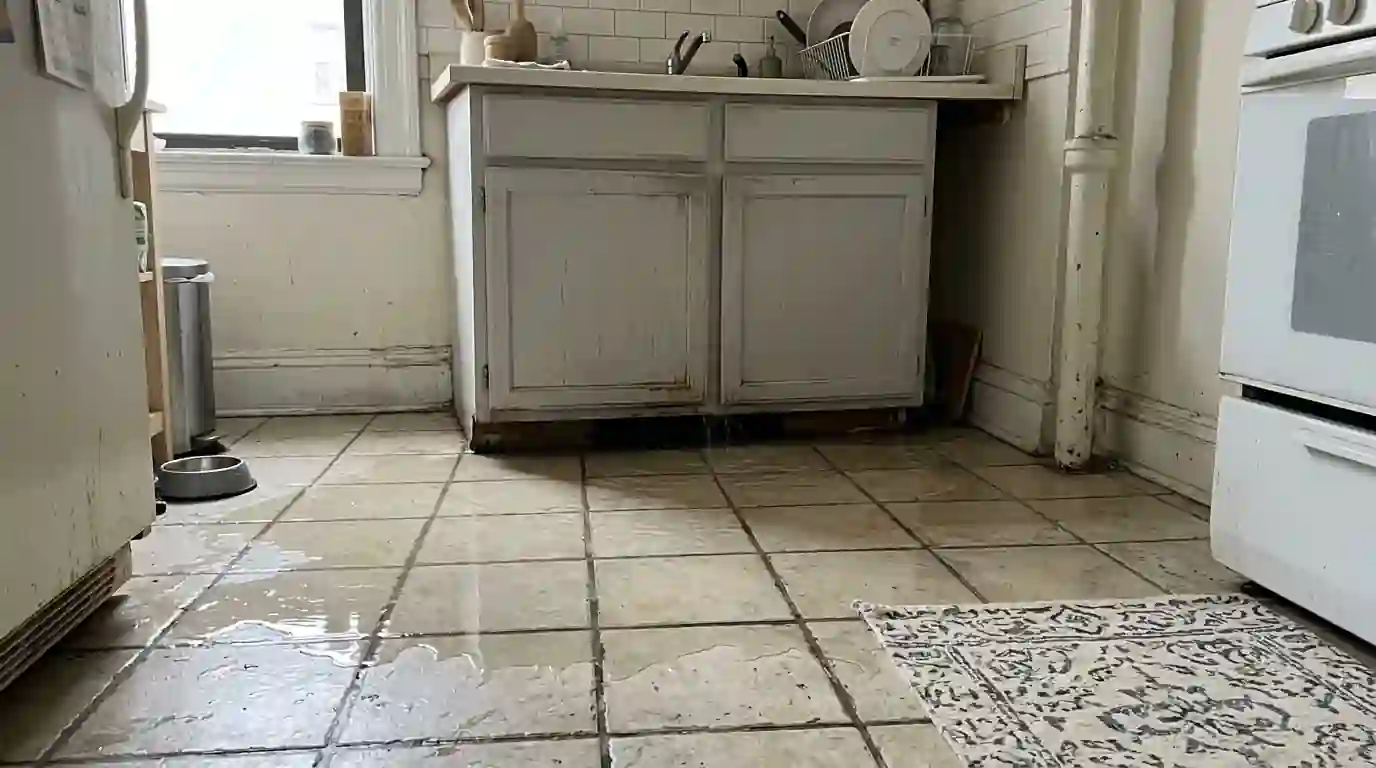
A burst supply line, a leak from upstairs or rain through a window starts as clean water. Caught quickly, most materials can be dried in place: drywall, carpet, even hardwood. We extract, open only where readings require and dry. See burst pipes and ceiling leaks for the most common sources.
Gray water losses
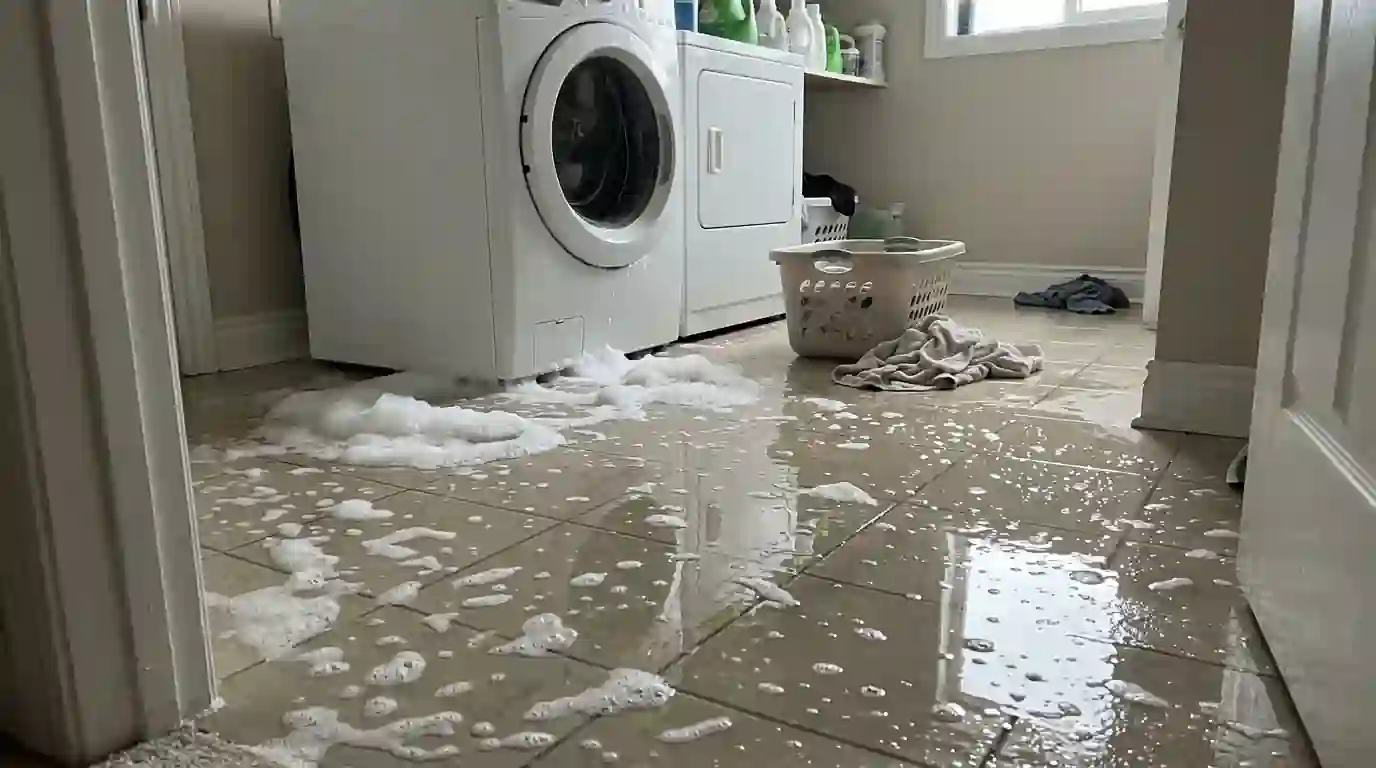
Washer and dishwasher overflows, toilet tank water and clean water left sitting too long fall in the middle. They carry more contaminants, so porous materials they soaked are often cleaned or removed instead of just dried, and surfaces are sanitized as well.
Wet drywall and plaster
Drywall and plaster wick water up from the floor and down from a ceiling. We read them from outside first, then open at the right height to dry the cavity. Plaster holds water longer than drywall and needs more patience. Repairs are covered on our drywall and plaster page.
Water under the flooring
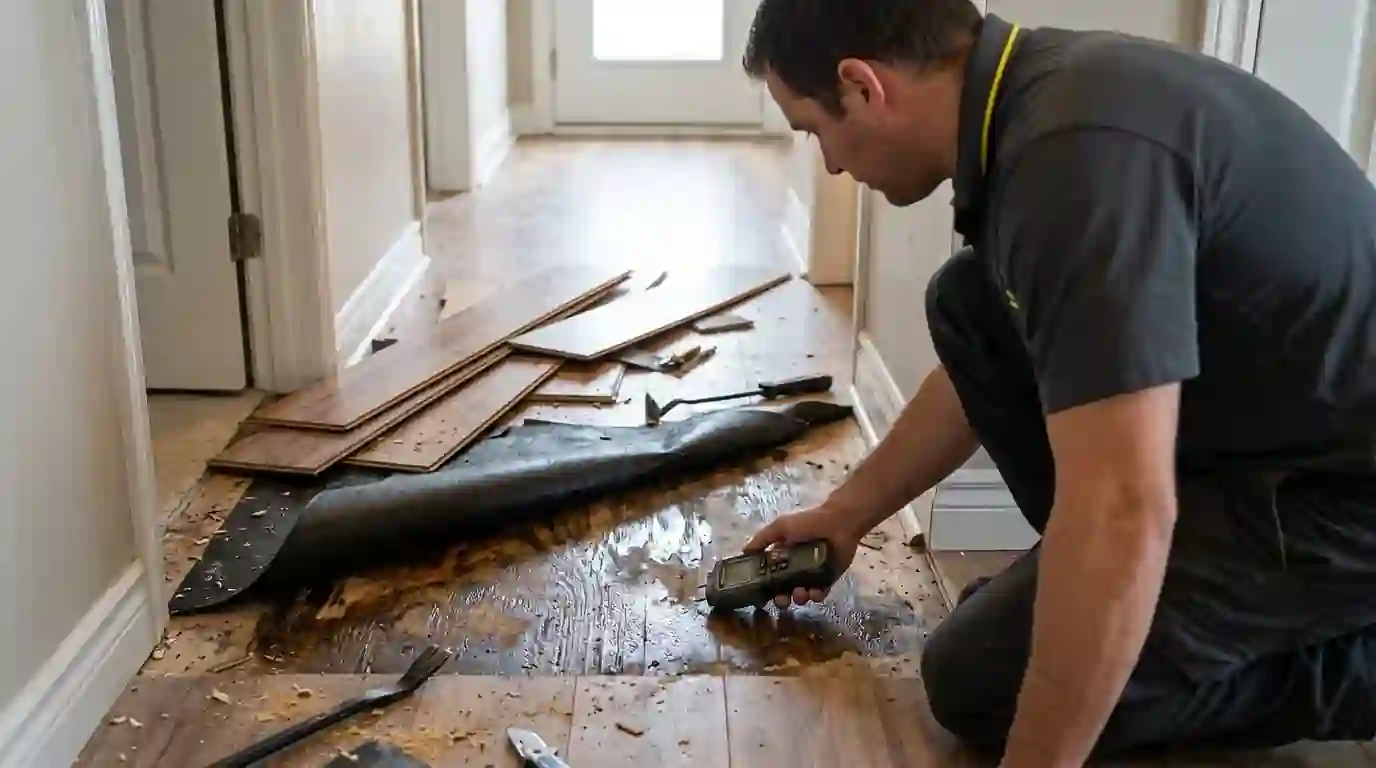
The water you can't see often sits under floors: in carpet pad, under laminate and vinyl, in the subfloor and in the gaps of hardwood. Thermal imaging and meters find it. Some floors can be dried in place with the right equipment; floating floors often have to come up. Our hardwood floor page covers that call.
How we restore water damage
Stop and assess
We confirm the source is stopped and read every affected room.
Extract
Standing water comes out of floors, carpet and below-grade spaces.
Map moisture
Meters and thermal imaging show where water went inside walls and floors.
Dry and log
Equipment runs with readings logged daily until every point is dry.
Repair
Drywall, plaster, flooring and finishes go back once dry.
Why the city takes water from above and below
About 60 percent of New York City drains stormwater and sewage through the same pipes, and DEP logged an average of 12,569 sewer backup complaints a year between 2019 and 2023. Add older buildings with stacked plumbing, and a water call here can come from the apartment above, the pipe in the wall or the drain in the cellar. Sorting out which one it is shapes the whole job.
Water still spreading?
The sooner it's out, the more stays in place. Call and we'll start.
Clean, gray and black water
| Category 1: clean | Category 2: gray | Category 3: black | |
|---|---|---|---|
| Typical source | Supply lines, rain through a window | Washer, dishwasher, toilet tank | Sewage, floodwater, toilet bowl |
| Porous materials | Usually dried in place | Often cleaned or removed | Removed and bagged |
| Published mitigation price | About $3.50 per sq ft | About $5.25 per sq ft | About $7.50 per sq ft |
| Watch for | Turns gray if left sitting | Odor and bacteria | Health risk; keep people out |
Clean water left for a day or two degrades into gray water, which is why speed matters.
What water damage restoration costs
Published ranges for planning; your job's price depends on the factors below.
| Job | Typical range | Source |
|---|---|---|
| National average, water damage restoration | national average about $3,865; most jobs $450 to $16,000 | Angi data as published by SERVPRO, 2026 |
| Typical total | $2,000 to $6,000 | HomeGuide |
| Mitigation by water class, per square foot | about $3.50 clean, $5.25 gray, $7.50 black water | Angi data as published by SERVPRO, 2026 |
| Extraction and drying, per square foot | $4 to $12 | HomeGuide |
These are planning ranges from published national cost guides, not a quote and not our price. We give you a written scope after we have measured the damage.
Time wet
The longer materials stay wet, the more has to come out.
Water category
Gray and black water add cleaning and removal.
Area and floors
More rooms and more floors mean more equipment and readings.
Materials
Plaster, hardwood and tile cost more to dry or replace than drywall and carpet.
Access
Walk-ups, elevator bookings and work hours affect time on site.
Mold found
Growth found during drying adds remediation.
Rebuild
Finishes, cabinets and flooring chosen for the repair set the final number.
Water damage questions
What people ask most in the first day.
As fast as possible. Materials can start growing mold within 24 to 48 hours, and clean water turns dirty if it sits.
A small clean spill, maybe. Fans without dehumidifiers just move damp air around, and you can't see what's wet inside the wall.
Readings, not touch. We log readings until each point matches a dry reference and show you the log.
Sudden water from inside the building is commonly covered; flooding from outside usually needs a flood policy. We document for either.
Yes. The same company that dries the building puts it back together.
We document the source and each unit separately, so both insurers see their own rooms.
Related water services
Emergency Water Removal
Truck-mounted and portable extraction for standing water on any floor.
Structural Drying
Dehumidifiers, air movers and daily readings until the structure is dry.
Leak Detection
Thermal imaging and moisture mapping to find where the water actually went.
Burst Pipe Water Damage
Frozen, split and failed supply lines, and the walls they soaked.
Ceiling Leak Water Damage
Ceilings, walls and floors soaked by a leak from the unit or roof above.
Water damage in your home right now?
Stop the source if you can and call. We answer around the clock and start the same visit.
Updated September 2026