Wind, rain and fallen limbs, answered 24/7
Storm damage cleanup and repair in New York, NY and Long Island
Storm let water into the house? We cover the opening first so it stops getting worse, then extract, dry and rebuild the rooms that took water.
- Answering 24/7
- Cover, then dry
- Photos for your claim
Quick answer
Storm damage in a New York, NY or Long Island home usually means two jobs at once: covering the opening so rain stops coming in, and drying what already got wet. Published guides put emergency board-up and tarping at about $300 to $1,500. We photograph, cover, extract and dry, in that order.
Storm damage is two jobs, not one
The outside job is stopping more water: a roof tarp, a board-up over a broken window, sheeting over a torn wall. It has to happen first, or every hour of rain adds to the inside job.
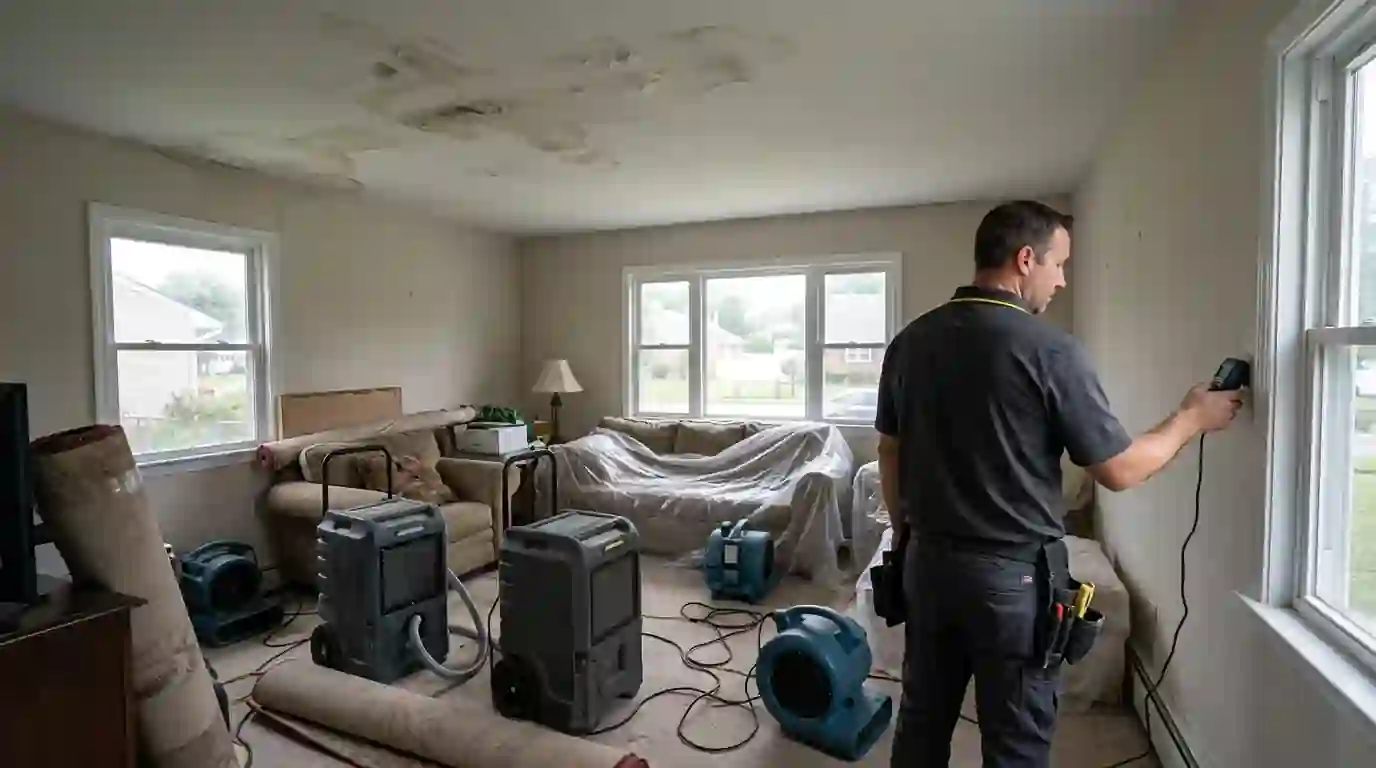
The inside job is the water that already got in. Wind-driven rain soaks insulation, runs down inside walls and sits in ceilings well away from the opening. We extract, map the moisture and dry the structure, then rebuild once the permanent exterior repair is done.
Storm damage that's easy to miss
Check these after the wind drops, even if nothing looks broken.
New stains after the storm
A stain that appears after heavy wind means water got in somewhere above it.
Shingles or flashing on the ground
Pieces in the yard mean a gap on the roof, even if you can't see it from below.
Wet window sills and frames
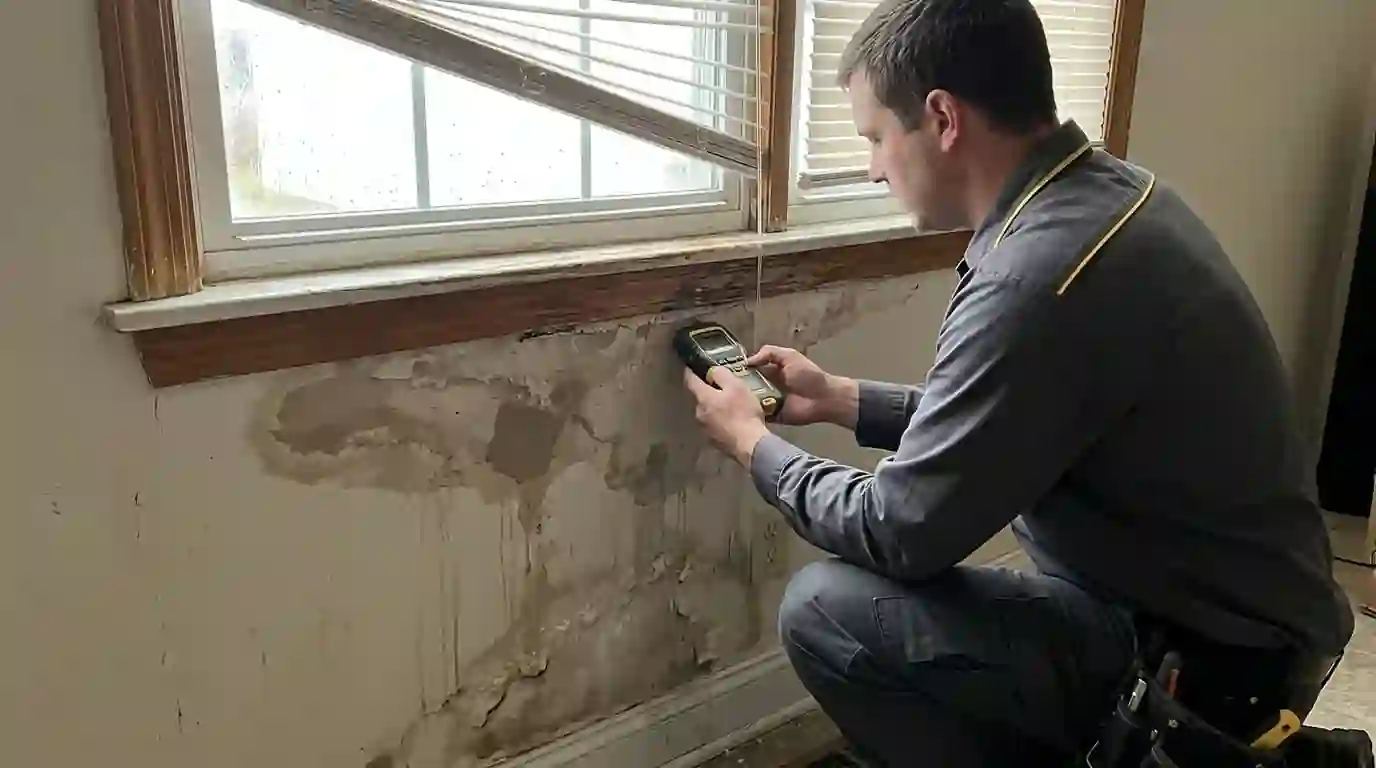
Wind-driven rain gets past window seals and soaks the wall below the sill.
Damp insulation in the attic
Attic insulation soaks up water long before a ceiling stains.
Water in the basement or crawl space
Heavy rain overwhelms grading and window wells even when the roof is sound.
Wind-driven rain through walls and windows
Rain driven sideways by wind gets in where normal rain never does: past window seals, through gaps at siding and trim, and into brick with failing mortar. The water runs down inside the wall and shows up at the baseboard or the ceiling below. We read the walls under every window on the storm side, not just the one that dripped.
Fallen tree and limb damage
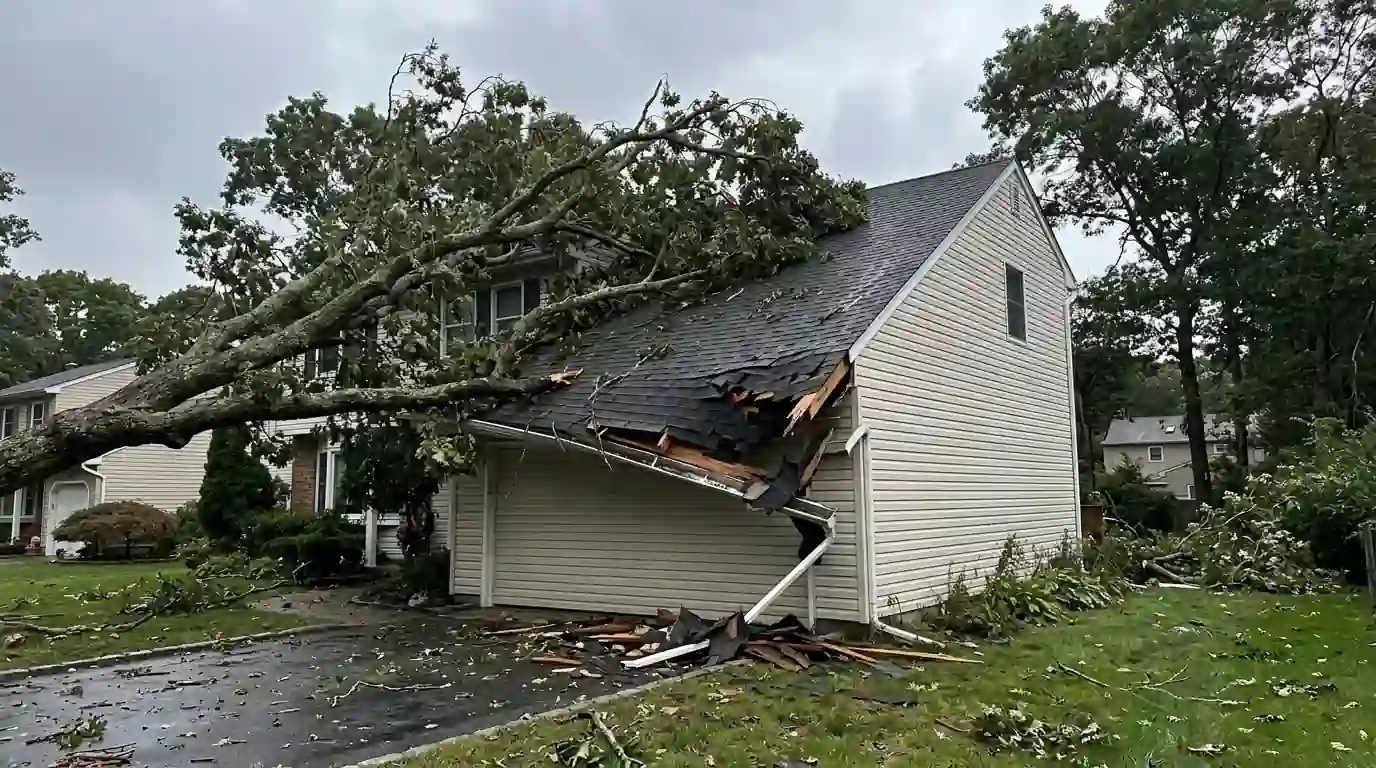
A limb through a roof opens a hole and cracks the framing around it. Once the tree crew has cleared it, we cover the opening, remove wet insulation and broken ceiling, and dry the rooms below. The photo record from before and after the removal is the part your insurer will ask for first.
Ice dam leaks
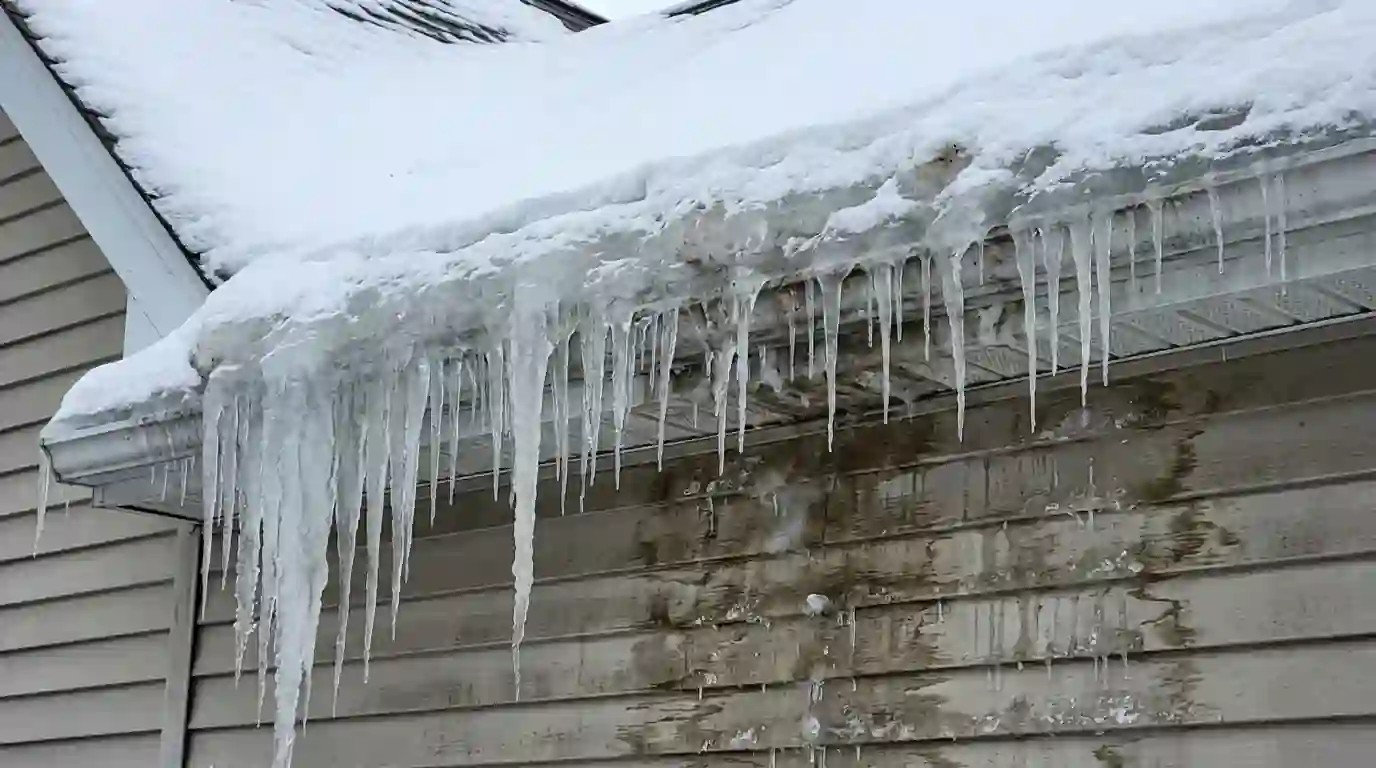
In winter, snow melting on a warm roof refreezes at the cold eave and builds a ridge of ice. Water backs up behind it, under the shingles and into the wall and ceiling below. The leak often starts inside the exterior wall, so we open and dry at the eave line and check the insulation that let the heat escape.
What we do after a storm call
Photograph
We record the outside damage and every wet room before anything is moved.
Cover the opening
Tarps, sheeting or board-up stop more water getting in.
Extract
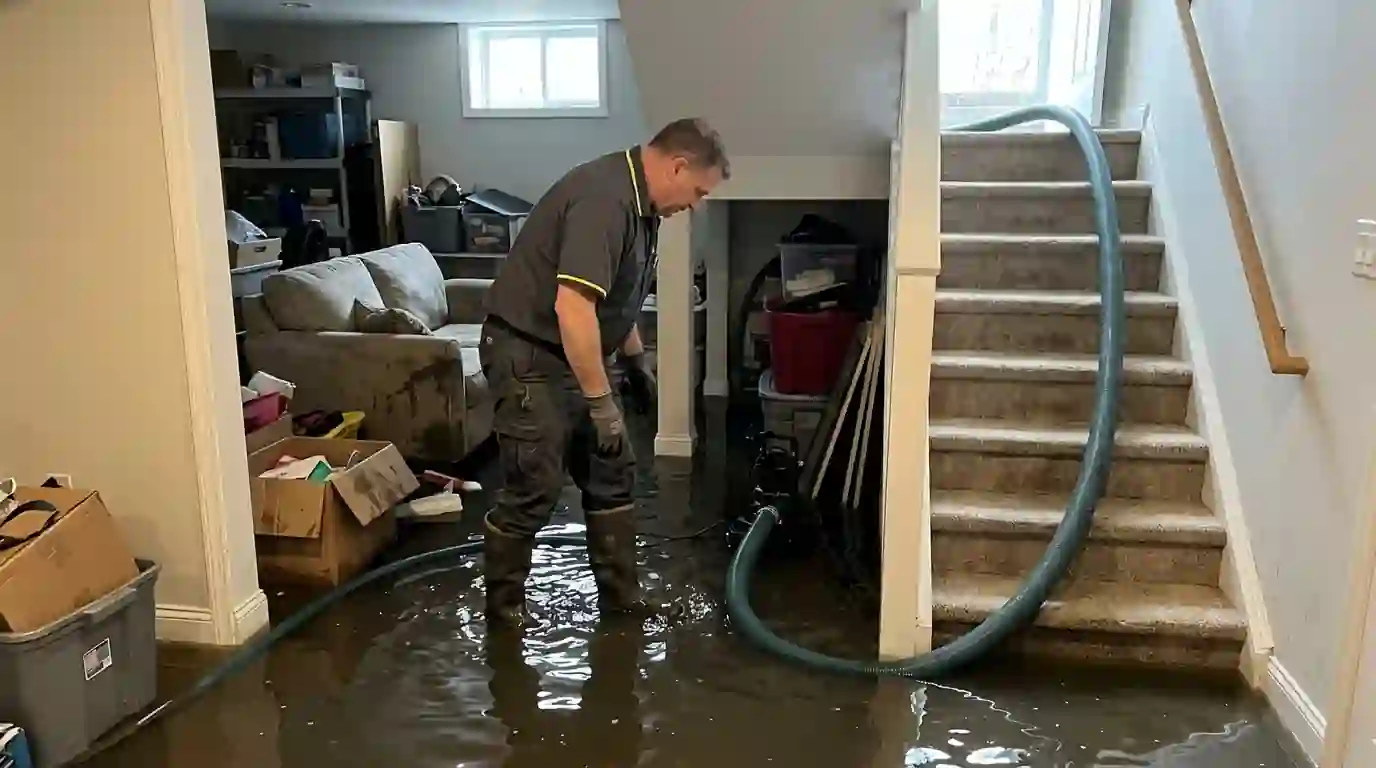
Standing water comes out of floors, carpet and basements.
Dry and log
Dehumidifiers and air movers run with daily readings until the structure is dry.
Rebuild
Insulation, drywall, plaster and finishes go back after the exterior is repaired.
How long storm drying takes
Drying can only finish once the opening is sealed. If a permanent roof repair is weeks away, the tarp has to hold and we keep checking the rooms below after each storm.
Rooms that took rain for a few hours usually dry faster than a wall that soaked for days behind an ice dam. The daily readings tell you where you stand; we pull equipment when every point is dry.
Storms on the North Shore and the Sound Shore
The August 2024 storm dropped its heaviest rain over Smithtown and Port Jefferson, and swiftwater rescues were concentrated in the Town of Brookhaven. North of the city, Ida dropped an estimated 8.5 inches on the Village of Mamaroneck in under 12 hours, where two rivers meet, and Port Chester flooded too. After storms like those, the calls come from both directions at once: water through the roof and water up from the basement.
What storm damage restoration costs
The opening, the rooms that took water and how long they stayed wet set the price.
| Job | Typical range | Source |
|---|---|---|
| Emergency board-up and tarping | $300 to $1,500 | HomeCostLab |
| Extraction and drying, per square foot | $4 to $12 | HomeGuide |
| Water damage restoration, overall | national average about $3,865; most jobs $450 to $16,000 | Angi data as published by SERVPRO, 2026 |
These are planning ranges from published national cost guides, not a quote and not our price. We give you a written scope after we have measured the damage.
Size of the opening
A bigger hole needs more covering and lets in more water.
Rooms affected
Every wet room adds drying equipment and readings.
Insulation
Soaked attic and wall insulation has to come out and be replaced.
Time to cover
Every hour of rain before the opening is covered adds to the inside damage.
Basement water
Water that also came up from below adds pump-out and extraction.
Debris
Limbs and broken material have to be cleared before covering.
Exterior repair wait
A long wait for the permanent repair extends monitoring.
Storm damage questions we get
What people ask while the storm is still passing.
Get everyone away from damaged areas and downed lines, then photograph the damage. Call us to cover the opening and your insurer to open a claim.
Rain that gets in through storm damage to the roof or walls is commonly covered. Flooding from outside at ground level usually needs a separate flood policy.
Tree removal is a tree service job. Once it's off the roof, we cover the opening and handle the water inside.
Yes. The tarp holds in the meantime, and we dry what we can and recheck after each storm.
We dry the wall and ceiling the ice dam soaked and note where heat is escaping so it can be fixed before the next snow.
Yes. The same number covers the city, Long Island and the towns just north of it.
Related storm and flood services
Emergency Roof Tarping
Tarps and temporary covers on pitched, flat and parapet roofs.
Emergency Board-Up
Plywood over broken windows, doors and storefronts after fire or impact.
Flood Damage Restoration
Floodwater from storms and surge, handled as contaminated water from the start.
Basement Flood Cleanup
Pump-out, tear-out and drying for basements that took on water.
Structural Drying
Dehumidifiers, air movers and daily readings until the structure is dry.
Storm let water into the house?
Call and we'll cover the opening first, then get the water out. We answer around the clock.
Updated September 2026