Walls and ceilings rebuilt after water
Drywall and plaster repair after water damage in New York, NY
Wall or ceiling stained, soft or cracked after a leak? We make sure it's dry first, then patch drywall, restore plaster and rebuild moldings so the repair doesn't show.
- Answering 24/7
- Prewar plaster and lath
- Moldings and ceilings
Quick answer
Water-damaged drywall in a New York, NY apartment can often be patched once it tests dry, while prewar plaster on lath needs a different repair. Published guides put drywall replacement at about $1.50 to $3 per square foot and plaster repair at about $6 to $19. We dry first, then repair to match the wall.
Why the wall has to be dry before it's repaired
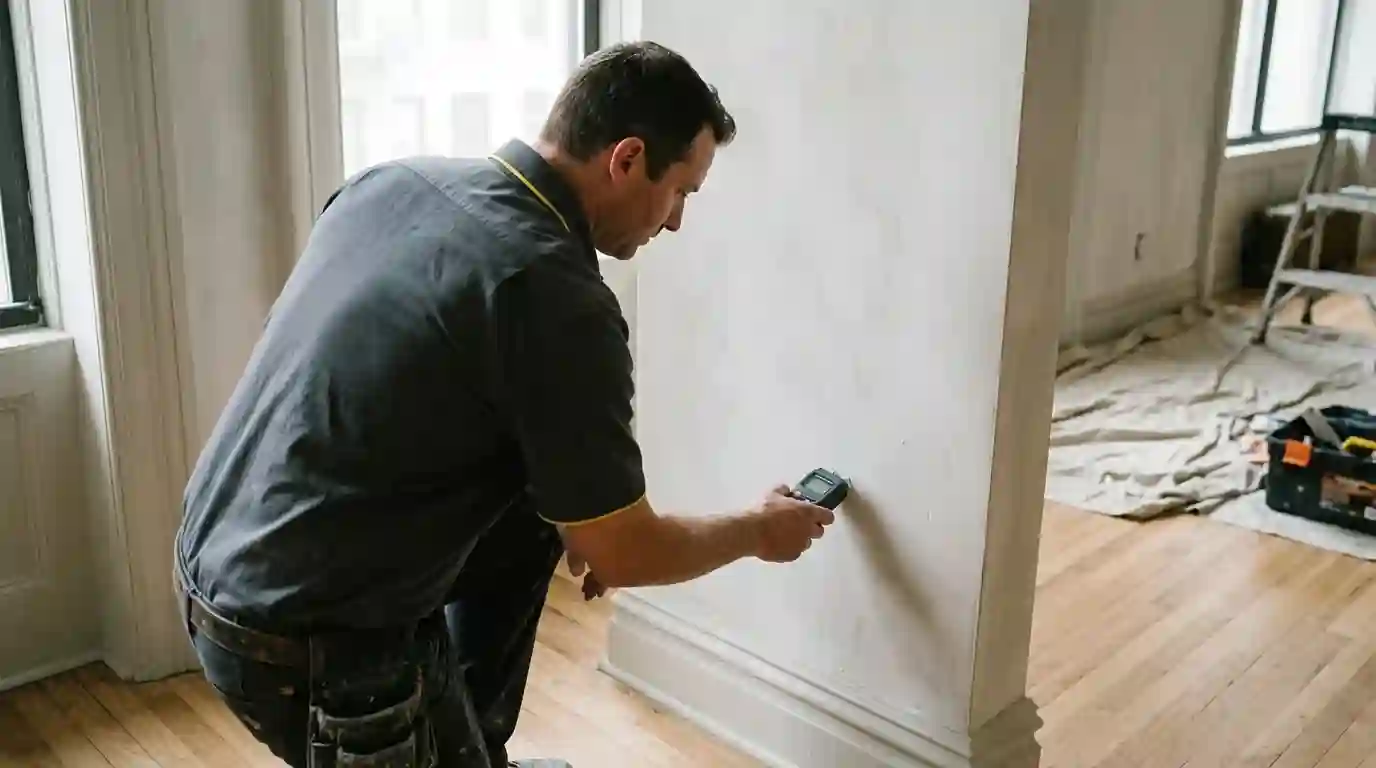
Paint and joint compound over a wet wall fail within weeks. The stain bleeds back through, the tape lifts and anything still damp behind the surface can start growing. So every repair starts with a moisture reading, and nothing is closed until the wall matches a dry reference.
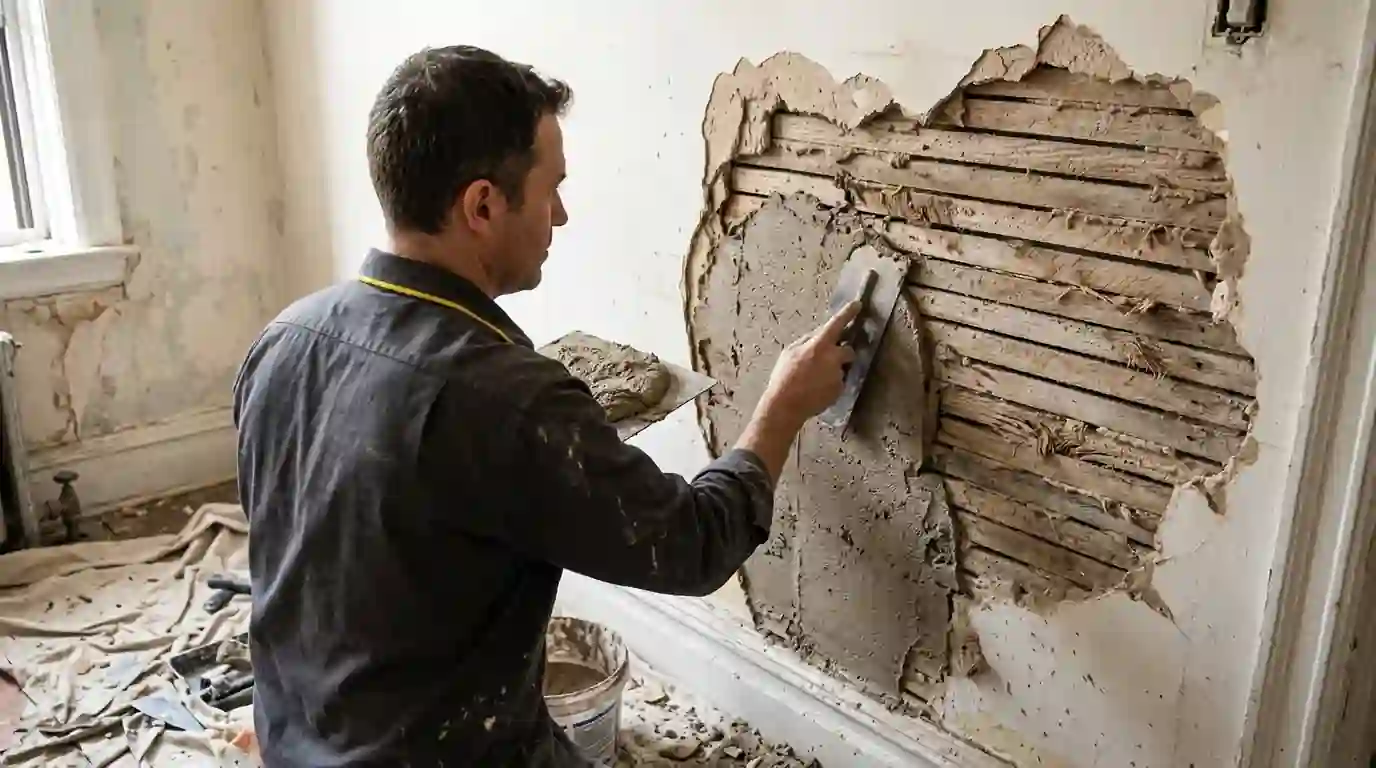
Then the question is what the wall is made of. Drywall is cut out and replaced in sections. Plaster on wood or metal lath is heavier, harder and keyed to the lath, and patching it with drywall leaves a visible seam and a different sound when tapped. We repair plaster with plaster wherever it makes sense.
What drywall and plaster repair costs
Material, area and finish level decide the price.
| Job | Typical range | Source |
|---|---|---|
| Drywall replacement after water, per square foot | $1.50 to $3 | HomeAdvisor |
| Plaster repair, per square foot | $6 to $19 | HomeAdvisor |
These are planning ranges from published national cost guides, not a quote and not our price. We give you a written scope after we have measured the damage.
Plaster or drywall
Plaster is slower, more skilled work than drywall.
Area
A full wall or ceiling costs more than a patch, but less per foot.
Height
Tall prewar ceilings need scaffolding or taller ladders.
Moldings
Running or casting a matching profile adds time and material.
Growth behind the wall
Treatment and extra removal add to the job.
Finish level
Smooth skim coats and old texture matching take extra coats.
Paint
Blending paint across a whole wall may be needed to hide the repair.
Plaster and drywall after water damage
| Prewar plaster on lath | Drywall | |
|---|---|---|
| How it fails | Loses its bond to the lath, cracks, bulges | Swells, softens and crumbles at the bottom |
| Drying | Slower, holds moisture longer | Faster once the cavity is open |
| Usual repair | Re-secure, patch with plaster, skim coat | Cut out and replace the section |
| Price band | About $6 to $19 per square foot | About $1.50 to $3 per square foot |
Price bands are published national planning ranges, not a quote.
Prewar plaster and lath
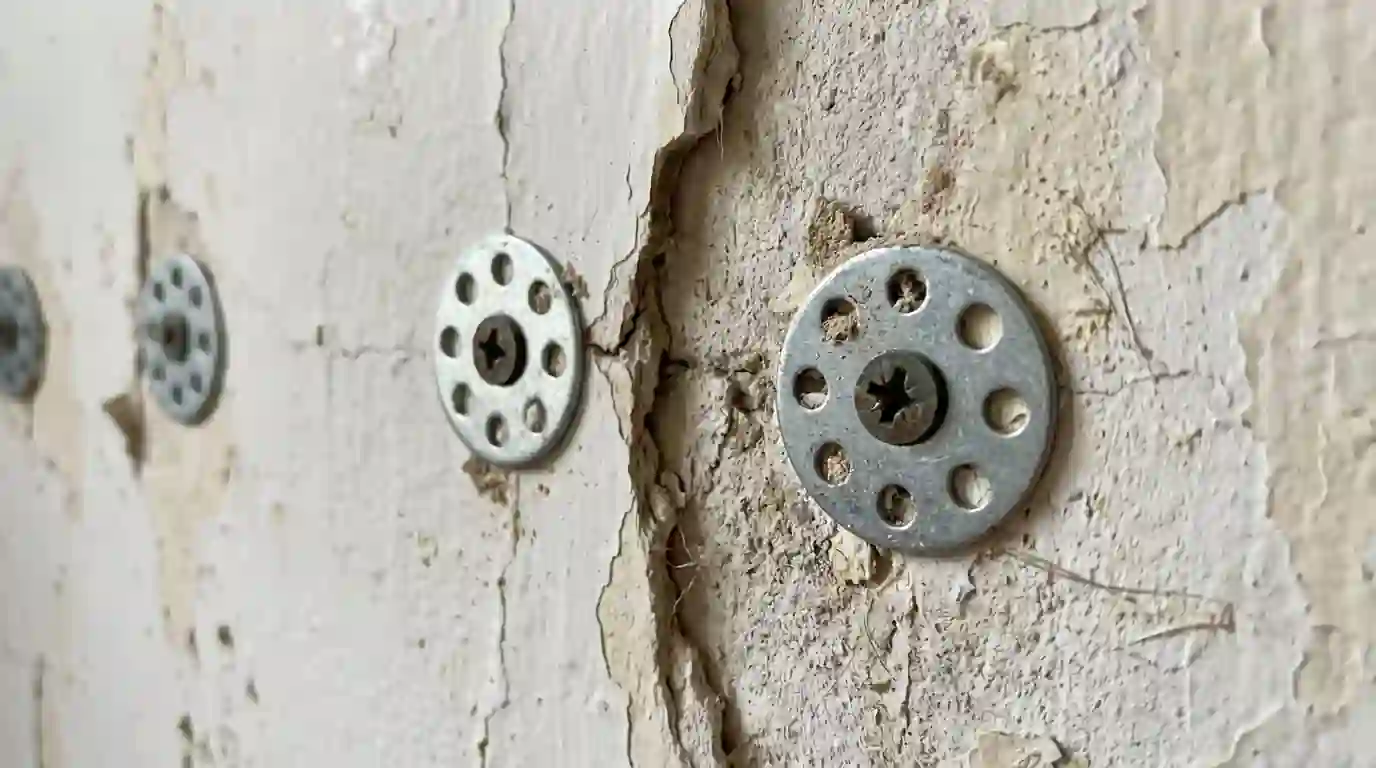
Water loosens the keys that hold plaster to the lath, so a wall can look fine and still sound hollow when tapped. We re-secure what is still sound with plaster washers, remove what has let go and build the patch back in layers, base coat and finish, so it sits flush and hard like the wall around it.
Drywall patch and replacement
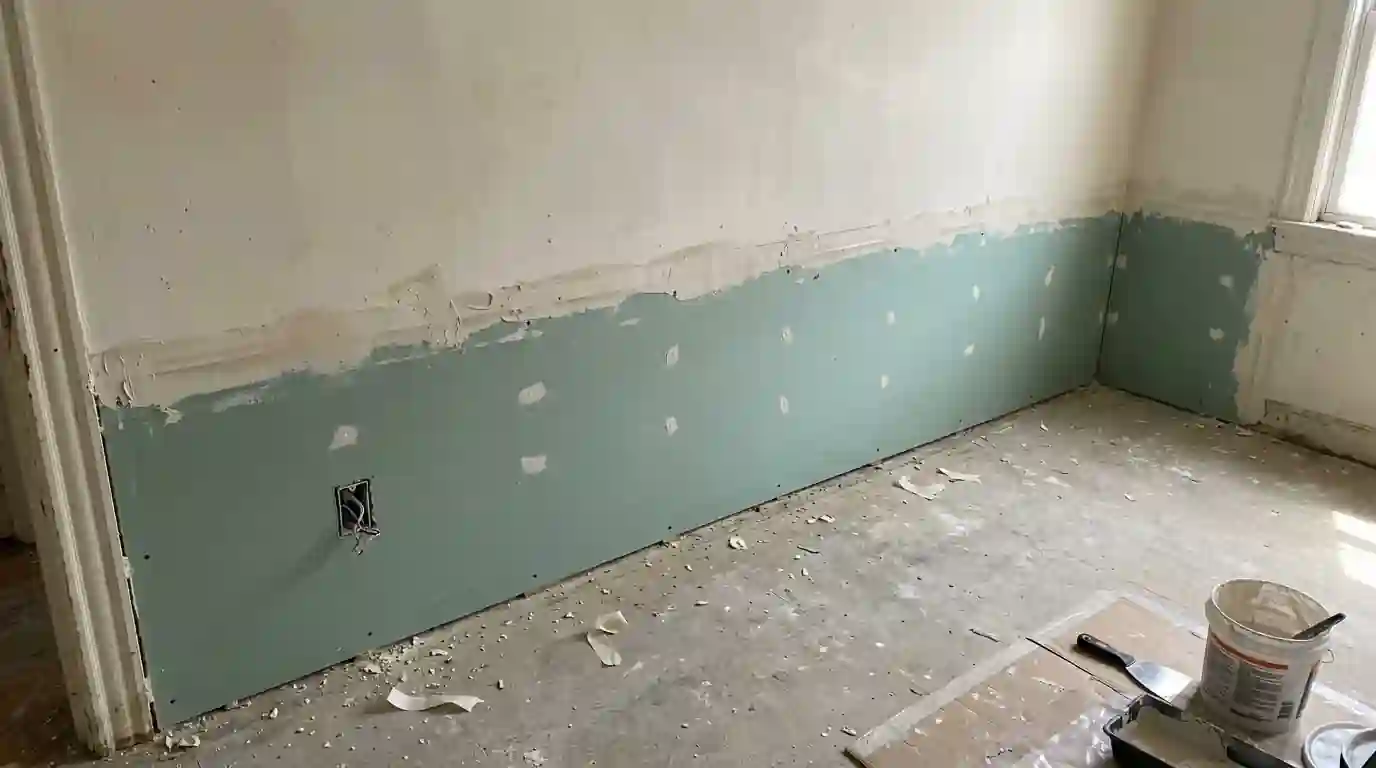
Drywall that stayed wet swells at the bottom edge and loses its strength. We cut above the wet line, dry the cavity with structural drying equipment, then hang new board, tape, finish and prime. Small, clean-water spots dried quickly can often stay; the readings decide.
Plaster ceilings and moldings
Ceilings carry the most weight when water sits on them, and prewar ceilings often have crown molding or a medallion tied into the damage. We shore or remove the failed section, rebuild the ceiling and run or cast the molding profile to match the original, so the room still reads as one piece.
What a wall and ceiling repair includes
The finish is the part you see; most of the work is before it.
- Moisture readings to confirm the wall and cavity are dry
- Removal of plaster or drywall that has lost strength or bond
- Treatment of any growth found behind the surface
- Re-securing sound plaster with washers where it has loosened
- Patching in matching material, plaster for plaster and board for board
- Molding and trim repaired or run to match the original profile
- Stain-blocking primer and paint blended to the surrounding wall
Plaster in prewar buildings, drywall on Staten Island
Prewar low-rise buildings with masonry walls make up a large share of the city's apartment stock, and their walls are plaster on lath or plaster straight on brick. Staten Island is the exception: it's the only borough where most housing units were built after 1960, so wall repairs there are usually drywall. We bring the materials for the building we're walking into, which is why we ask its age on the first call.
How a wall repair runs after water damage
Confirm it's dry
Readings on the damaged area are compared to a dry reference point.
Open what failed
We remove only material that has softened, crumbled or lost its bond.
Rebuild the layers
Lath, board, plaster coats or compound go back in the right order.
Match the finish
Texture, molding and edges are matched so the patch disappears.
Prime and paint
Stain-blocking primer first, then paint blended into the surrounding wall.
Wall and ceiling repair questions
What people ask once the leak is fixed.
It can be done, but it shows. The surface, edge and sound differ. We repair plaster with plaster where the wall is worth keeping.
A moisture meter reading compared with a dry part of the same wall. Touch and color are not reliable.
Not if the wall is dry, the source is fixed and a stain-blocking primer goes on before the paint.
Yes. We run a new section to the existing profile or cast one from a sample.
Drywall compound is usually ready in a day or two. Plaster needs longer to cure before paint.
Usually. Sound plaster is harder and quieter than drywall and matching it keeps the wall even.
Related rebuild services
Water & Fire Damage Reconstruction
Kitchens, baths and basements rebuilt once the structure is dry.
Hardwood Floor Water Damage
Cupped strip, plank and parquet floors dried in place or replaced.
Structural Drying
Dehumidifiers, air movers and daily readings until the structure is dry.
Ceiling Leak Water Damage
Ceilings, walls and floors soaked by a leak from the unit or roof above.
Contents Pack-Out
Belongings inventoried, packed out, cleaned and returned after a loss.
Walls or ceilings to put back after a leak?
Call and tell us what the wall is made of and what happened. We'll tell you whether it needs drying first.
Updated September 2026