Category 3 cleanup, answered 24/7
Sewage backup cleanup in New York, NY basements and ground floors
Sewage coming up through the basement drain? Stay out of it, keep children and pets away and call. We pump out, remove what it soaked, disinfect and dry.
- Answering 24/7
- Category 3 water
- Basements and ground floors
Quick answer
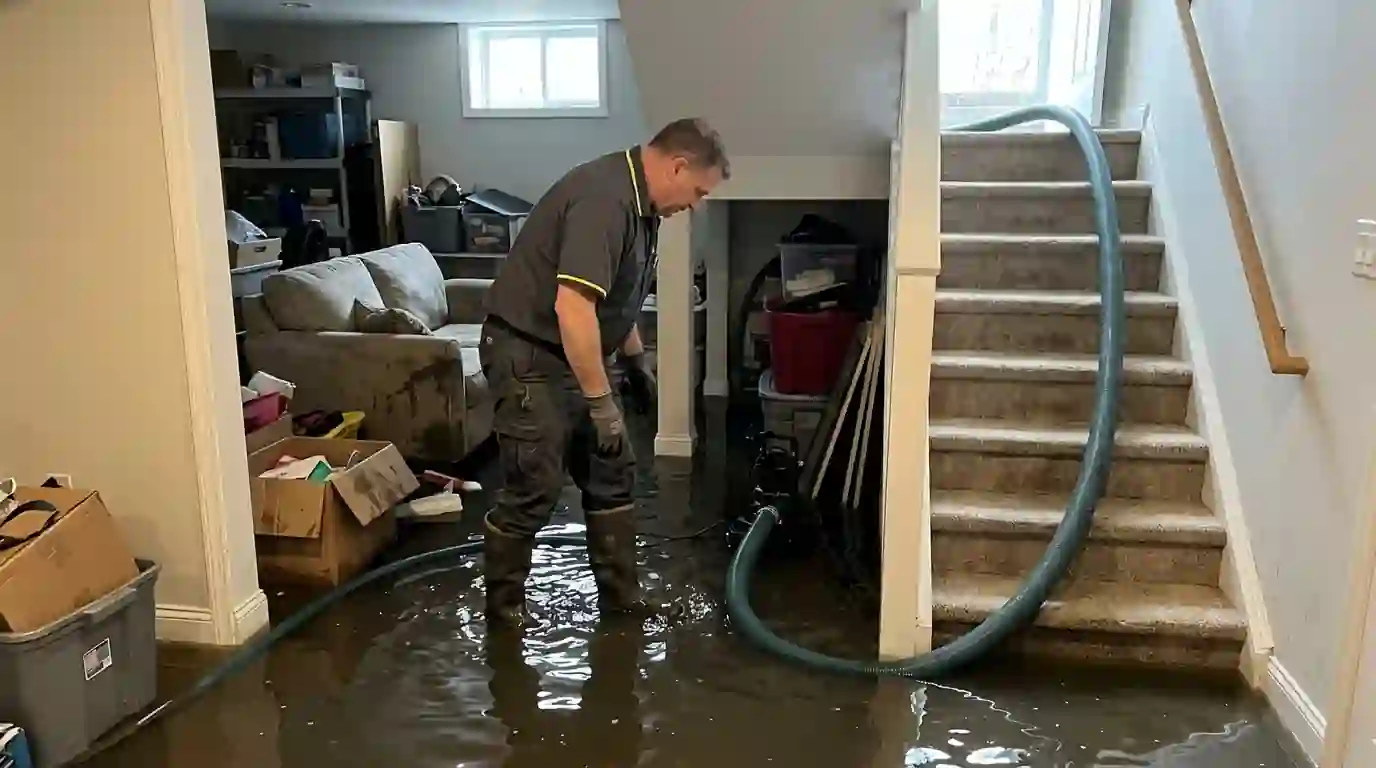
A sewage backup in a New York, NY basement is Category 3 water, the most contaminated class, so anything porous it soaked usually has to go. Published guides put sewage cleanup at about $7 to $15 or more per square foot. Stay out of the water, keep children and pets away and call; we pump, remove, disinfect and dry.
Why sewage cleanup is handled differently
Sewage carries bacteria and viruses that cling to everything the water touches. Drywall, carpet, pad, insulation and cardboard that it soaked can't be cleaned well enough to keep, so they come out and are bagged. Hard surfaces, concrete and framing are cleaned, disinfected and dried.
The work is done in protective gear with the area sealed from the rest of the house, so the cleanup doesn't carry contamination upstairs. We document what was removed and why, because that list is what your claim will turn on.
Warning signs before a sewer backup
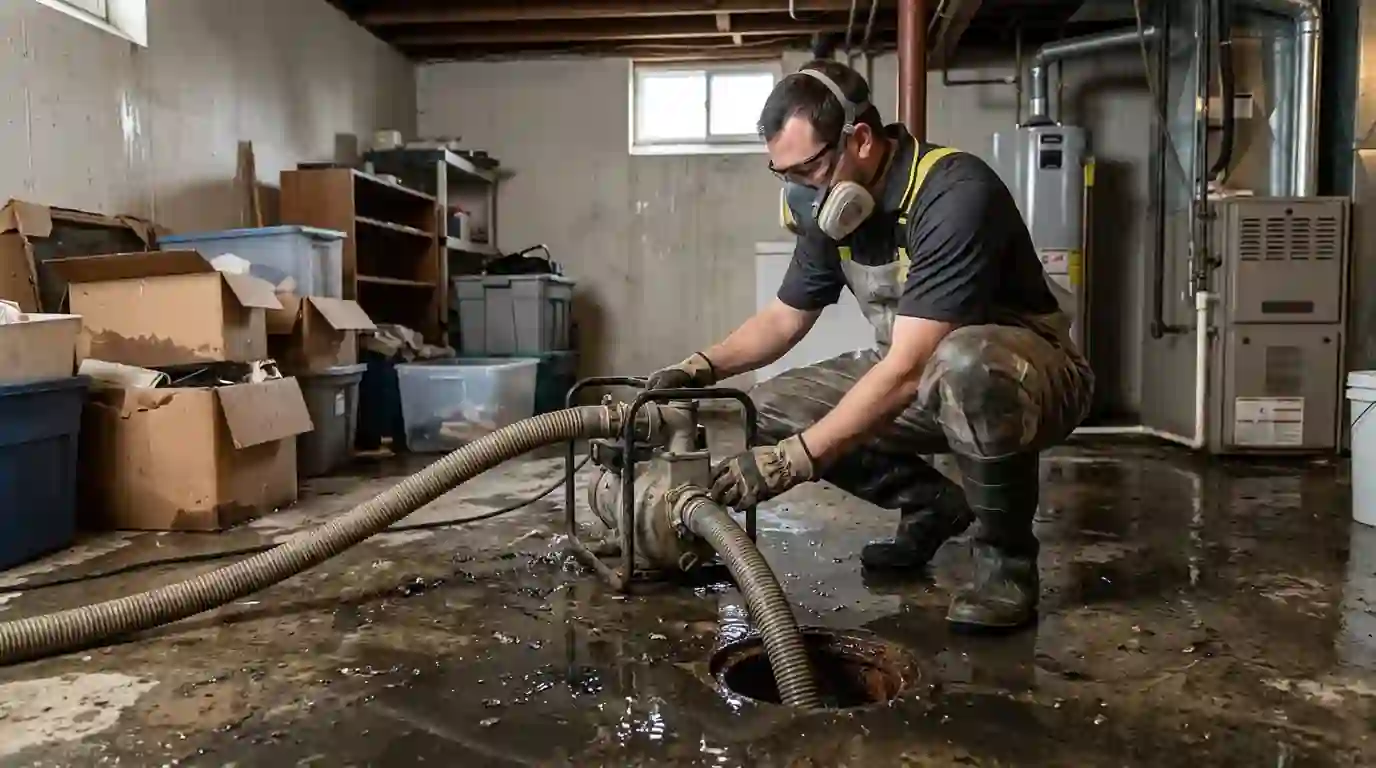
Backups usually give a little notice first.
Gurgling floor drains
A basement drain that gurgles in heavy rain is pushing air ahead of water.
Slow drains on the lowest floor
When every fixture downstairs drains slowly, the problem is the main line, not one clog.
Sewer smell in the basement
A smell near a floor drain means the trap is dry or gas is coming back up.
Water around the floor drain after rain
A ring of water or sediment around a drain is a backup that stopped short.
Backups during cloudbursts
If it happens in heavy rain, the city sewer is surcharging into your line.
Rain-driven sewer backups
In a combined sewer, stormwater and sewage share the pipe. When a cloudburst fills it, the water looks for the lowest opening, and that is often a basement floor drain or toilet. These backups happen fast and in many houses on the same block at once. Where the building needs it, a backwater valve, which the NYC Plumbing Code calls for where fixtures can take backflow, is the fix that stops the next one. See basement flooding for water that comes in through walls instead.
Main line clogs and grease
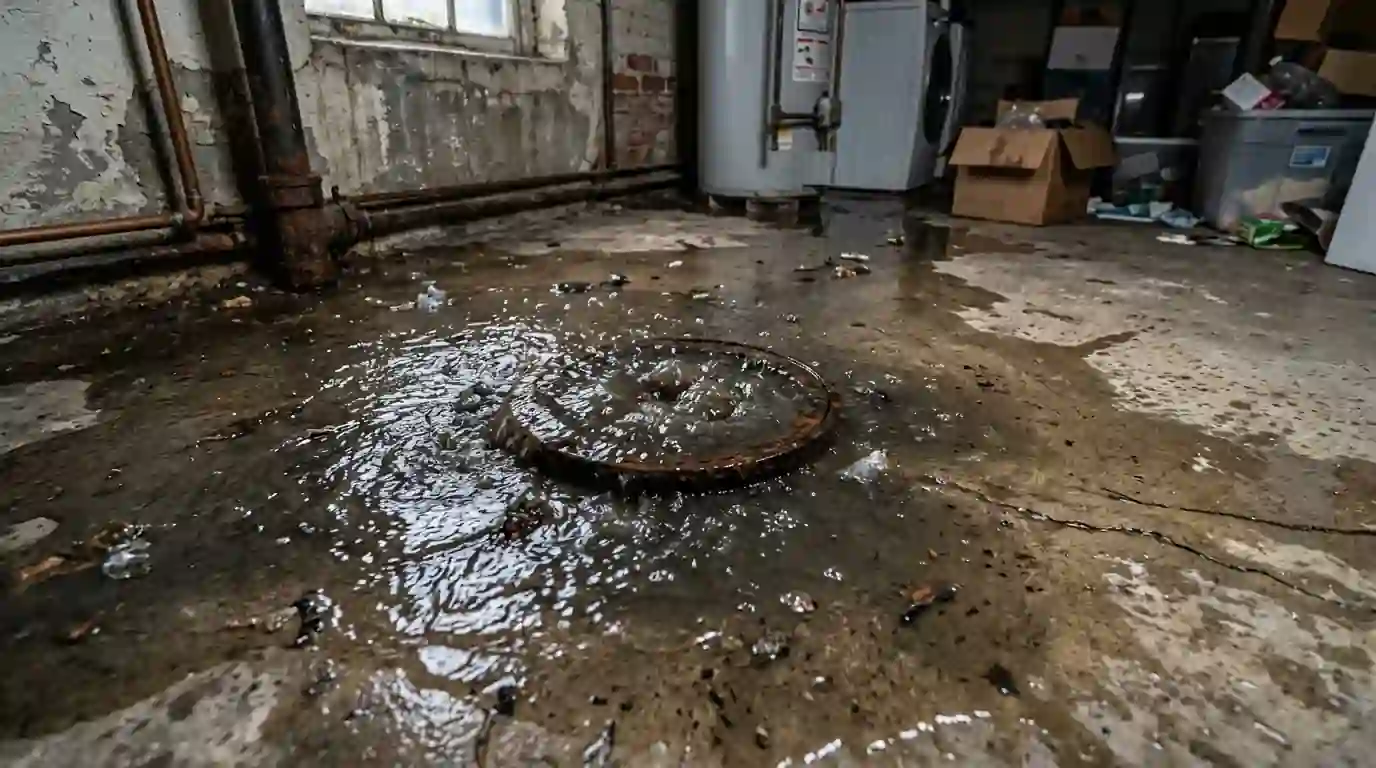
When the backup happens on a dry day, the cause is usually the building's own line: roots, a collapsed section or grease. The city's environmental agency has attributed more than 60 percent of confirmed sewer backups to grease poured down kitchen drains. The line gets cleared by a plumber; we clean up what came out of it.
Floor drain backups
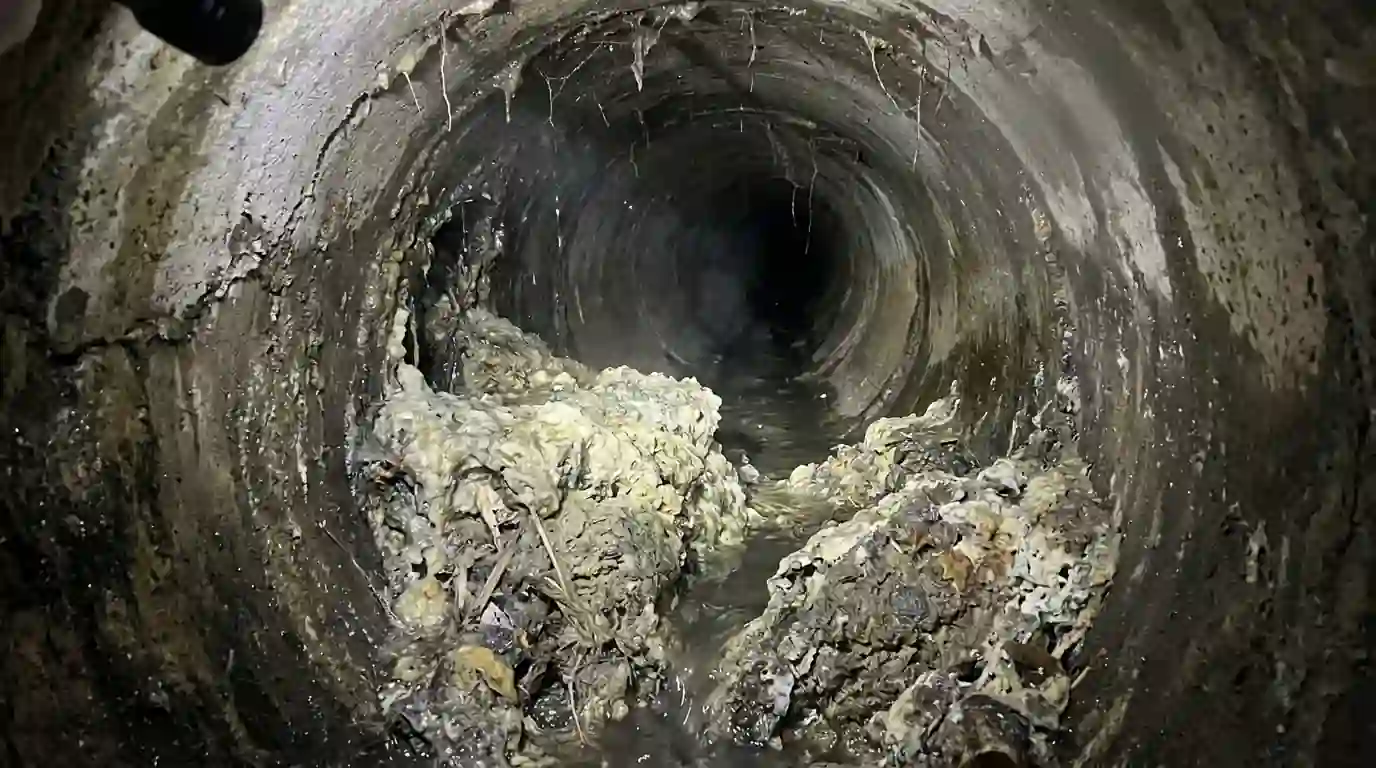
A backup that stays around the floor drain still counts as Category 3. We extract it, clean and disinfect the slab, remove anything porous within reach of the water and dry the area. If the drain's trap is dry and letting sewer gas in, that is worth fixing too, so the smell doesn't return.
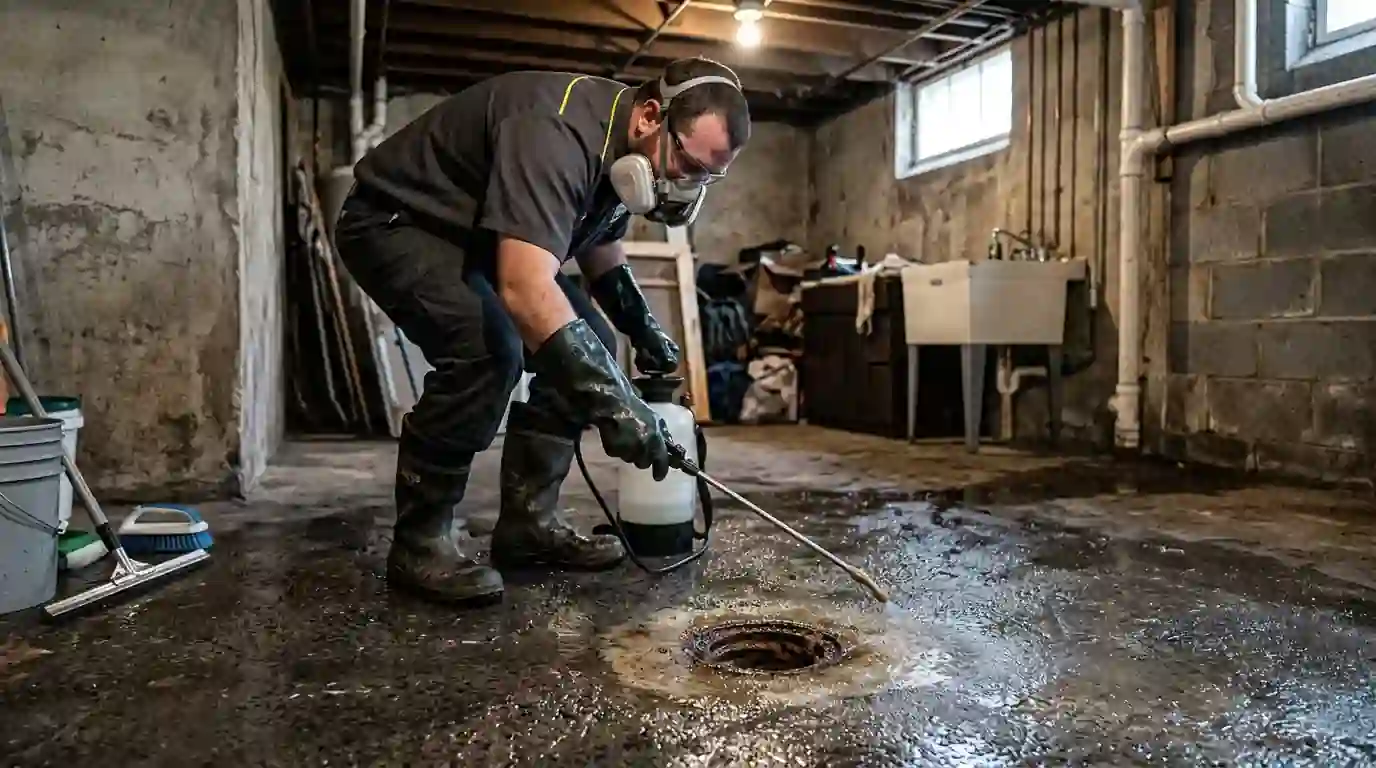
How a sewage backup job runs
Make it safe
Power to wet areas goes off and the area is closed to the rest of the house.
Pump and extract
Standing sewage is pumped and extracted and disposed of properly.
Remove porous materials
Carpet, pad, drywall, insulation and boxes it soaked are cut out and bagged.
Clean and disinfect
Concrete, framing and hard surfaces are cleaned and treated with disinfectant.
Dry and check
Drying equipment runs with daily readings until the area tests dry.
Where sewer backups hit hardest in the city
City sewers are designed for about 1.75 inches of rain per hour, slightly less in Queens, and heavier bursts back water up through basement fixtures. Rain-driven backups have been reported in Park Slope, Pelham Gardens and East Elmhurst. In those neighborhoods a backup often hits several houses on the same block during one storm, which is when calls come in all at once.
Why sewage isn't a do-it-yourself cleanup
| Clean water spill | Sewage backup | |
|---|---|---|
| Who can clean it | You, with towels and a wet vacuum | Trained crew in protective gear |
| Carpet and pad | Often dried in place | Removed and bagged |
| Drywall | Dried if caught early | Cut out above the water line |
| Surfaces | Wiped and dried | Cleaned, disinfected and dried |
| Children and pets | Keep them off wet floors | Keep them out of the area entirely |
What sewage backup cleanup costs
Area, depth and what the water soaked decide the price.
| Job | Typical range | Source |
|---|---|---|
| Sewage cleanup, per square foot | $7 to $15+ | HomeGuide |
| Sewer backup cleanup and repair | $500 to $2,000+ minor; $2,000 to $15,000+ major | HomeGuide |
| Mitigation by water class, per square foot | about $3.50 clean, $5.25 gray, $7.50 black water | Angi data as published by SERVPRO, 2026 |
These are planning ranges from published national cost guides, not a quote and not our price. We give you a written scope after we have measured the damage.
Area and depth
More square feet and deeper water mean more removal and cleaning.
Finished or unfinished
Finished basements lose drywall, flooring and trim; bare concrete cleans faster.
Time before cleanup
Sewage left for days soaks deeper and smells worse.
Contents
Stored belongings add sorting, bagging and disposal.
Access
Tight basement stairs and narrow areaways slow removal.
Disposal
Contaminated material has to be bagged and disposed of properly.
Rebuild
Drywall, flooring and trim replaced after drying add to the total.
Sewage backup questions
Safety first, then the rest.
Stay out of the water. Sewage carries bacteria and viruses, and wet floors near outlets are an electrical risk.
Carpet and pad that sewage soaked are removed. Hard flooring may be cleaned and kept if the water didn't get under it.
Many policies exclude them unless you added sewer backup coverage. Check your policy and call your insurer before cleanup starts.
A plumber clears or repairs the line. We clean up the water and materials it left behind.
Keep grease out of drains and ask a plumber whether a backwater valve fits your building's line.
Cleanup and drying often take a few days to a week, then rebuilding depends on what came out.
Related flood and basement services
Basement Flood Cleanup
Pump-out, tear-out and drying for basements that took on water.
Flood Damage Restoration
Floodwater from storms and surge, handled as contaminated water from the start.
Toilet Overflow Cleanup
Bathroom and unit-below cleanup after a toilet overflows.
Odor Removal
Smoke, sewage, pet and tobacco odors treated at the source, then deodorized.
Wet Carpet Cleanup
Wet carpet dried in place, pad replaced, or contaminated carpet removed.
Sewage coming up through the drain?
Keep everyone out of it and call. We answer day and night.
Updated September 2026