Multi-unit water losses, answered 24/7
Co-op and condo water damage restoration in New York, NY
Water through several apartments or a lobby? We work with the super and the managing agent, dry every affected unit and common area, and keep a separate record for each owner and insurer.
- Answering 24/7
- Unit-by-unit records
- Supers and agents
Quick answer
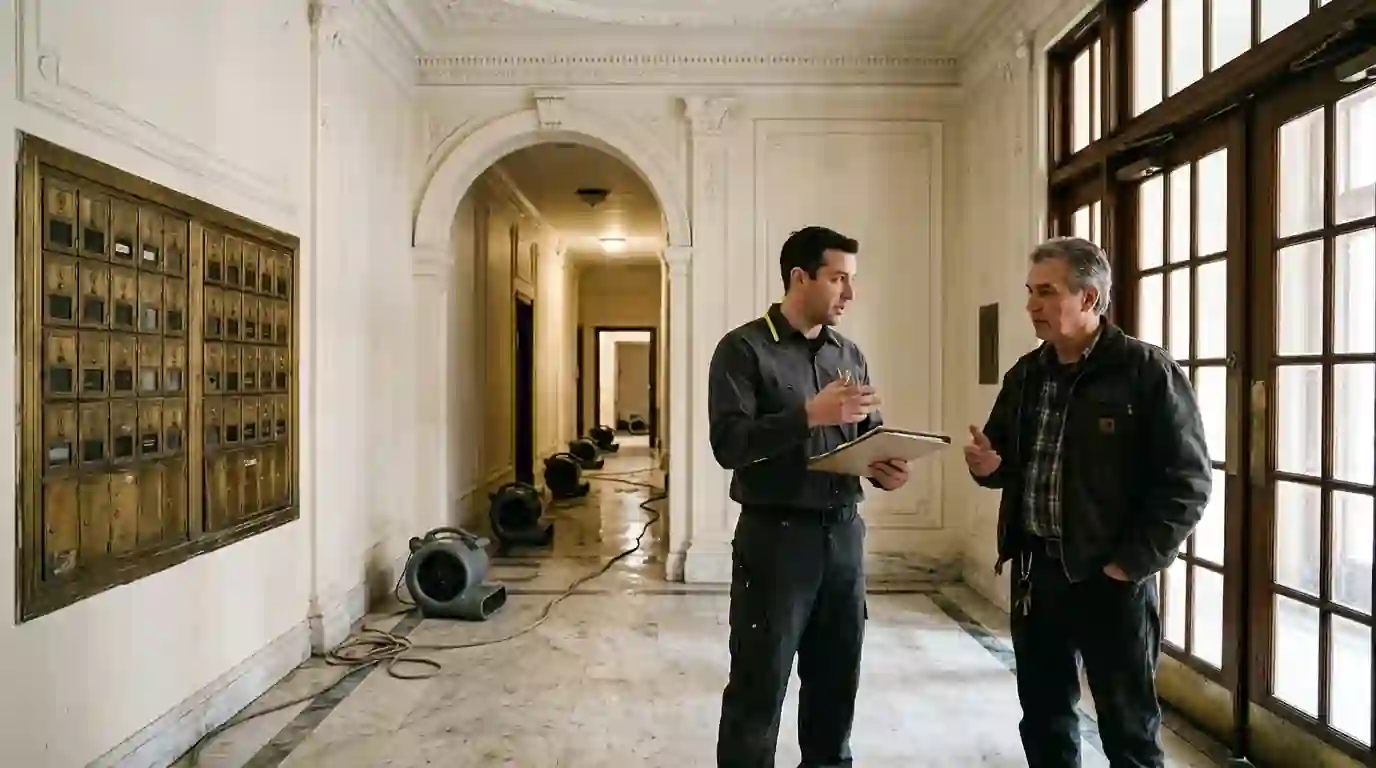
Water damage in a New York, NY co-op or condo often crosses several units, so each apartment and common area needs its own drying record for its own insurer. We start on the lowest wet floor, dry unit by unit and common areas, and coordinate access and work hours with the super and the managing agent.
Why multi-unit water losses need a different plan
In a co-op or condo, the building, each owner and sometimes the tenants all have separate insurance. A riser leak that soaks five apartments and a hallway becomes five claims plus the building's, each asking what happened in its own space. Keeping those records apart from day one saves weeks of back and forth.
Access is the other half. Units have to be opened, sometimes with owners away; elevators have to be booked; work hours follow house rules. We work through the super and the managing agent and keep the board informed with a single summary.
Riser leaks across several units
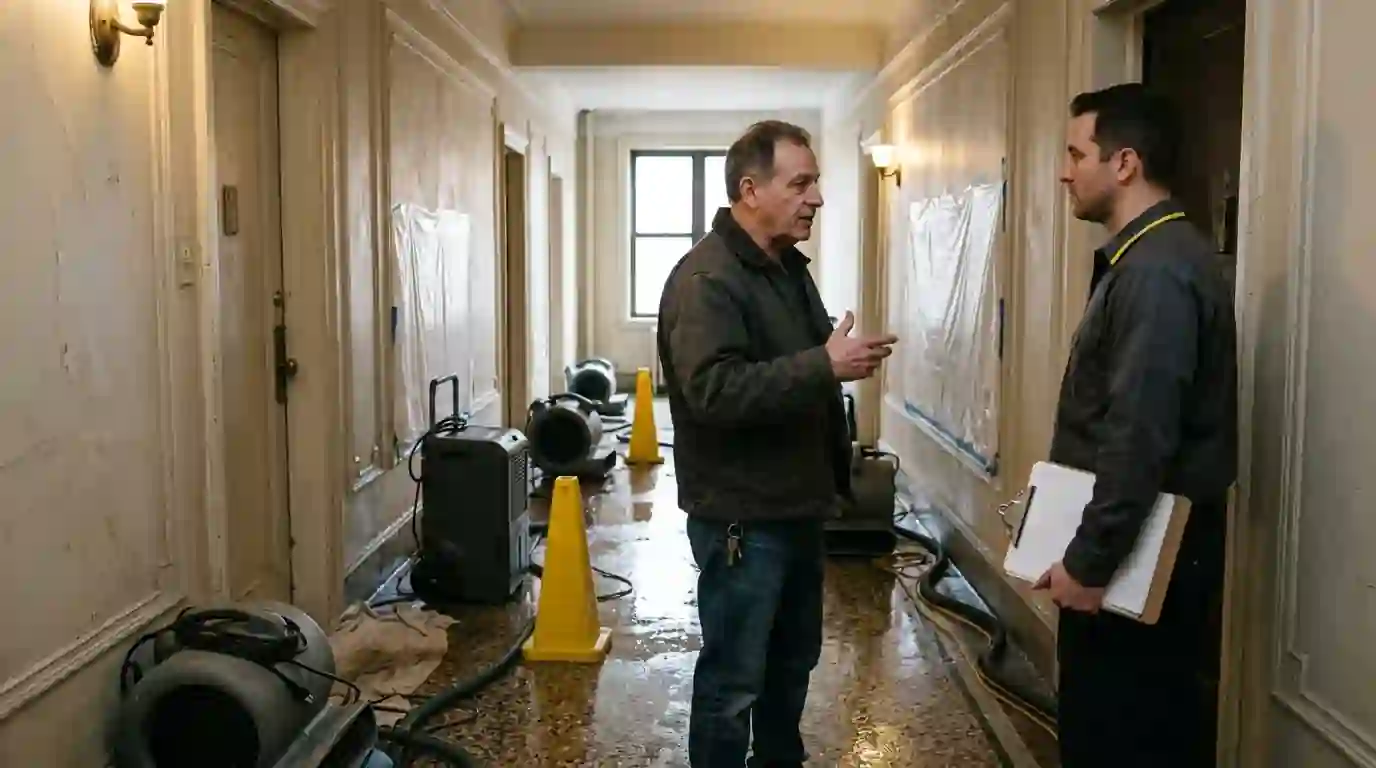
A leak in a shared riser shows up in every apartment stacked along it. We map each unit, open only where readings require and dry them in order from the bottom up. The riser repair belongs to the building's plumber; the drying records show which units were affected and how badly. Leak tracing is covered on our leak detection page.
Lobbies and common areas
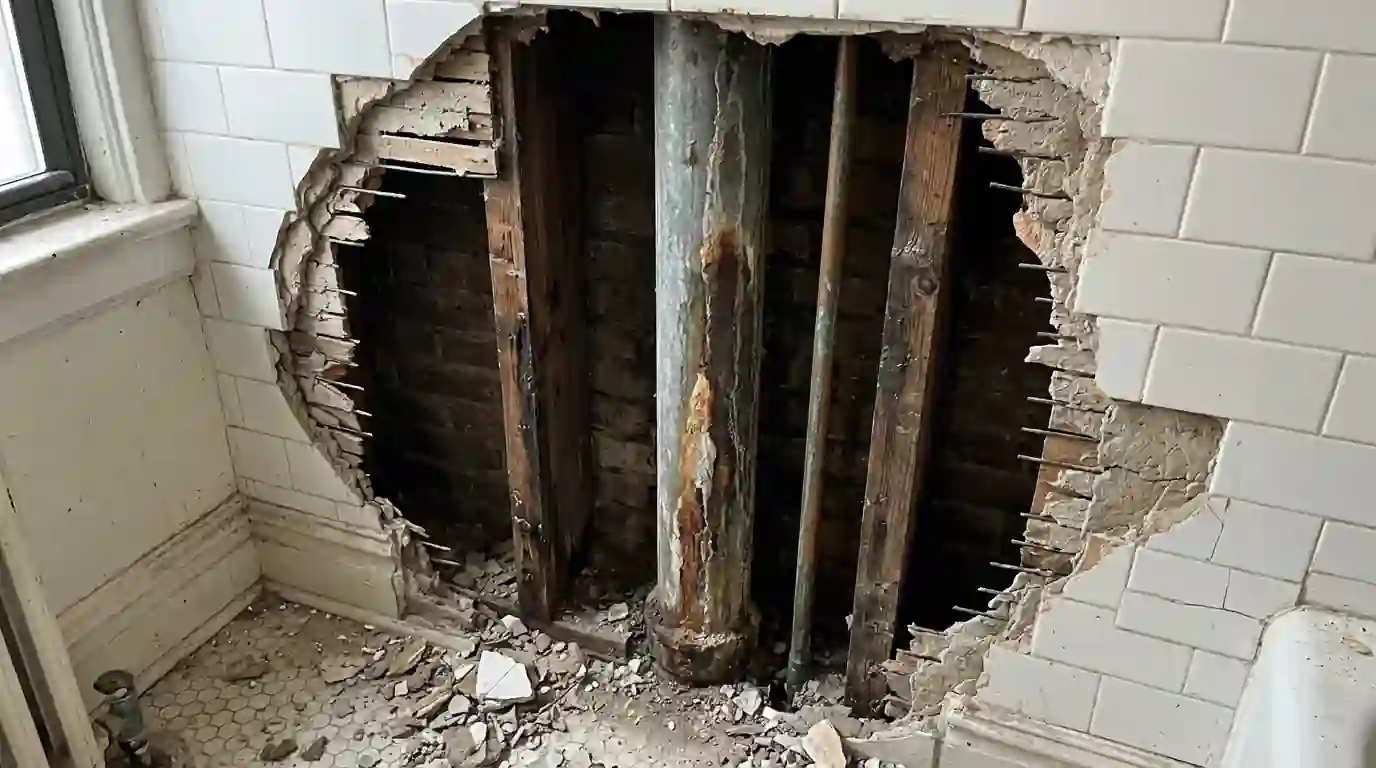
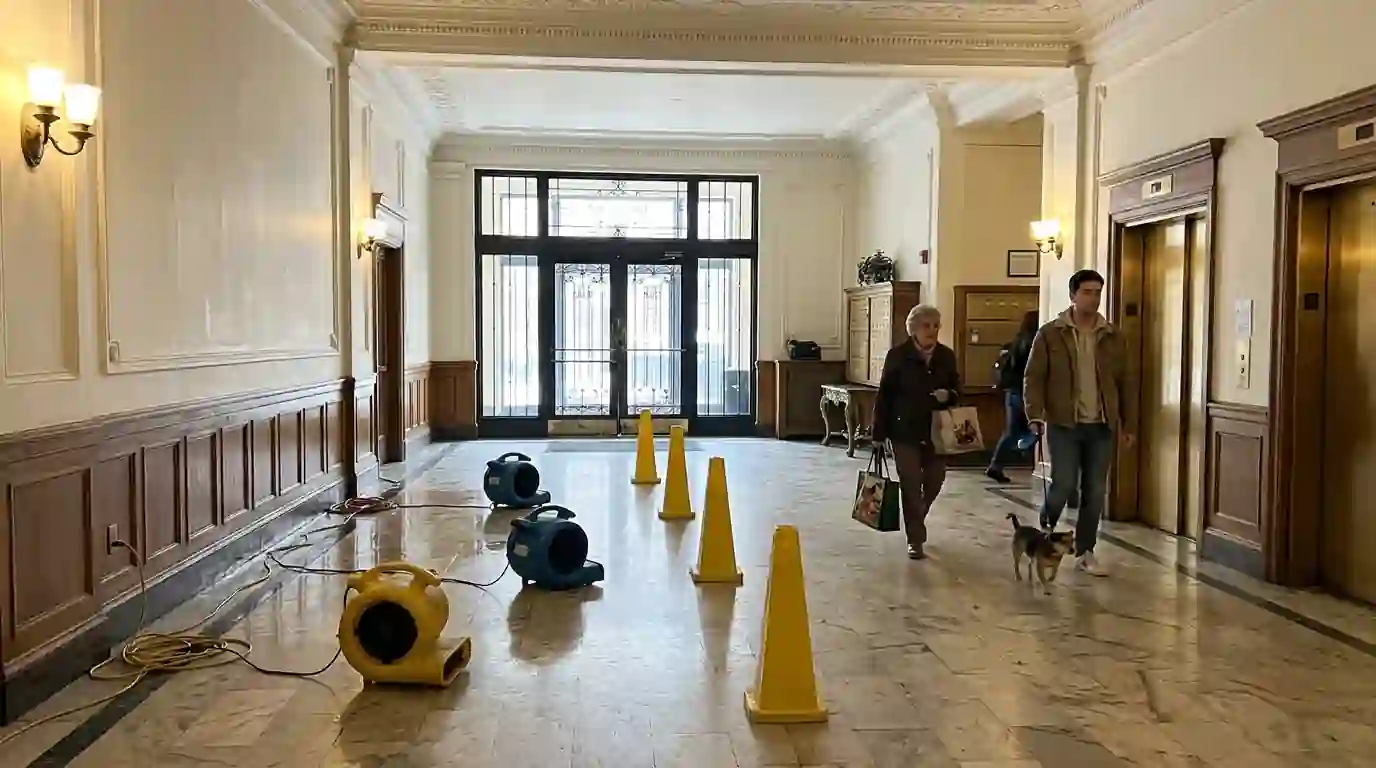
Lobbies, hallways, stairwells and laundry rooms belong to the building, and they're in use all day. We section off wet areas, keep a path open for residents and schedule noisy work around peak times. Marble, terrazzo and plaster in older lobbies are dried and cleaned carefully rather than torn out.
Working with managing agents and boards
Agents need to know which units are affected, what's being done and when it will be finished; boards need a clear summary for their decisions. We send both, and route resident questions through the agent so everyone hears the same thing. Owners get their own unit's records for their insurers.
How we run a multi-unit water job
Start at the bottom
The lowest wet unit and common area first, where water collects.
Map every unit
Readings and photos for each affected apartment.
Coordinate access
The super and agent arrange entry, elevator time and work hours.
Dry and log
Each unit gets its own drying record.
Report and rebuild
The agent gets a summary; each owner gets their unit's file.
Older buildings and shared pipes
When Sandy's surge reached back into the West Village, it flooded the West Village Houses and many older buildings' cellars and mechanical rooms at once. More often the water comes from inside: about 60 percent of the city drains sewage and stormwater through the same pipes, and a building's shared stacks and risers can move water through many apartments before anyone knows. Multi-unit jobs are routine here, and we plan them as one building with many records.
Water moving through the building?
Start with the lowest wet unit. Call and we'll bring enough crew.
What a multi-unit job includes
Organized so every owner and insurer gets what they need.
- A walk of every unit and common area below the source
- A separate moisture log and photo set for each unit
- A summary for the managing agent and the board
- Access and work hours coordinated with the super
- Drying of risers, chases and common areas
- Removal lists per unit for each insurer
- Rebuild scheduled within building rules
What multi-unit water damage costs
Priced unit by unit and area by area, so each insurer sees its share.
| Job | Typical range | Source |
|---|---|---|
| Extraction and drying, per square foot | $4 to $12 | HomeGuide |
| Plaster repair, per square foot | $6 to $19 | HomeAdvisor |
| Water damage restoration, overall | national average about $3,865; most jobs $450 to $16,000 | Angi data as published by SERVPRO, 2026 |
These are planning ranges from published national cost guides, not a quote and not our price. We give you a written scope after we have measured the damage.
Units affected
Each apartment adds its own drying and records.
Common areas
Lobbies, halls and stairwells add equipment and scheduling.
Access delays
Units that can't be opened promptly slow drying and add damage.
Building materials
Prewar plaster and masonry dry slower than drywall.
Work hours
House rules can limit when noisy work happens.
Records
Separate files for each owner take time but prevent disputes.
Rebuild
Finishes vary by unit and set the final numbers.
Co-op and condo questions
From owners, supers and managing agents.
Usually the managing agent for the building's areas; owners may hire for their own units. We can work for either or both.
That depends on the proprietary lease, bylaws and policies. We document your unit separately so your insurer has what it needs.
The super or agent arranges access. Delays let water spread, so it's worth pushing for early entry.
Yes. We schedule around house rules and book elevators through the super.
Usually. We section off wet areas and keep a path open.
Yes, within the building's alteration rules.
Related building services
Ceiling Leak Water Damage
Ceilings, walls and floors soaked by a leak from the unit or roof above.
Fire Sprinkler Water Damage
Frozen lines, accidental discharges and standpipe leaks cleaned up and dried.
Radiator Leak Water Damage
Spitting air valves, leaking radiator valves and steam risers between floors.
Commercial Restoration
Water and fire recovery for offices, stores, restaurants and warehouses.
Leak Detection
Thermal imaging and moisture mapping to find where the water actually went.
Water moving through the building?
Call and tell us which floors are wet. We answer around the clock.
Updated September 2026