Strip, plank and parquet floors
Water-damaged hardwood floor drying and repair in New York, NY
Floorboards cupping or lifting after a leak? Many hardwood floors can be dried in place if we get to them early. We measure, dry from above and below, and replace only what won't recover.
- Answering 24/7
- Drying in place first
- Prewar strip and parquet
Quick answer
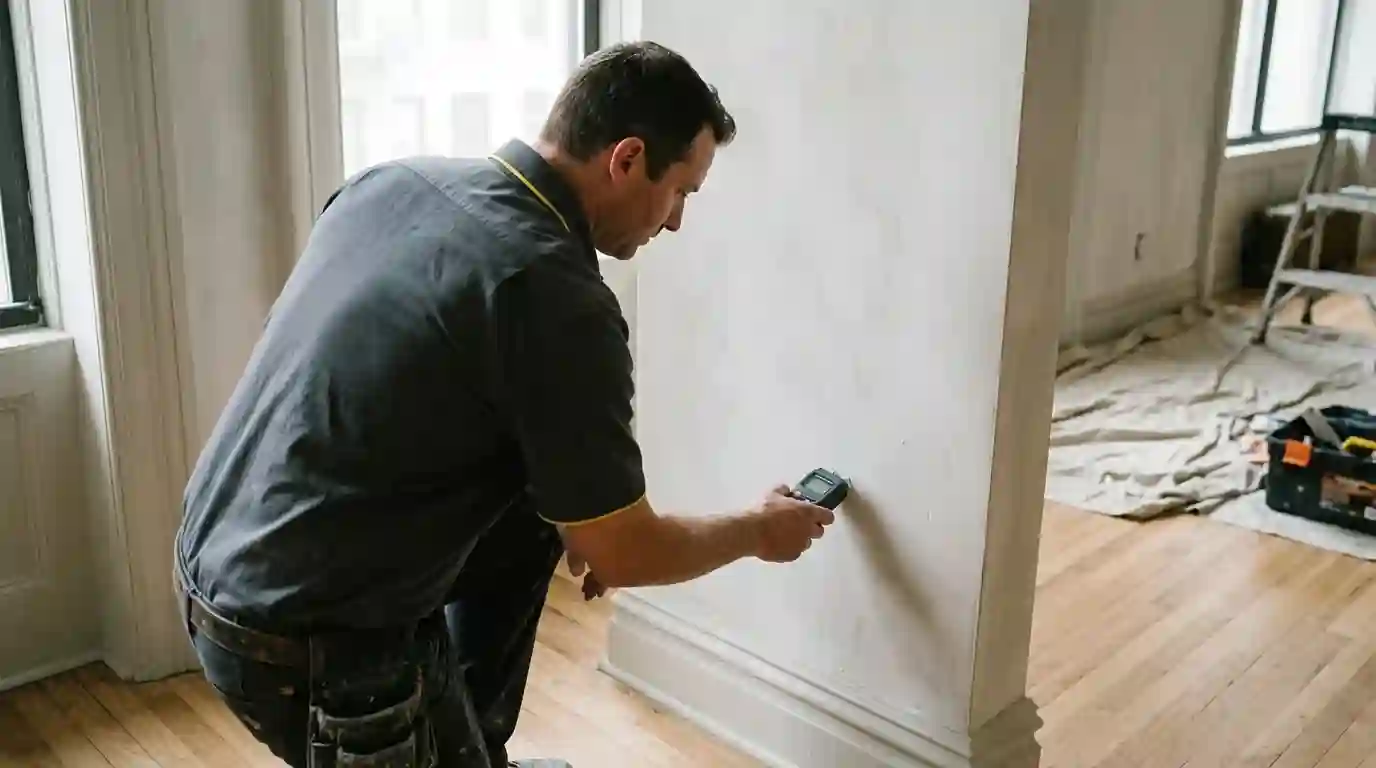
Water-damaged hardwood in a New York, NY apartment can often be dried in place if drying starts within a day or two, before the boards crack or the subfloor stays wet. Published guides put hardwood repair after gray water at about $10 to $15 per square foot. Readings decide whether a floor stays or comes up.
What water does to a hardwood floor
Wood swells when it takes on water. Water from above makes the top of each board swell and crown; water from below, the more common case, makes the edges rise and the boards cup. Left alone, cupping can settle as the floor dries, or it can set permanently if the subfloor stays wet.
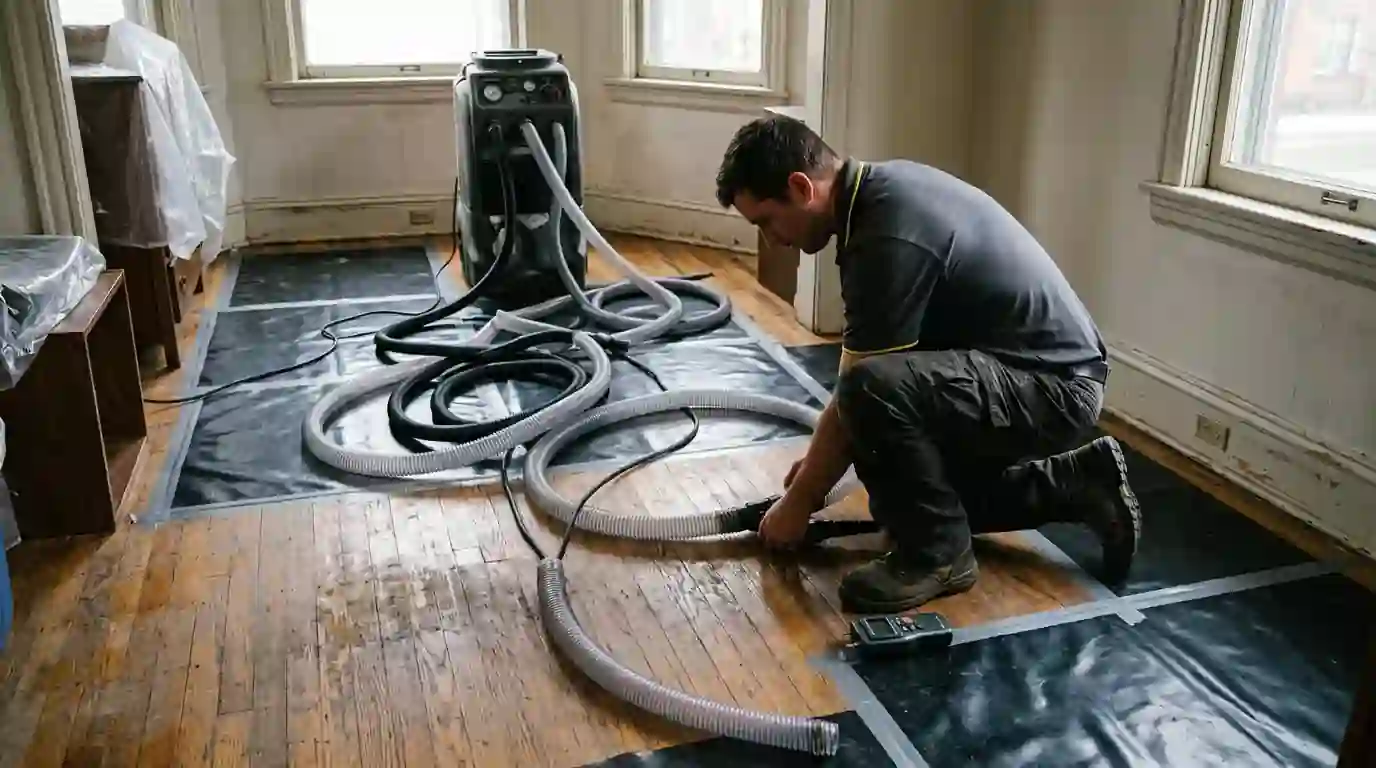
Drying in place uses specialized mats and panels that pull moisture up through the boards while dehumidifiers dry the air, and from below where there's access. It's slower than tearing out, but it keeps the original floor, which in a prewar apartment is usually worth keeping.
What hardwood water damage repair costs
Drying in place usually costs less than replacing, and keeps the original floor.
| Job | Typical range | Source |
|---|---|---|
| Hardwood repair after gray water, per square foot | $10 to $15 | HomeAdvisor |
These are planning ranges from published national cost guides, not a quote and not our price. We give you a written scope after we have measured the damage.
Time wet
Floors caught early dry in place far more often.
Floor type
Solid hardwood dries better than engineered or laminate.
Subfloor
Concrete or wet plywood underneath slows drying and may need work.
Area
A whole room costs more than a strip by the sink.
Replacement boards
Matching old species, width and grade can take time and cost more.
Refinishing
Sanding and finishing the whole room blends the repair.
Furniture
Moving furniture and built-ins adds time.
Cupping and crowning
Cupping is a moisture problem, not a sanding problem. Sanding a cupped floor before it's dry flattens the top, and when the floor finishes drying the boards crown instead. We dry the floor until the readings across the board match, then decide whether it needs sanding at all.
Parquet and prewar strip floors
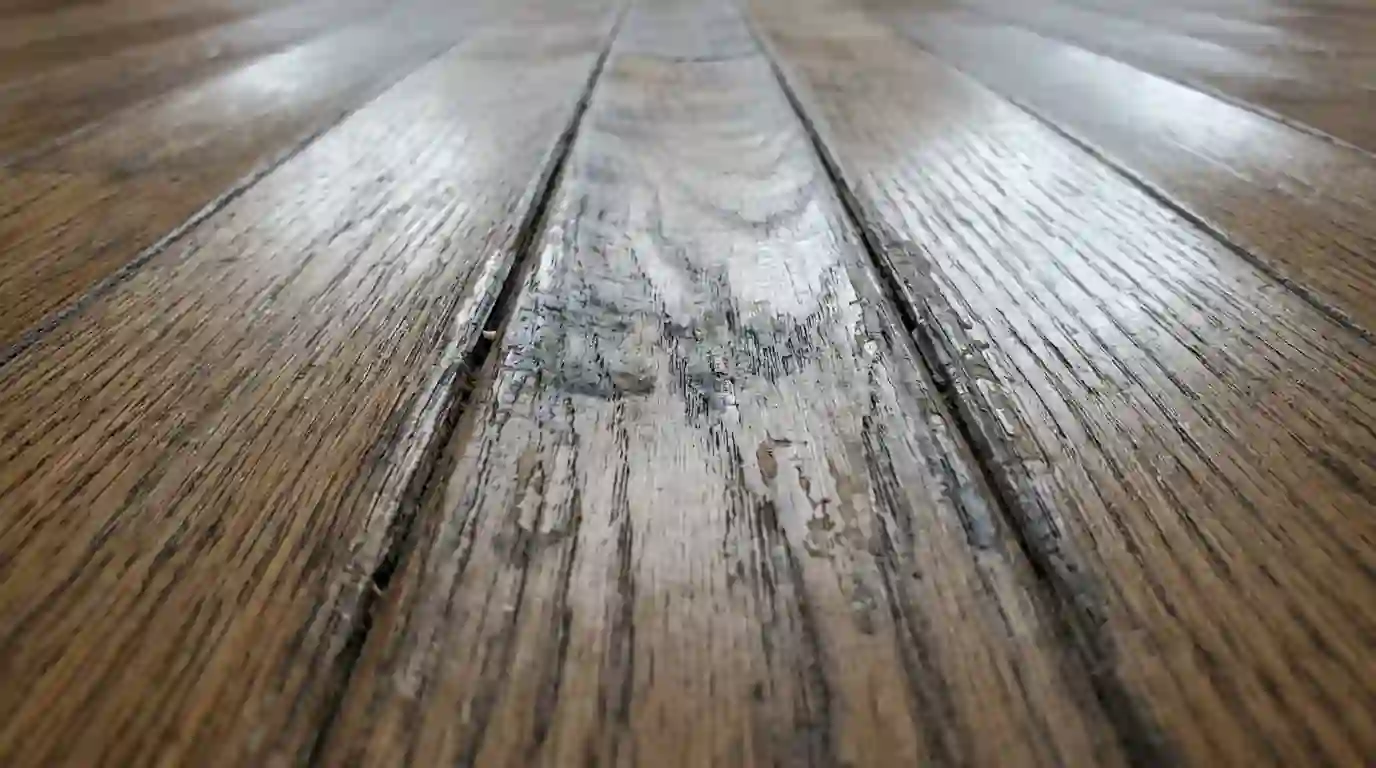
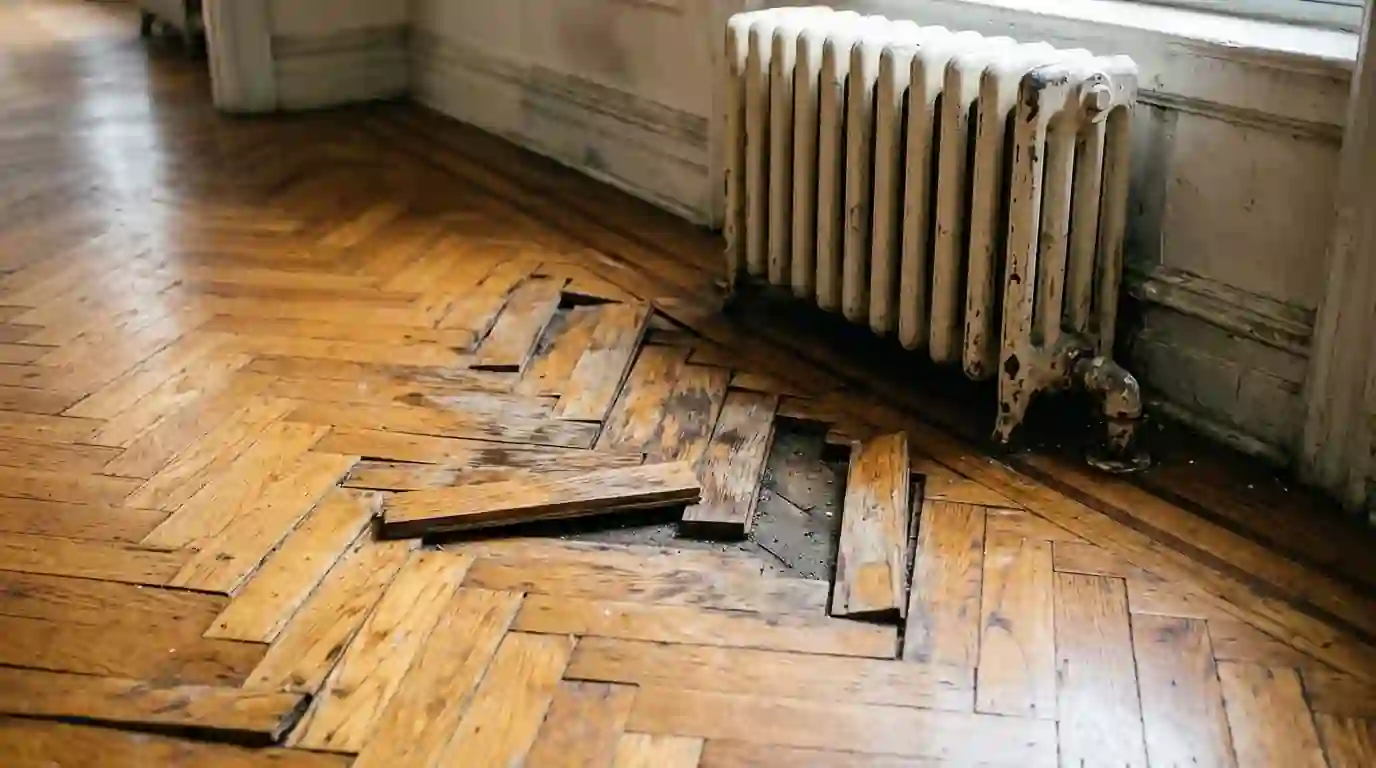
Many prewar apartments have narrow oak strip floors or parquet laid on a wood subfloor or directly over concrete. Parquet set in adhesive can release when it gets wet, and loose blocks can often be re-set once dry. Narrow strips are forgiving; they usually flatten well if dried early.
Drying in place versus replacing
Drying in place fits clean water, solid hardwood and a floor caught early. Replacement fits engineered floors that delaminate, laminate and floating floors that swell at the joints, and any floor soaked by sewage. Where only a section is lost, new boards are woven in and the room is refinished. Structural drying of the subfloor comes first either way.
Radiators and hardwood in steam-heated buildings
Steam boilers heat about 78 percent of the city's multifamily floor area, and radiators sit on hardwood in most of those apartments. A spitting air vent or a weeping valve drops a little water on the same few boards every heating cycle, which is why the floor under a radiator is so often the first to cup and gray. We dry the floor and point out the valve or vent that needs attention so the stain doesn't return.
How we handle a water-damaged hardwood floor
Read the floor
Meters map moisture across the boards and in the subfloor.
Extract
Surface water and water between boards come out first.
Dry in place
Drying mats, panels and dehumidifiers pull moisture from the wood.
Monitor
Readings are logged until the boards match a dry reference.
Repair and refinish
Lost boards are replaced and woven in, then the floor is refinished once settled.
How long hardwood takes to dry
Hardwood dries slower than drywall because the water has to move through dense wood. Drying in place usually takes days to a couple of weeks, depending on how long it was wet and what's underneath.
Refinishing waits until the wood has settled. Sanding too soon is the most common reason a floor that looked fixed starts to crown months later.
Signs water got under the floor
Wood shows water long after the surface is dry.
Cupping
Board edges higher than the centers means the underside is wetter than the top.
Crowning
Boards higher in the middle after drying usually mean they were sanded while still cupped, or got wet from above.
Gaps closing or buckling
Boards pushing against each other, or lifting off the subfloor, mean they've swollen past their gaps.
Dark edges and stains
Graying or black edges point to water sitting between boards.
A musty smell at floor level
A smell near the floor suggests wet subfloor or growth underneath.
Hardwood water damage questions
What people ask when the boards start to lift.
Some do if the floor and subfloor dry fully. Others need drying equipment, and some set permanently.
Not until the floor is dry. Sanding too soon leaves a crowned floor later.
Rarely. Laminate swells at the joints and usually has to be replaced.
Usually. We match species, width and grade and weave new boards in, then refinish the room.
If the water damage is covered, the floor usually is too.
You can usually walk on it during drying; refinishing needs the room empty for a few days.
Related floor and water services
Wet Carpet Cleanup
Wet carpet dried in place, pad replaced, or contaminated carpet removed.
Structural Drying
Dehumidifiers, air movers and daily readings until the structure is dry.
Radiator Leak Water Damage
Spitting air valves, leaking radiator valves and steam risers between floors.
Water Damage Restoration
Extraction, drying and repairs after any indoor water loss, logged room by room.
Contents Pack-Out
Belongings inventoried, packed out, cleaned and returned after a loss.
Floorboards lifting after a leak?
Call early. The sooner drying starts, the more of the floor stays.
Updated September 2026