Overflows into the unit below, answered 24/7
Toilet overflow and bathroom flood cleanup in New York, NY
Toilet overflowed and it's coming through the ceiling below? Close the valve behind the toilet, keep people off the wet floor and call. We clean, disinfect and dry both rooms.
- Answering 24/7
- Both units documented
- Bathroom subfloors dried
Quick answer
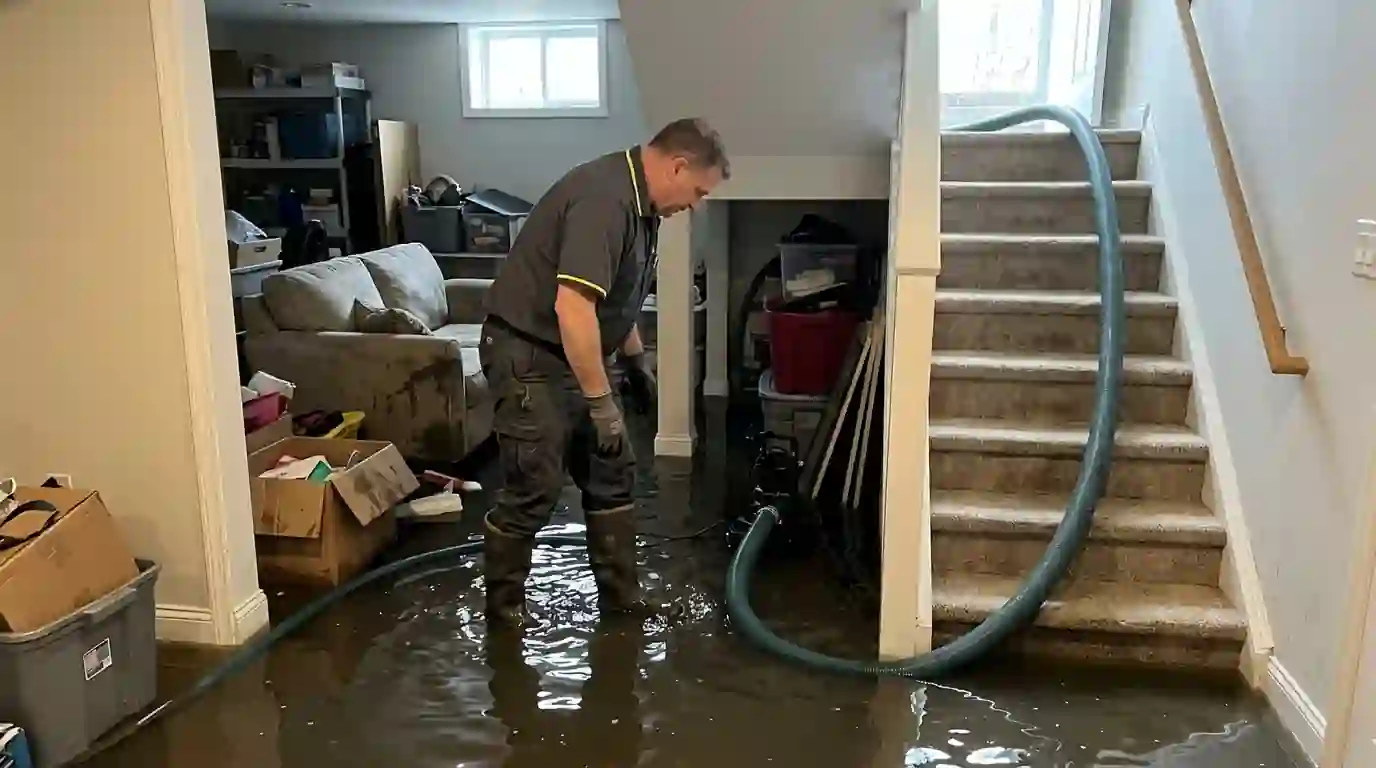
A toilet overflow in a New York, NY apartment is usually treated as contaminated water once it leaves the bowl, so bath mats and anything porous it soaked may need to go. Close the supply valve behind the toilet, stay off the wet floor and call. We clean, disinfect and dry the bathroom and the ceiling below it.
Why a toilet overflow is more than a mop-and-bucket job
Water from a clogged bowl carries bacteria even when it looks clear, and it travels. It runs under the toilet flange, into the grout lines and down through the subfloor. In an apartment building the next stop is usually the bathroom ceiling of the unit below.
Tank water from a stuck fill valve is a different case. It starts clean, and caught quickly the cleanup is lighter. We ask which one it was, how long it ran and where it went, because that decides what gets cleaned, what gets dried and what comes out.
Overflow into the unit below
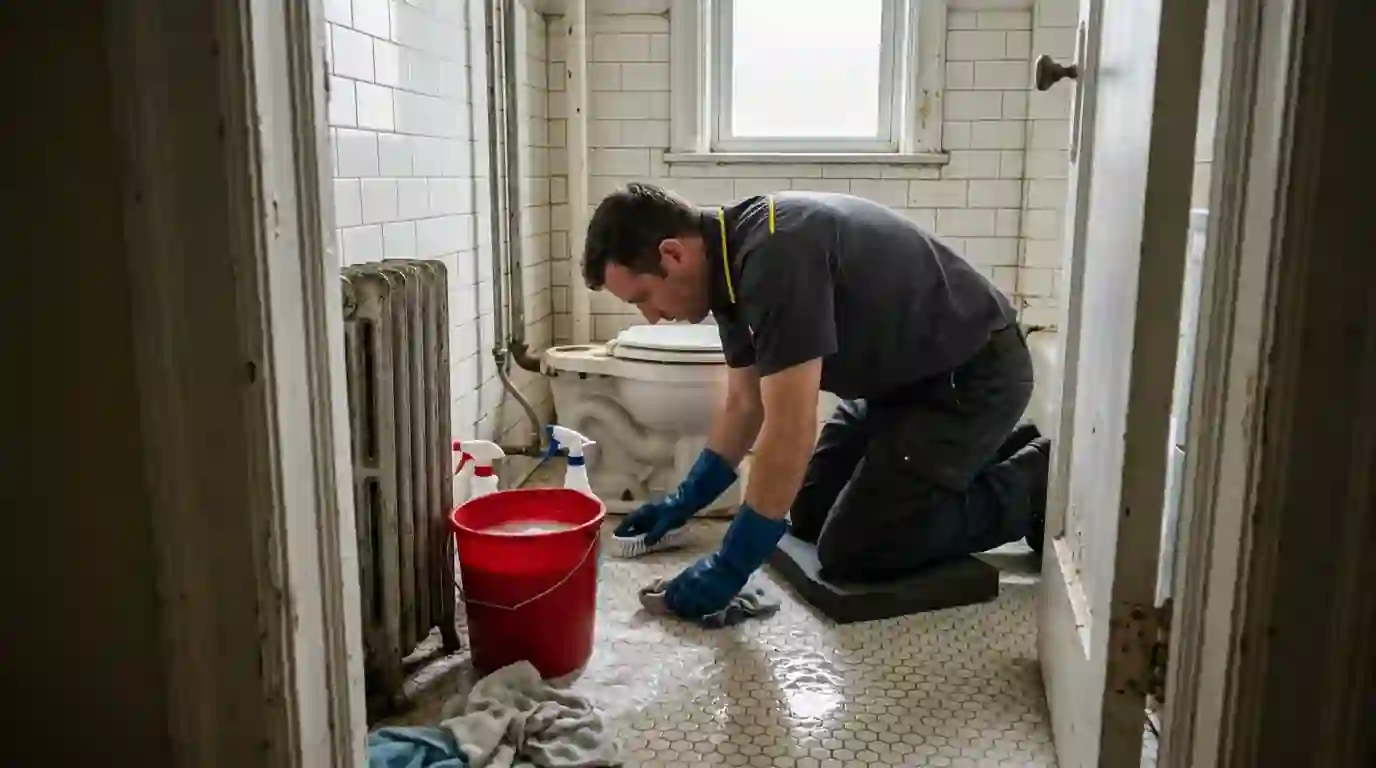
Many overflow calls come from the neighbor downstairs. Water that comes through a bathroom ceiling has passed through the subfloor, the joist bay and the plaster, and it brings whatever was in the bowl with it. We document both units, open the ceiling below only as far as the readings require, and clean and dry the joist bay from underneath. For leaks that are clean water, see ceiling leaks from above.
Tank water versus bowl water
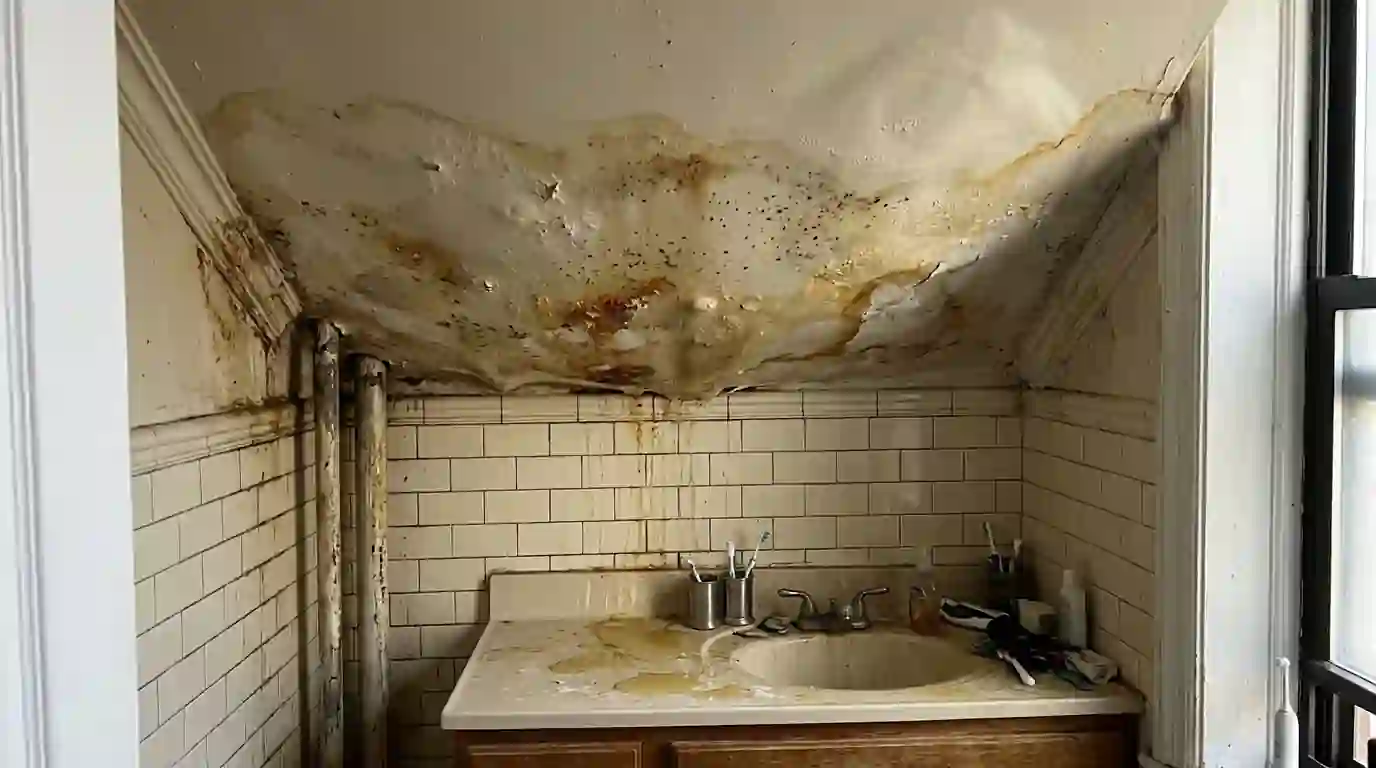
Water that spills from the tank or the supply line is clean when it leaves the fixture. Water that comes over the rim of the bowl is not. Cleanup guides class the second as gray or black water depending on what was in it, and published per-square-foot mitigation prices rise with each class, from about $3.50 for clean water to about $7.50 for black water. Knowing which you had keeps the work matched to the risk.
Bathroom subfloor contamination
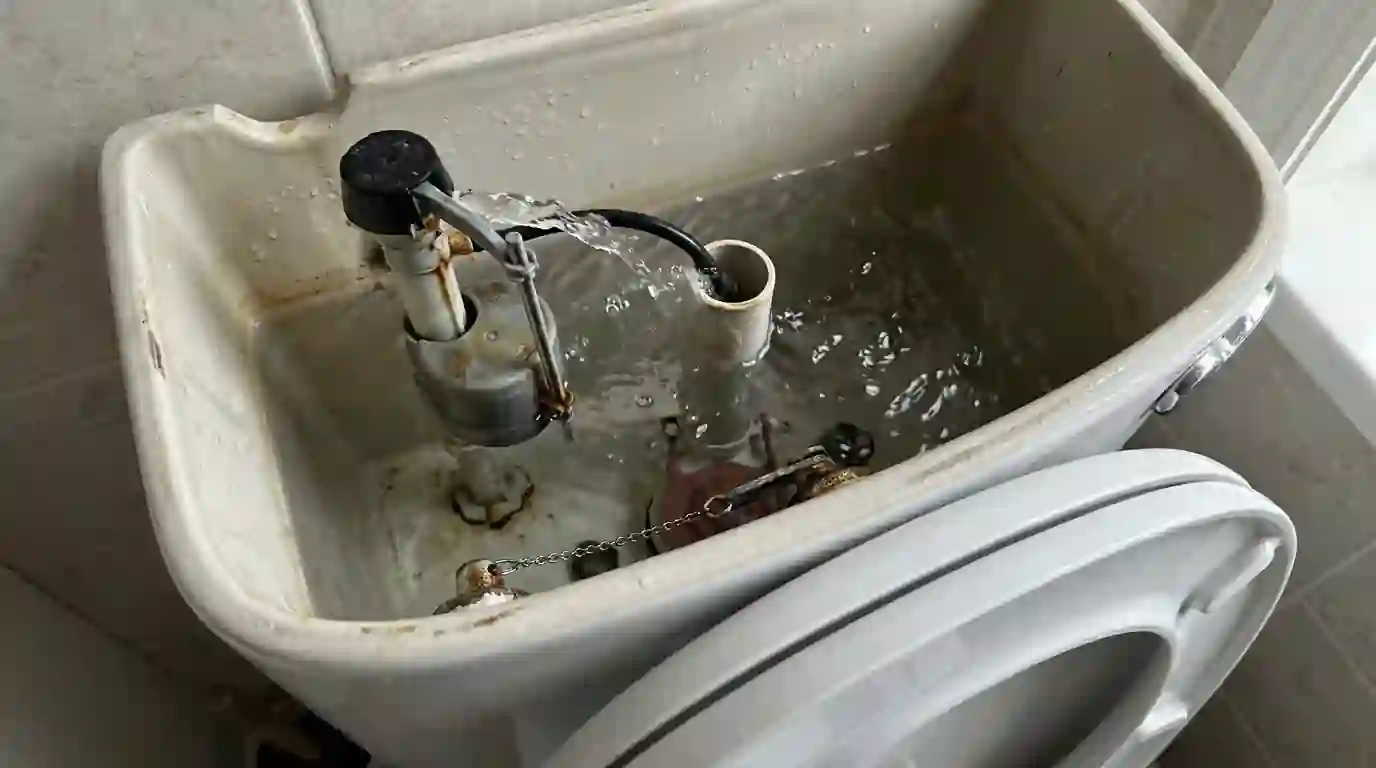
Bathroom floors are built to shed water from the top, not from the edges. Overflow water gets under tile at the flange and along the tub, and wood subfloors under older mosaic tile soak it up. We check the subfloor from below where we can. When contaminated water has soaked into wood or a mortar bed, removing that section is safer than drying it, and the bathroom rebuild is planned once the floor tests dry.
What we do after a toilet overflow call
Stop the source
Close the supply valve behind the toilet; if it won't close, we walk you through the main or the super.
Sort the water
We establish whether it was tank or bowl water and how long it sat, which sets the cleanup level.
Clean and disinfect
Standing water comes up, then floors, fixtures and lower walls are cleaned and disinfected.
Remove what can't be saved
Porous material soaked by contaminated water, like pad, drywall edges or subfloor, is cut out and bagged.
Dry both units
Dehumidifiers and air movers run in the bathroom and the ceiling below until the readings are dry.
Toilet overflows in the city's stacked bathrooms
More than half of the city's housing units are in buildings from before 1947, and in most of them the bathrooms stack directly on top of each other. An overflow on the fourth floor tends to show up in the third-floor bathroom ceiling within the hour, through plaster that was never meant to get wet. That stacking is why we ask about the unit below on every overflow call, and why we plan the job as two rooms rather than one.
Water coming through the ceiling below?
Tell the super, keep people out of both bathrooms and call. We answer 24/7.
What you can handle yourself, and what you shouldn't
| Tank water, caught fast | Bowl water or long-running | |
|---|---|---|
| Who cleans | You can mop and dry it yourself | Call; it needs disinfection and protective gear |
| Rugs and bath mats | Wash and dry them | Bag them; they are rarely worth saving |
| Floor and grout | Wipe, dry and watch for staining | Clean, disinfect and check the subfloor |
| Ceiling below | Check for new stains over a day or two | Tell the neighbor and the super right away |
What toilet overflow cleanup costs
The class of water and the number of rooms it reached drive the price.
| Job | Typical range | Source |
|---|---|---|
| Mitigation by water class, per square foot | about $3.50 clean, $5.25 gray, $7.50 black water | Angi data as published by SERVPRO, 2026 |
| Contaminated water cleanup, per square foot | $7 to $15+ | HomeGuide |
| Full bathroom cleanup and repair, about 120 square feet | as much as $3,000 | HomeAdvisor |
These are planning ranges from published national cost guides, not a quote and not our price. We give you a written scope after we have measured the damage.
Tank or bowl water
Clean tank water costs less to handle than water from the bowl.
Time before cleanup
Water left overnight soaks deeper and is harder to clean.
Floor build-up
Mosaic tile on a mortar bed dries slower and costs more to replace than vinyl.
The ceiling below
A second unit adds ceiling repair and its own drying setup.
Vanity and cabinets
Particleboard vanities that wick contaminated water usually get replaced.
Building access
Work hours, elevator bookings and access to the unit below set the schedule.
Rebuild
Tile, grout, paint and fixtures reinstalled after drying add to the total.
Toilet overflow questions we hear
Quick answers for the first hour.
Bowl water carries bacteria even when it looks clear. Keep children and pets away, wear gloves if you have to touch it and wash your hands afterward.
If it was clean tank water and you caught it fast, usually yes. If it came over the rim or sat for hours, it needs cleaning and disinfecting, not mopping.
That depends on the policies and the building's rules, so tell your insurer and the managing agent. We document where it started and what each unit lost.
Not always. Tile over a sound, dry subfloor can stay. If contaminated water got into a wood subfloor or a mortar bed, removing that section is safer.
Clear the clog before flushing again and replace a fill valve that sticks. If it keeps happening, have a plumber check the line for a partial blockage.
Yes. We coordinate access with the super and the managing agent and keep separate records for each unit involved.
Related cleanup services
Sewage Backup Cleanup
Category 3 cleanup for rain-driven backups, main line clogs and floor drains.
Ceiling Leak Water Damage
Ceilings, walls and floors soaked by a leak from the unit or roof above.
Co-op and Condo Water Damage
Multi-unit leaks, riser failures and common areas, coordinated with management.
Odor Removal
Smoke, sewage, pet and tobacco odors treated at the source, then deodorized.
Water & Fire Damage Reconstruction
Kitchens, baths and basements rebuilt once the structure is dry.
Toilet overflowed and it's spreading?
Close the valve behind the toilet, keep people off the floor and call. We answer around the clock.
Updated September 2026