Storm-opened roofs covered, answered 24/7
Emergency roof tarps in New York, NY and on Long Island
Roof opened up by wind or a fallen limb? We cover it with a secured tarp or temporary sheeting so the rain stops coming in while the insurer and the roofer catch up.
- Answering 24/7
- Pitched and flat roofs
- Photos before and after
Quick answer
An emergency roof tarp in New York, NY covers a storm-damaged section with heavy sheeting fastened over the ridge, or weighted on a flat roof, so rain stops getting in until the permanent repair. Published guides put board-up and tarping at about $300 to $1,500. We photograph the damage first, then cover it.
What an emergency tarp is for, and what it isn't
A tarp buys time. It keeps wind-driven rain out of the attic, walls and ceilings after a storm opens the roof, while the insurer inspects and a roofer schedules the permanent repair. It is not a repair, and it isn't meant to stay up through a season.
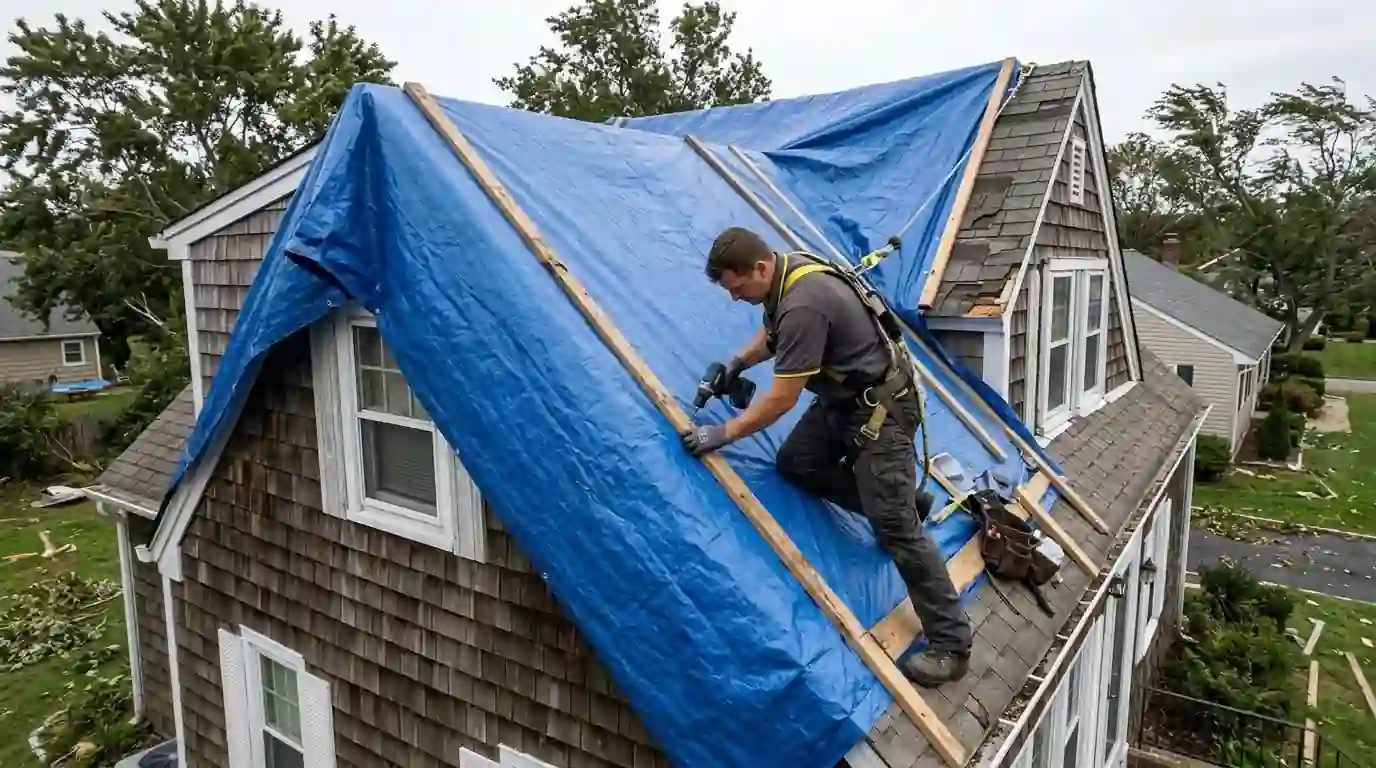
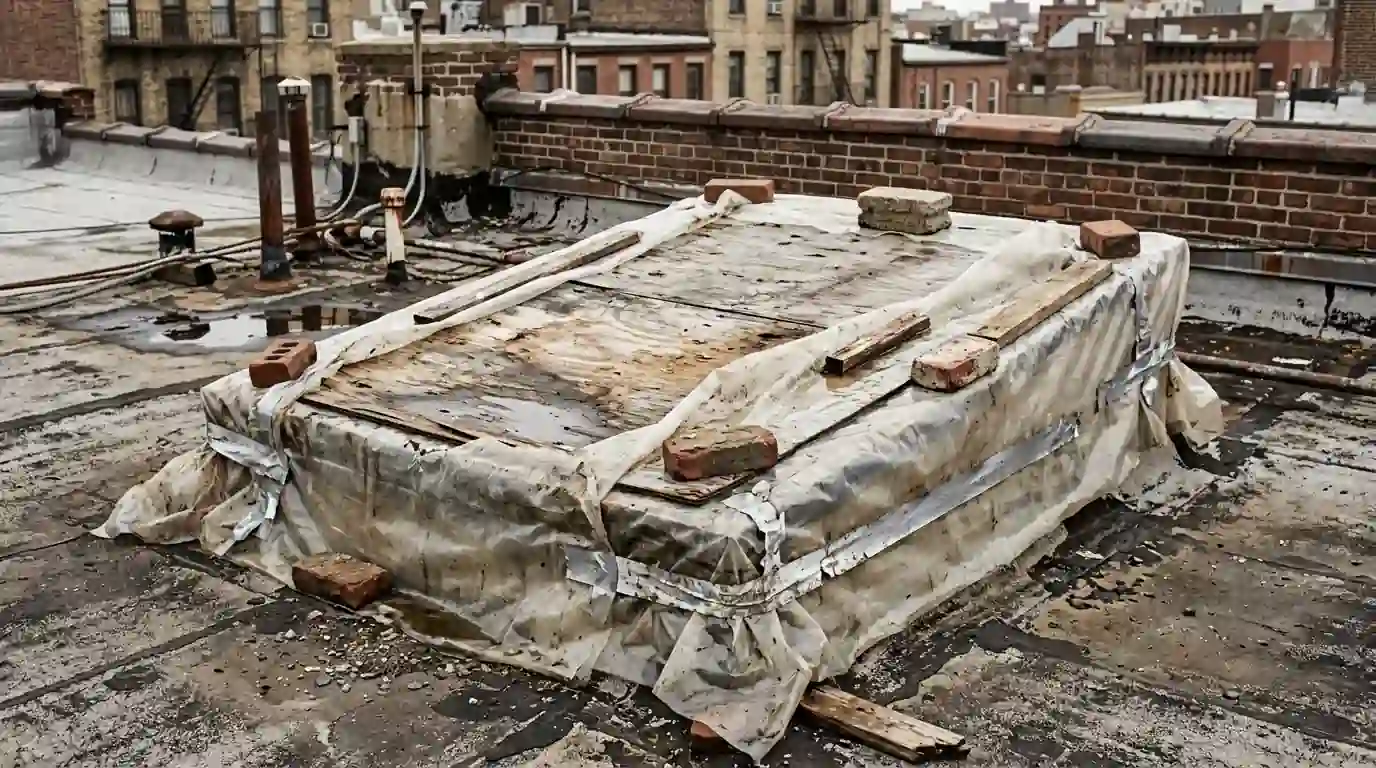
How it goes on matters more than the tarp. On a pitched roof we run it over the ridge and fasten it through wood battens so wind can't get under the edge. On a flat roof or behind a parapet we cover the opening with sheeting that is weighted and sealed rather than nailed through a membrane that is still sound.
Pitched roof tarps
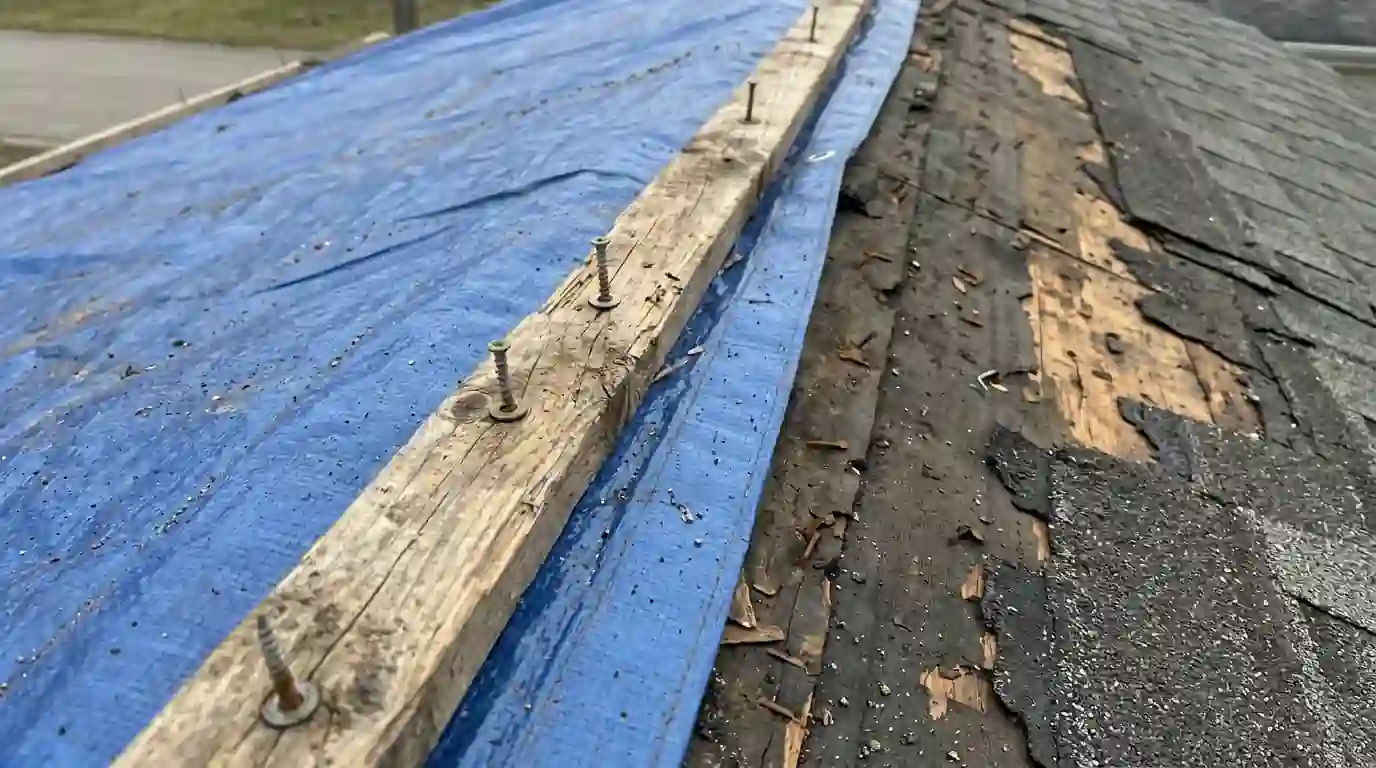
Shingle and slate roofs lose tabs, flashing and whole sections to wind and falling limbs. The tarp has to run past the damage on every side and wrap the ridge, or water simply runs in under its top edge. Battens screwed through the tarp spread the load so it doesn't tear at the fasteners in the next gust. We note every fastener hole in the photo record so the roofer knows what to seal.
Flat roof and parapet covers
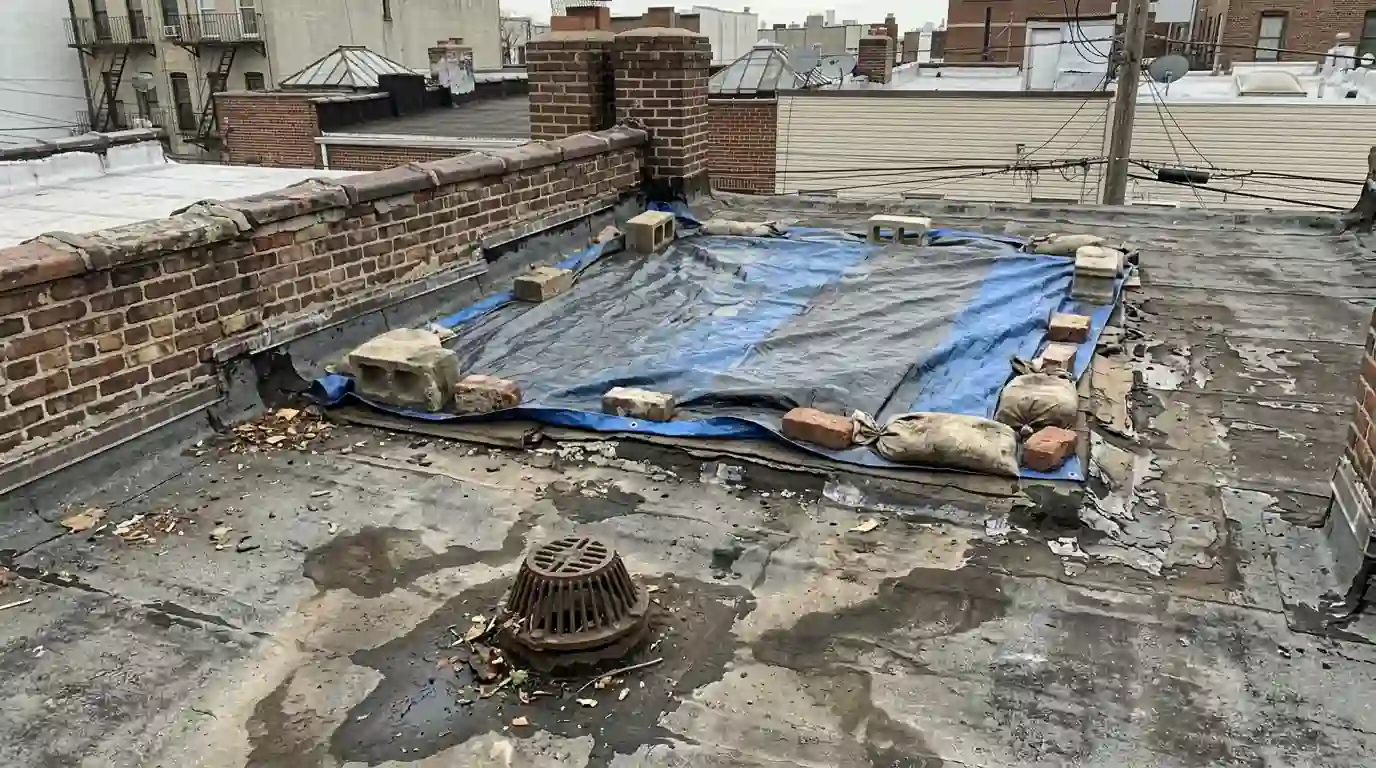
Row houses, brownstones and small apartment buildings mostly have flat roofs behind a parapet, and there a nailed tarp is the wrong answer. We clear standing water, cover the damaged area with sheeting lapped up the parapet, and weight or tape the edges so the cover holds without new holes. Blocked drains cause a lot of flat-roof leaks, so we check them while we are up there.
Skylight and hatch covers
Skylights crack under falling branches and hail, and roof hatches leak once their curbs rot. Both let water straight into a stairwell or a top-floor room. We cover the opening with rigid board under the sheeting so the cover can't sag and pond, then seal it to the curb. Inside, we set up structural drying for anything that got wet below.
What happens when you call about a damaged roof
Safety first
If a limb is still on the roof or lines are down, we wait until it is made safe before anyone climbs.
Photograph
We record the damage from outside and from the rooms below before touching anything.
Cover
The tarp or sheeting goes on, fastened or weighted to suit the roof.
Check inside
We look for wet insulation, ceilings and walls under the opening.
Dry what got wet
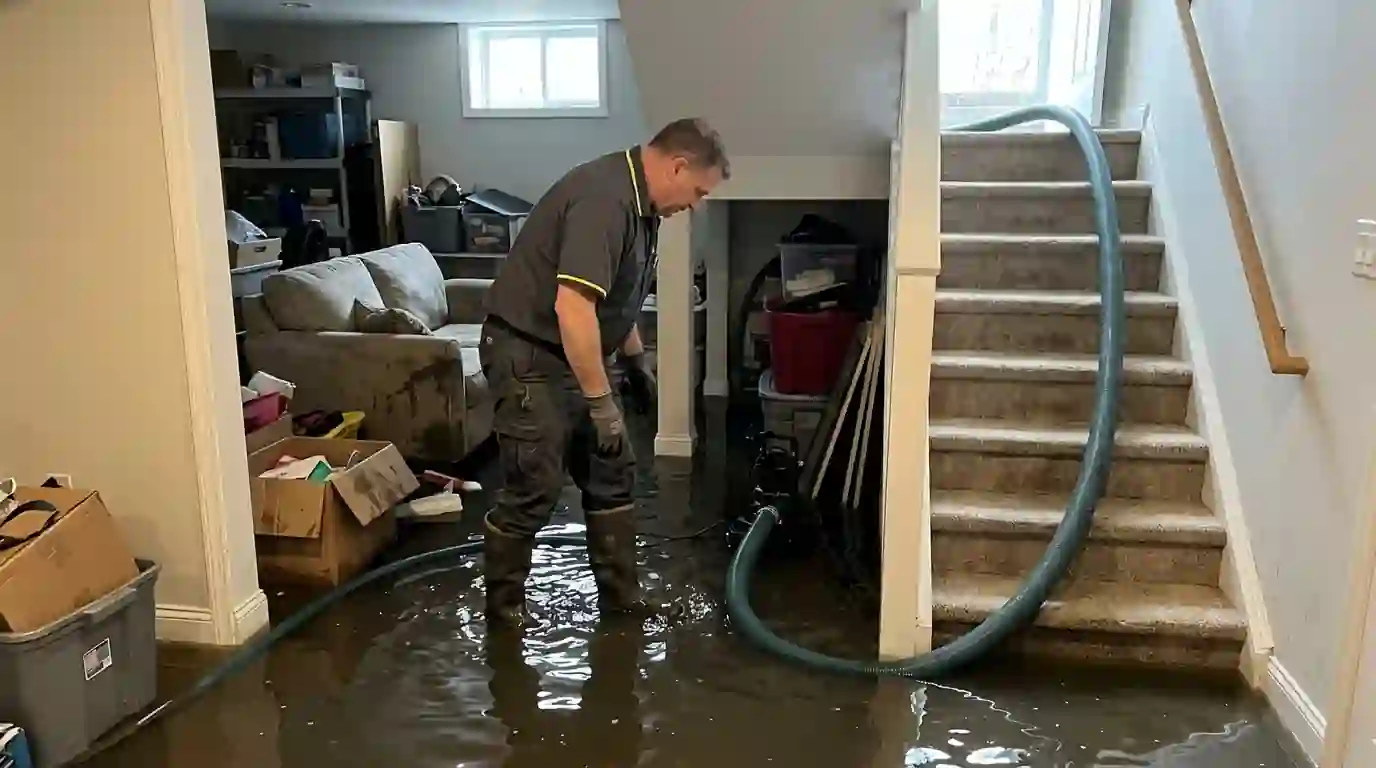
If water got in, we set drying equipment and log readings until it is dry.
Why Long Island roofs need a proper cover
Long Island storms have been getting heavier. Islip MacArthur Airport recorded 13.57 inches of rain in August 2014, the state's 24-hour record, and in August 2024 a Stony Brook station measured 9.40 inches as Suffolk County saw its first flash flood emergency. Rain like that finds every gap a broken shingle or lifted flashing leaves, so we cover the whole damaged section and check the attic below instead of tarping only the hole you can see.
What an emergency tarp visit includes
The visit covers more than the hole itself.
- Photos of the damage from the roof and from inside before anything is covered
- Removal of loose debris and branches from the damaged area where it is safe
- A tarp or sheeting sized to run past the damage on every side
- Battens and fasteners on pitched roofs, weights and seals on flat roofs
- A check of roof drains, gutters and flashing near the opening
- A look inside the attic or top floor for wet insulation and ceilings
- A photo record of the finished cover for your insurer and your roofer
Emergency covers by roof type
| Pitched roof | Flat or parapet roof | |
|---|---|---|
| Cover | Heavy tarp over the ridge | Sheeting lapped up the parapet |
| Fastening | Battens screwed through the tarp | Weights, tape and seals, no new holes |
| Main risk | Wind lifting the edges | Rain ponding on the cover |
| What we check | Flashing, vents and the ridge | Drains, scuppers and the membrane |
What emergency roof tarping costs
Size, pitch and access decide most of the price.
| Job | Typical range | Source |
|---|---|---|
| Emergency board-up and tarping | $300 to $1,500 | HomeCostLab |
These are planning ranges from published national cost guides, not a quote and not our price. We give you a written scope after we have measured the damage.
Roof pitch
Steep roofs need harnesses and more time than low-slope roofs.
Size of the opening
A bigger hole needs a bigger cover and more fastening.
Height and access
Three-story houses and tight lots may need longer ladders or access through the building.
Debris on the roof
Branches and broken material come off before the cover goes on.
Roof type
Flat roofs behind parapets need seals and weights instead of battens.
Weather at the time
Covering during an active storm is slower and only done when it is safe.
Water inside
Wet ceilings and insulation below add drying to the job.
Roof tarp questions from homeowners and supers
What people ask us while the rain is still falling.
It is a stopgap until the permanent repair. It should hold through the weeks it takes to get an adjuster and a roofer out, and it should be checked after every storm.
Only when it is safe. High wind and lightning keep everyone off a roof; we protect what we can from inside and go up as soon as conditions allow.
Policies commonly expect you to prevent further damage after a covered loss, and a tarp is how that is done. Keep the invoice and photos for your adjuster.
Our part is the emergency cover and any water damage inside. The permanent repair belongs to a roofer, who can work from our photo record.
Yes, with care. We protect the surrounding slates or tiles from battens and footsteps, because they crack easily.
Move valuables away from the leak, set buckets under drips and keep everyone out from under any ceiling that is sagging.
Related storm and flood services
Storm Damage Restoration
Wind-driven rain, fallen limbs and ice dam leaks, dried and repaired.
Emergency Board-Up
Plywood over broken windows, doors and storefronts after fire or impact.
Flood Damage Restoration
Floodwater from storms and surge, handled as contaminated water from the start.
Attic Mold Removal
Mold on roof sheathing and rafters, plus the venting that caused it.
Structural Drying
Dehumidifiers, air movers and daily readings until the structure is dry.
Roof open to the weather right now?
Call and tell us what you can see from inside. We answer around the clock and cover the roof as soon as it is safe to go up.
Updated September 2026