Guide: sewer backups
Sewer backups in New York basements: causes and prevention
Most city sewer backups come down to two things: rain and grease. Here's why basements back up, and what prevents the next one.
By Wallace Blackwell, Restoration Guides Editor
Quick answer
Sewer backups in New York City basements usually happen when a cloudburst overloads the combined sewer, which is designed for about 1.75 inches of rain per hour, or when grease clogs a building's line. A backwater valve where the code calls for one, grease kept out of drains and a clear main line are the main defenses.
How the city's sewers work in a storm
About 60 percent of New York City is served by a combined sewer, one pipe carrying both stormwater and sewage (source). The system is designed for about 1.75 inches of rain per hour, slightly less in Queens (source). When a storm drops more than that, the pipes fill and water looks for the lowest opening, which is often a basement floor drain or toilet.
That's why backups hit several houses on a block at once, and why they happen during the heaviest part of a storm rather than afterward.
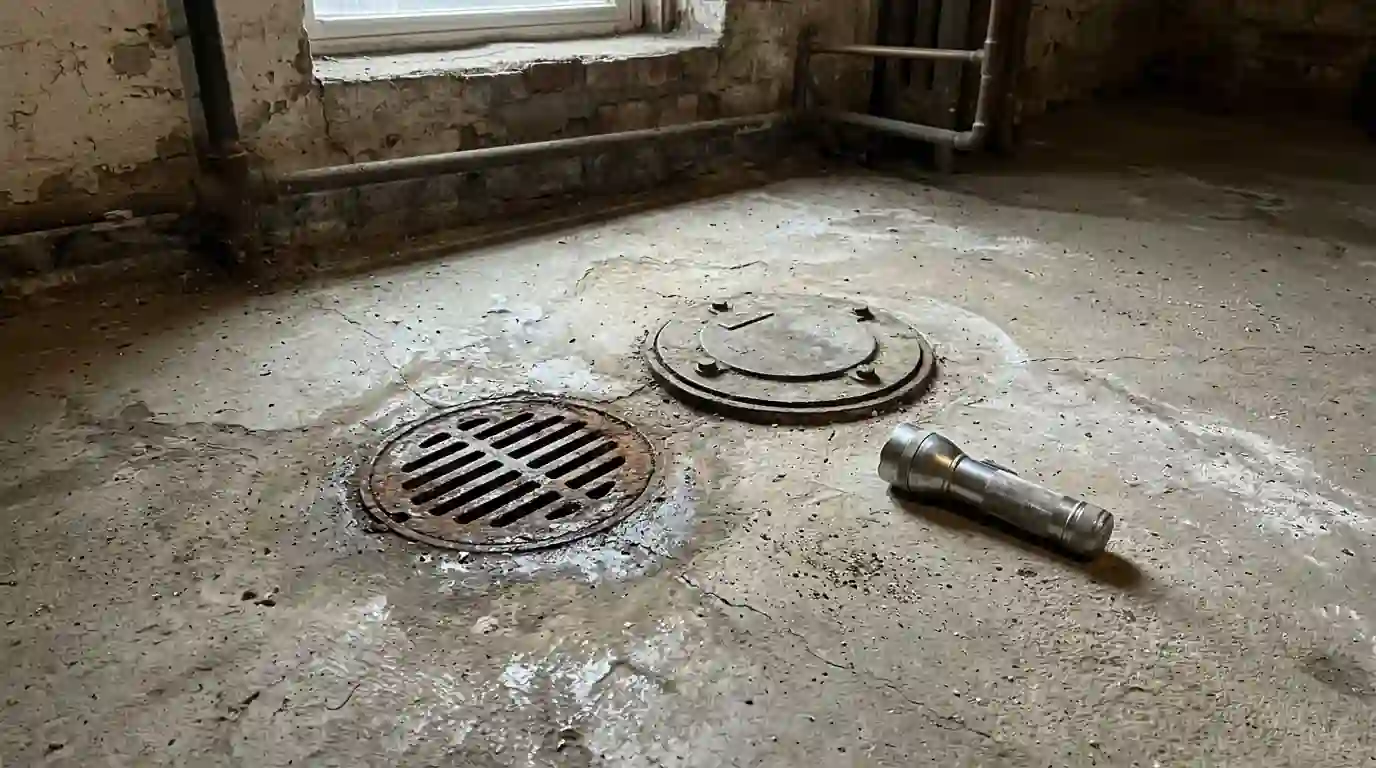
Grease: the dry-weather cause
When a backup happens on a dry day, the cause is usually the building's own line or the sewer nearby. The city's environmental agency has attributed more than 60 percent of confirmed sewer backups to grease poured down kitchen drains (source). Grease cools, hardens and narrows the pipe until it closes.
Wipe pans before washing them, pour cooled grease into a container for the trash and never use hot water to flush grease down. In buildings with restaurants, grease traps need regular cleaning.
Where backups hit hardest
Rain-driven backups have been reported in Park Slope in Brooklyn, Pelham Gardens in the Bronx and East Elmhurst in Queens (source), among other low-lying neighborhoods. If your block floods in heavy rain, your basement fixtures are the most likely escape route for the sewer.
Houses with finished basements have the most to lose, because drywall, carpet and furniture soaked by sewage all have to go.
Backwater valves
A backwater valve lets water leave the building and closes when sewer water tries to come back in. The NYC Plumbing Code requires one where fixtures sit below the level that could see backflow from the sewer (source). If your basement has had backups, ask a plumber whether your building needs one and where it should go.
Valves need occasional checking; one stuck with debris doesn't protect anything.
Warning signs before a backup
Gurgling floor drains in heavy rain, every fixture on the lowest floor draining slowly, a sewer smell near a drain and a ring of sediment around a floor drain after a storm all suggest a line that's close to backing up. A plumber can camera the line and tell you whether it's roots, grease or a collapse.
Downspouts, sump pumps and yard drains
In older houses, roof downspouts and yard drains are sometimes tied into the sewer line, which sends a roof's worth of rain into the same pipe as your toilets during a storm. Where local rules allow, a plumber can redirect them to the yard, away from the foundation.
Sump pumps should discharge outside and away from the house, not into a floor drain. A pump that dumps into the sewer adds to the load at exactly the wrong moment.
Clearing the line before storm season
Roots, sagging sections and old cast iron that has scaled inside all narrow a building's sewer line. A plumber's camera inspection shows what's in there, and a cleaning before the heavy-rain months gives the line its full capacity when it's needed.
If a backup has happened once, a camera inspection is worth doing before the next storm rather than after it.
Buildings with restaurants on the ground floor
Where a restaurant shares a building's sewer line, grease is a constant risk to the apartments and basements on the same line. Grease traps need regular cleaning, and backups there are handled as sewage in every affected space. Our commercial restoration page covers the restaurant side of the cleanup.
If it happens anyway
Stay out of the water, keep children and pets away and turn off power to the basement from a safe point. Photograph everything. Sewage is Category 3 water, so porous materials it soaked are removed and bagged rather than dried; our sewage backup cleanup page explains the job.
Then check your policy: many homeowners policies need a sewer backup endorsement. Our insurance guide explains the difference.
Sewer backup questions
What basement owners ask us.
The sewer was overloaded and your basement fixtures were the lowest opening.
It stops sewer water coming back through the protected line. It won't stop water coming through walls.
A plumber, who can tell you whether your building needs one.
A plumber with a camera can tell you where the blockage or problem is.
It's not recommended. It carries bacteria and viruses, and porous materials have to be removed.
Often only with a sewer backup endorsement.
Keep grease out of drains entirely: wipe pans and put cooled grease in the trash.
Sewer water in your basement?
Stay out of it and call. We answer 24/7.