Guide: frozen pipes
Frozen pipes in New York apartments and houses: prevent and respond
Pipes don't leak when they freeze. They leak when they thaw. Here's how to keep them from freezing, and what to do the moment one splits.
By Wallace Blackwell, Restoration Guides Editor
Quick answer
Pipes in New York apartments and houses freeze where they run along cold exterior walls, unheated corners and crawl spaces, and they usually split while frozen and leak when they thaw. Keep heat on, open cabinets under sinks on outside walls, and if a line bursts, close the nearest valve and call before the water spreads.
Where pipes freeze first
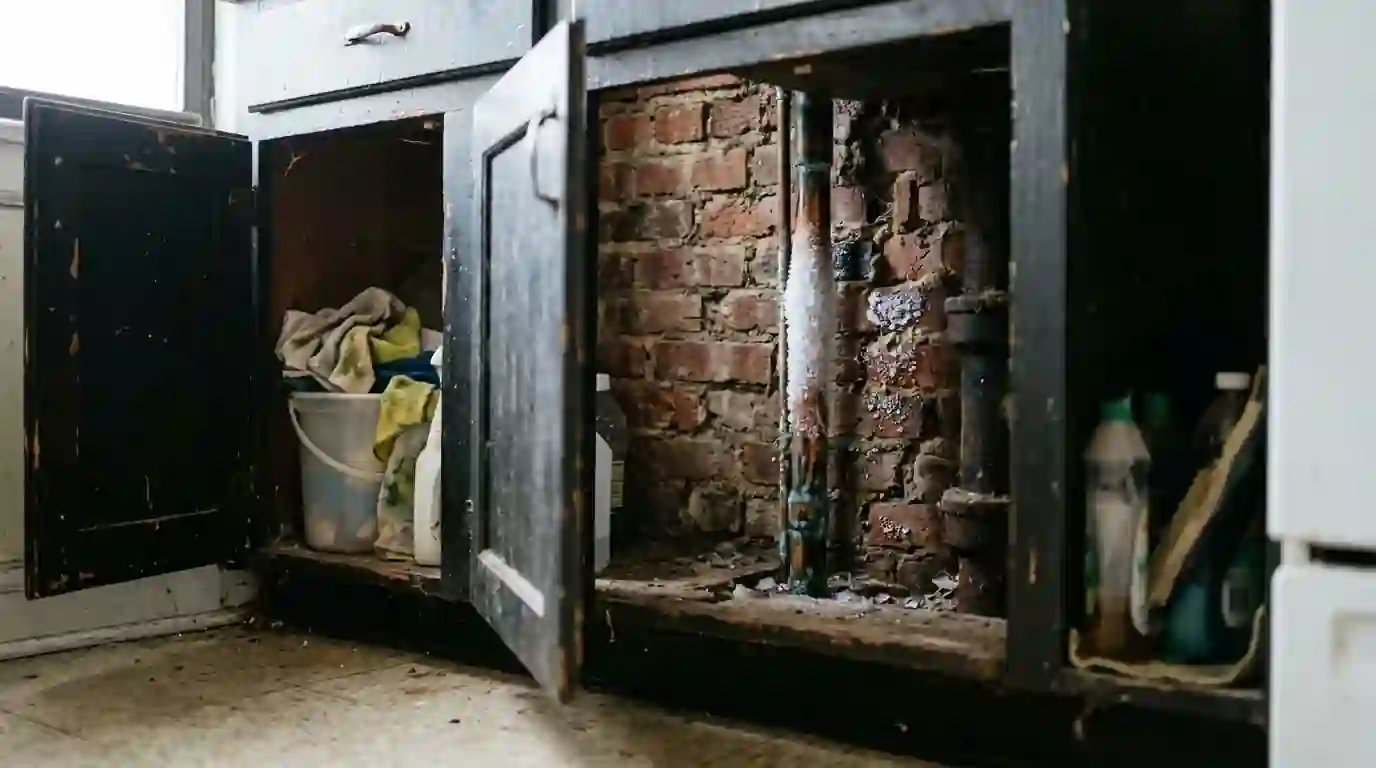
Pipes freeze where cold reaches them: supply lines along exterior walls, in unheated corners of kitchens and bathrooms, in crawl spaces, garages and attics, and near drafty windows. In prewar low-rise buildings with uninsulated masonry walls (source), a line inside a cold brick wall is a common culprit.
Houses have extra exposure: outdoor spigots, lines in the garage and pipes in crawl spaces under additions.
Why the leak shows up later
Water expands as it freezes, and the pressure splits the pipe. While it's frozen, the ice plugs the crack. When the pipe thaws, often overnight or once the heat comes back, water pours through the split under full pressure. That's why the flood often appears a day after the cold snap, when nobody expects it.
Prevention in a cold snap
Keep the heat on in every room with plumbing, even rooms you don't use. Open the cabinet doors under sinks on outside walls so warm air reaches the pipes. On the coldest nights, let a faucet on an outside wall drip slowly; moving water is harder to freeze.
In a house, disconnect garden hoses and close the shutoff to outdoor spigots. If you're going away in winter, keep the heat set above freezing and ask someone to check the house.
Apartments and the building's heat
In rentals, heat is the building's job during the heating season, and a cold apartment is worth reporting in writing. Pipes in cold hallways, stairwells and unheated basements are usually the building's responsibility too. If a pipe bursts, call the super first; the riser may need to be shut. Our guide on leaks from upstairs covers what happens between units.
If a pipe is frozen but not leaking
If a tap barely trickles in a cold snap, a line may be frozen. Keep the faucet open and warm the area gently with warm air from a hair dryer or by raising the heat. Never use an open flame, a torch or a space heater pressed against the pipe or wall. If you can't find or reach the frozen section, call a plumber before it thaws on its own and splits.
If a frozen pipe bursts
Close the valve nearest the break, or the main in a house, or call the super for the riser. Turn off power to any wet room from a dry spot. Photograph the water and the break, then call for extraction. Our burst pipe page explains how the drying works; the pipe repair itself is plumbing work.
Vacant apartments and second homes
Empty apartments and houses are where frozen pipes do the most damage, because nobody sees the leak for days. Keep the heat on and set above freezing, shut off the main water supply to a house you're leaving for a long stretch, and have someone check in during cold snaps. Some policies limit coverage for freeze damage in vacant homes, so check yours.
After the thaw: what to check
Once a cold snap breaks, check under sinks on outside walls, the ceiling under bathrooms, the garage and the crawl space. Listen for running water with every tap closed, and look at the water meter if you have one. Catching a slow thaw leak in the first hour saves days of drying.
What freezing damage usually involves
Water from a burst supply line is clean at first, so fast extraction lets most materials dry in place. The trouble is the wall the pipe runs through: water runs down inside the cavity and soaks insulation and the bottom plate. We read the wall, open only where needed and run structural drying until it tests dry.
Frozen pipe questions
What people ask in a cold snap.
It depends on the wall and the draft more than the thermometer. Pipes on cold exterior walls freeze first in any hard freeze.
On the coldest nights, a slow drip from a faucet on an outside wall helps.
Yes, gently, with the faucet open. Never use an open flame.
It depends on the cause, the lease and the policies. Report it in writing and document everything.
Sudden bursts are commonly covered, but some policies exclude damage if heat wasn't maintained in a vacant home.
In most houses it's where the water line enters, in the basement or a front closet. In apartments, ask the super.
Not always. Clean water caught early often dries in place; readings decide.
Pipe burst in the cold?
Close the valve, stay clear of wet outlets and call. We answer 24/7.