Guide: leaks from above
A leak from the apartment upstairs: who handles what in New York
The water isn't yours, but the ceiling is. Here's who stops the leak, who usually pays for what and what to put in writing today.
By Wallace Blackwell, Restoration Guides Editor
Quick answer
When water comes through your ceiling from the apartment above in New York, NY, the super or managing agent gets the source stopped, and each unit's damage usually runs through its own insurance, with the building's policy covering common structure in co-ops and condos. Report it in writing the same day and photograph everything.
Get the source stopped
Your first call is to the super or the managing agent, even at night. They can get into the apartment above or close the riser that feeds it. Knock on the door upstairs too: often the neighbor doesn't know their dishwasher, toilet or tub is leaking.
While you wait, protect your things, turn off power to any wet fixtures and put buckets under the drips. Keep clear of any section of ceiling that sags.
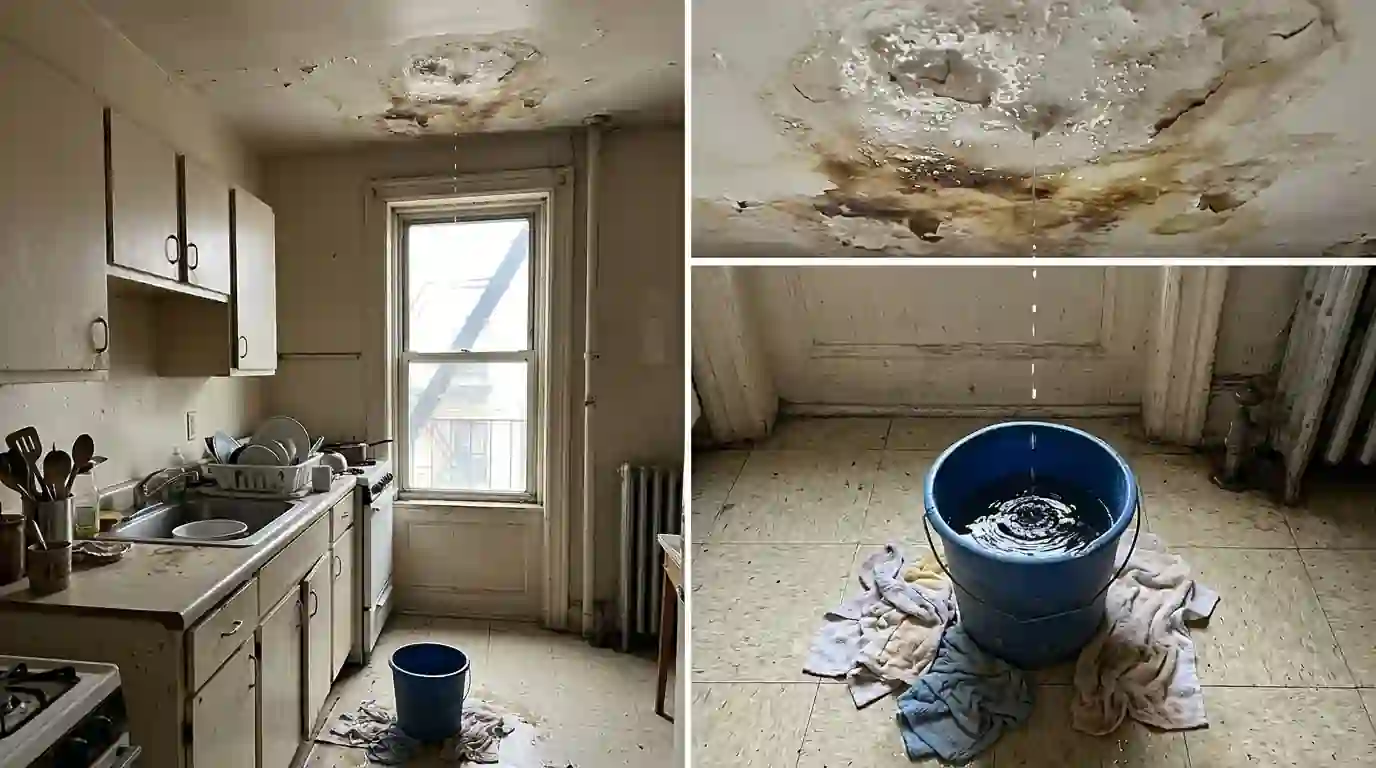
Report it in writing, the same day
A phone call gets things moving; an email creates the record. Send the managing agent or landlord a short message with the time you noticed the water, where it's coming in, the photos you took and who you've told. Keep a copy.
If the leak happens again, report it again, with dates. Repeated leaks from the same unit are often the ones that end up in disputes, and a written trail settles them.
Whose insurance usually covers what
In most New York buildings, each owner or tenant claims their own losses on their own policy: renters and unit-owner policies usually cover belongings and the improvements inside the unit. In co-ops and condos, the building's master policy usually covers the common structure, which can include some walls and ceilings depending on the proprietary lease or bylaws.
If the leak was caused by the neighbor's negligence, your insurer may go after theirs afterward. That's between the insurers; you usually don't have to wait for it. This is general information, not advice about your policy, so ask your agent how yours works.
Renters, co-op owners and condo owners
Renters are usually responsible for their belongings; the landlord is responsible for the building, including the ceiling. Co-op shareholders and condo owners are usually responsible for what the proprietary lease or bylaws assign to the unit, often finishes and fixtures, with the building handling structure and common pipes.
That split is why records by unit matter. When we work in co-ops and condos, each apartment gets its own moisture log and photos, so each insurer sees exactly what happened in its space.
Getting it dried properly
Your ceiling needs drying from the cavity above, not just the room below. If the upstairs floor is wet too, both units should be read and dried at the same time. Otherwise the water above keeps feeding the ceiling below.
Ask whoever does the work for a daily drying log with readings and photos. See ceiling leak water damage for how that job runs.
What to ask the managing agent
Ask who is coming to stop the source and when, whether a plumber has found the cause, and whether the building's insurer has been told. Ask who will open and repair your ceiling if the damage is to building structure, and whether the building wants its own restoration company in your unit or will let you choose.
Keep the answers in writing. If the agent's answer is that it's the upstairs owner's problem, send that owner the same photos and timeline, and copy the agent.
If you're the neighbor upstairs
If water from your apartment is reaching the unit below, close the fixture valve, call the super and tell your insurer. Let the building into your apartment to find the source, and keep receipts for the repair. Your policy's liability coverage is usually what responds to damage in the unit below.
When the leak keeps coming back
A stain that returns after showers usually points to a failed shower pan or drain upstairs. One that returns in winter points to a radiator or steam riser. One that returns after rain on a top floor points to the roof.
If nobody can find it, moisture mapping with readings from both units usually settles which way the water is moving, and gives the managing agent something concrete to act on.
Leak-from-above questions
What people ask with water coming through the ceiling.
No. Ask the super or managing agent to arrange access.
Usually not. Your own policy handles your losses; insurers sort out responsibility between themselves.
Often the building for common areas and each occupant for their own unit. Ask the managing agent how your building handles it.
Keep reporting in writing with dates and photos. Tenants can also contact the city's 311 about conditions in rentals.
Not until the ceiling tests dry and the source is fixed, or the stain comes back.
Yes. Slow leaks soak insulation and plaster above before anything drips.
Photos with timestamps, emails to the building and a drying log from the first visit.
Water coming through your ceiling?
Call the super, then call us. We answer 24/7.