Guide: kitchen fires
After a kitchen fire: what to do in the first days
The fire is out. The mess is just starting. Here's the order that keeps the damage from spreading and keeps your claim clean.
By Wallace Blackwell, Restoration Guides Editor
Quick answer
After a kitchen fire in a New York, NY home, stay out until the fire department says it's safe, then photograph everything, don't wipe the soot, throw out exposed food and call for board-up and cleanup. Published guides put fire damage restoration at about $4 to $7 per square foot, and grease soot needs degreasing, not wiping.
Safety first
Stay out until the fire department releases the home. When you go back in, wear a mask and gloves, keep children and pets out and don't switch on appliances or circuits near the fire until they've been checked. If the range, outlets or wiring behind the stove were involved, an electrician needs to look before power goes back on in that area.
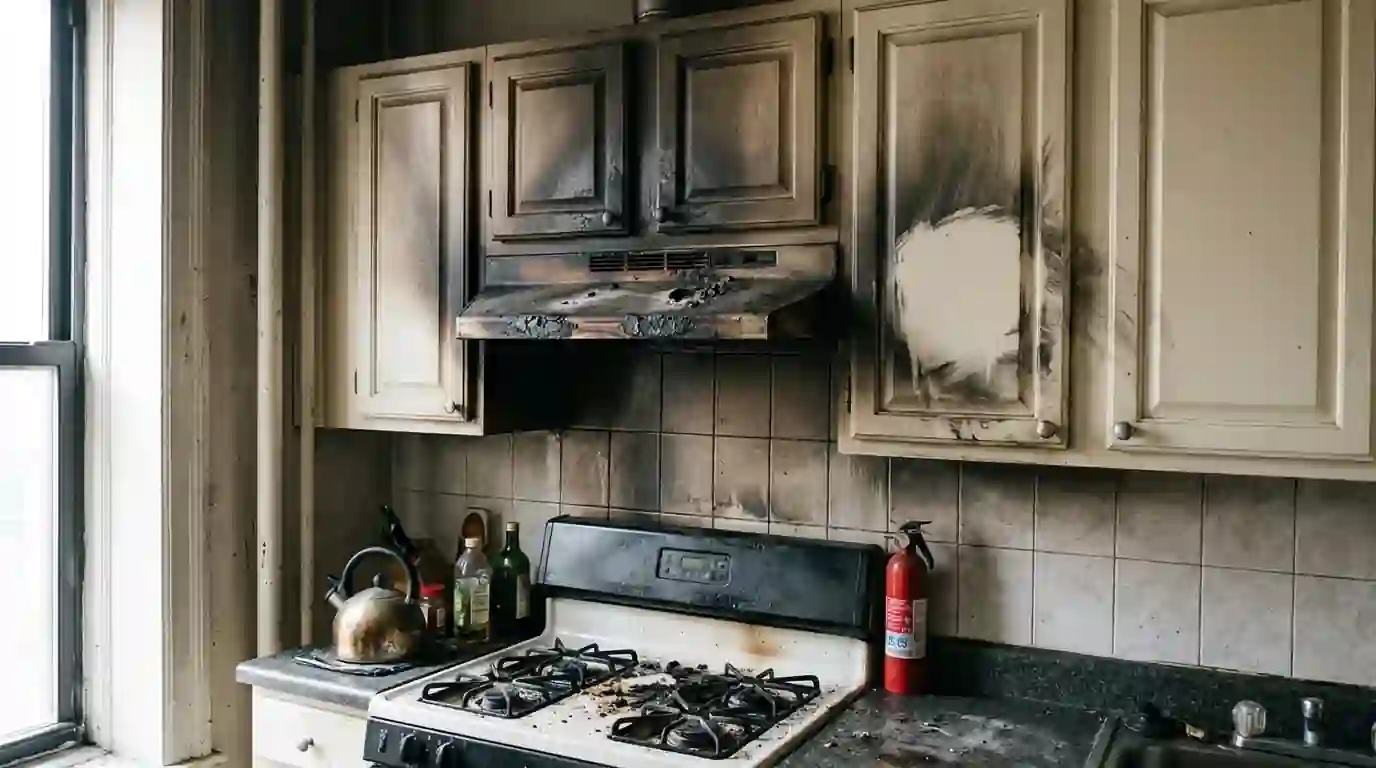
Document before anything is cleaned
Photograph the kitchen and every room smoke reached, before cleaning or throwing anything out. Include the range, the hood, the cabinets and close-ups of soot on walls and ceilings. For belongings, our guide on smoke-damaged belongings explains what to keep for the claim.
Kitchen soot is greasy
Cooking fires burn fat and oil, and the soot they leave is sticky and smears on contact. Wiping it with a damp cloth pushes it into paint and cabinet finishes. It needs dry sponging and HEPA vacuuming first, then degreasing cleaners chosen for the surface.
Our smoke and soot cleanup page covers the difference between dry and oily soot.
Food, medicine and the fridge
Throw out food exposed to heat, smoke or firefighting water, including canned goods that got hot and anything in open packages. Medicines and cosmetics near the fire go too. If the power was off for a long time, the fridge and freezer contents may need to go as well. Photograph what you discard for the claim.
Water from firefighting
Even a small kitchen fire can bring a lot of water, and in an apartment building it goes into the unit below. That water mixes with soot and ash. Extraction and drying start alongside the soot cleanup, not after it, or the cabinets and floors swell.
The range hood and ductwork
A stovetop fire often reaches the range hood and the duct behind it, which are full of grease. The hood and duct need cleaning or replacement before the kitchen is used again. In apartment buildings with shared exhaust, the building may need to be involved.
The rest of the apartment
Smoke from a kitchen fire travels into every room, closet and drawer, often more than people notice at first. Bedrooms and closets far from the kitchen can still have soot on window sills and a smell in fabrics. We walk every room and test surfaces before deciding what needs cleaning.
Living there during cleanup
For a small kitchen fire, many people stay while the rest of the home is cleaned, with the kitchen closed off. Heavy smoke through the apartment, a damaged electrical system or water in several rooms are reasons to stay elsewhere for a few days. Your policy may cover additional living expenses; ask your insurer.
Preventing the next one
Keep a lid within reach of the stove to smother a pan fire, never use water on a grease fire, and keep the range hood filter clean. A working smoke alarm near the kitchen, but not so close it triggers on every meal, is the best early warning.
Keeping records as you go
Keep a simple log of who came, what they did and what you were told, from the fire department visit onward. Add receipts for meals, hotel nights and anything you buy while the kitchen is out of use. Adjusters work from that record, and it saves you reconstructing the week later.
If the fire department left a report number, add it to the log; your insurer will usually ask for it early in the claim.
Cabinets, counters and walls
Cabinets near the fire are often too damaged to clean; the rest can usually be degreased. Counters and backsplashes clean well if they weren't cracked by heat. Walls and ceilings are cleaned, sealed and painted. The rebuild is covered on our reconstruction page.
Kitchen fire questions
What people ask after a stovetop or oven fire.
Not until the range, wiring and hood have been checked and the soot cleaned.
No. Greasy soot smears; it needs dry cleaning first, then degreasing.
If the fridge stayed closed and powered, it may be. Anything exposed to heat or smoke should go.
Fire is a covered peril on most homeowners and renters policies. Document everything first.
Smoke travels through the rooms and into fabrics. Cleaning and odor treatment deal with it.
Cabinets near the fire often do; others can usually be cleaned.
It may have taken firefighting water. Tell the neighbor and the super.
Dealing with a kitchen fire?
Call once everyone is safe. We answer 24/7.