Guide: after a fire
After a fire: which smoke-damaged belongings can be saved
More survives a fire than people expect. Here's what usually cleans up after smoke, what usually doesn't, and what to do before anything is thrown out.
By Wallace Blackwell, Restoration Guides Editor
Quick answer
After a fire in a New York, NY home, many smoke-damaged belongings can be saved: hard goods like dishes, metal and glass usually clean well, and many clothes and fabrics respond to professional cleaning. Items that are charred, melted or soaked by firefighting water with soot are usually lost. Photograph everything before anything is thrown away.
Document before you decide
Before anything is cleaned or thrown out, photograph each room and each damaged item. Your insurer will want an itemized list, and an item without a photo is hard to claim. In larger losses, a contents pack-out does this for you: every item listed, boxed and labeled by room.
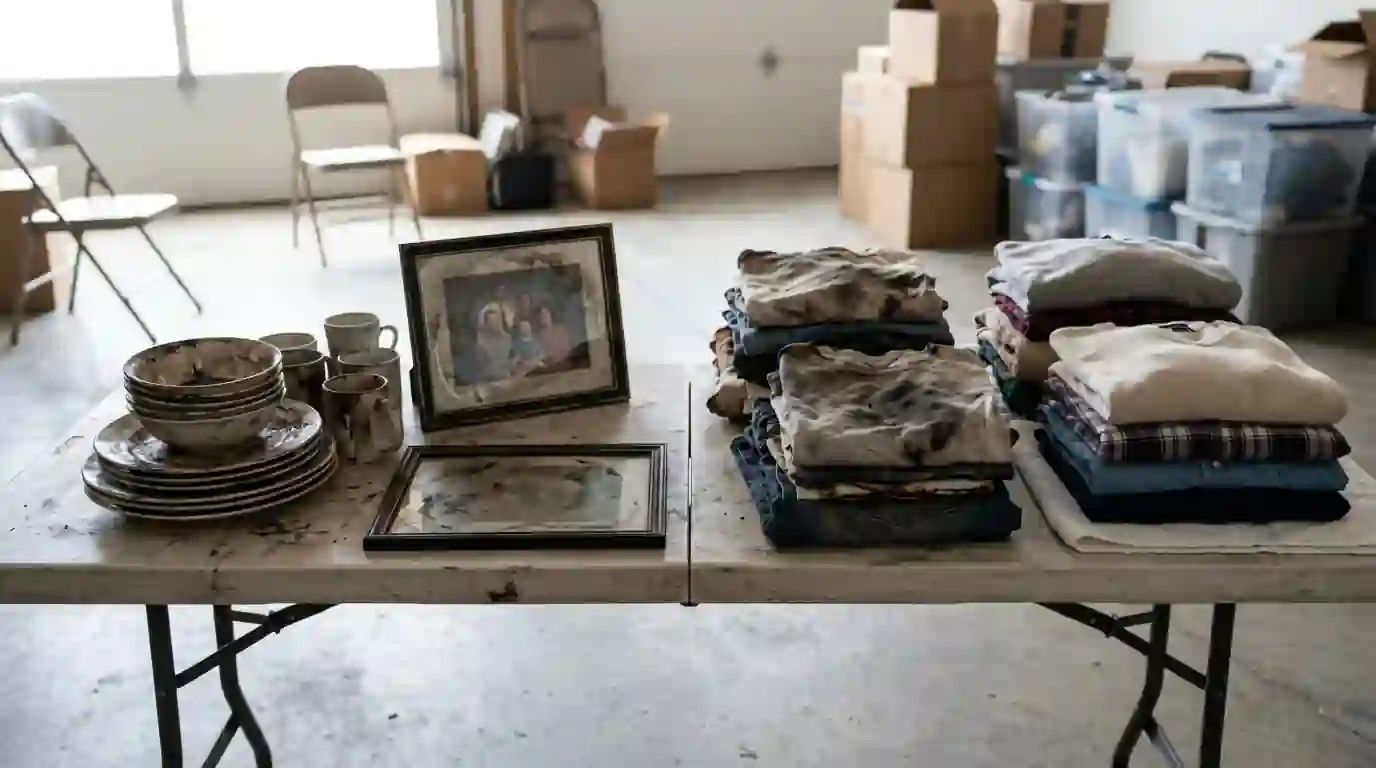
What usually cleans up well
Hard, non-porous items: dishes, glassware, metal pots, ceramics, most hard plastics and sealed wood furniture. Soot sits on their surface and can be removed with the right cleaners. Framed art and photos behind glass often survive if the glass kept the soot out.
Many clothes, linens and curtains respond well to professional laundering or dry cleaning designed for smoke, even when they smell strongly at first.
What often can't be saved
Anything charred, melted or warped by heat. Upholstered furniture and mattresses with heavy soot or smoke deep in the padding. Food, medicine and cosmetics exposed to heat or smoke, which should be thrown out. Porous items soaked by firefighting water mixed with soot, if they aren't dried and cleaned quickly.
Particleboard furniture that got wet usually swells and can't be restored.
Electronics and appliances
Don't switch on electronics that were exposed to heavy soot or water. Soot is acidic and conductive, and corrosion keeps working after the fire. Some items can be professionally cleaned and tested; others are listed for the claim. Appliances near the fire should be checked before use.
Papers, photos and keepsakes
Documents and photographs soaked by firefighting water can often be saved if they're kept cold and dried quickly. Separate them from wet boxes, keep them flat and ask about specialist drying for anything important. Soot on photo surfaces is best left for a specialist rather than wiped.
Clothing and textiles
Clothes, bedding and curtains often come back from smoke with the right cleaning, but household washing can set soot stains. Keep them bagged and separate from clean items until they're sorted. Items that stay stained or smelly after professional cleaning are listed for the claim.
Furniture and upholstery
Solid wood and metal furniture usually cleans well. Upholstered pieces are harder: soot and odor get into the padding, and cleaning only reaches so far. Pieces soaked by firefighting water as well as smoke are often lost.
What to tell your adjuster
Give them the room-by-room photos and the list of items cleaned, items discarded and why. If a pack-out was done, the inventory from it is usually the backbone of the contents claim.
Books, art and heirlooms
Books and paper take smoke odor deeply but can often be cleaned and deodorized; soaked books need freezing and specialist drying. Framed art behind glass often survives; canvas and unframed works need a conservator. Tell us what matters most so it's handled first and never goes in a discard pile by mistake.
When to replace rather than clean
Cleaning makes sense when an item is worth more than the cleaning and the material isn't damaged. Cheap, porous items with heavy soot are usually replaced. The adjuster makes the final call on replacement, so the photos and notes from the sort are what support your choice.
Keeping sorted items apart
Once belongings are sorted, keep cleaned items away from rooms that still smell of smoke, or they pick the odor back up. Bag and label what's waiting for cleaning, and keep the discard pile photographed and separate until the adjuster has seen it or signed off.
Why the smell isn't the deciding factor
A strong smoke smell doesn't mean an item is ruined. Odor lives in porous materials and often comes out with the right cleaning and treatment. See odor removal. What decides is whether the material itself is damaged: charred, melted, warped or soaked beyond drying.
Belongings after a fire
What people ask when sorting their things.
Light smoke odor may wash out. Heavily sooted clothes are better cleaned professionally, because home washing can set the stain.
Hard furniture often can. Upholstery with heavy soot or smell deep in the padding often can't.
Throw out food exposed to heat, smoke or firefighting water, including canned food that got hot.
Don't switch it on until it's been checked; soot can cause corrosion and shorts.
Cleaning is commonly part of a covered fire claim. Items that can't be cleaned are listed.
Not yet. Smell alone doesn't mean an item is ruined.
You do, with advice from the cleaning crew and your adjuster.
Sorting belongings after a fire?
Call before anything is thrown out. We answer 24/7.