Guide: water categories
Category 1, 2 and 3 water: what the labels mean for your home
The category decides what gets dried and what gets thrown out. Here's what each label means and why it can change while you wait.
By Wallace Blackwell, Restoration Guides Editor
Quick answer
Restoration work sorts water into three categories: Category 1 is clean water from a supply line, Category 2 is gray water carrying contaminants, like a washer overflow, and Category 3 is black water, like sewage or floodwater. Published mitigation prices rise from about $3.50 to $7.50 per square foot across the three.
Category 1: clean water
Clean water comes from a sanitary source: a burst supply line, a leaking faucet, a tank overflow, rain through a window. It doesn't carry significant contamination when it arrives. Caught early, most materials it soaks can be dried in place, which is the cheapest and fastest kind of job. See burst pipes for a typical example.
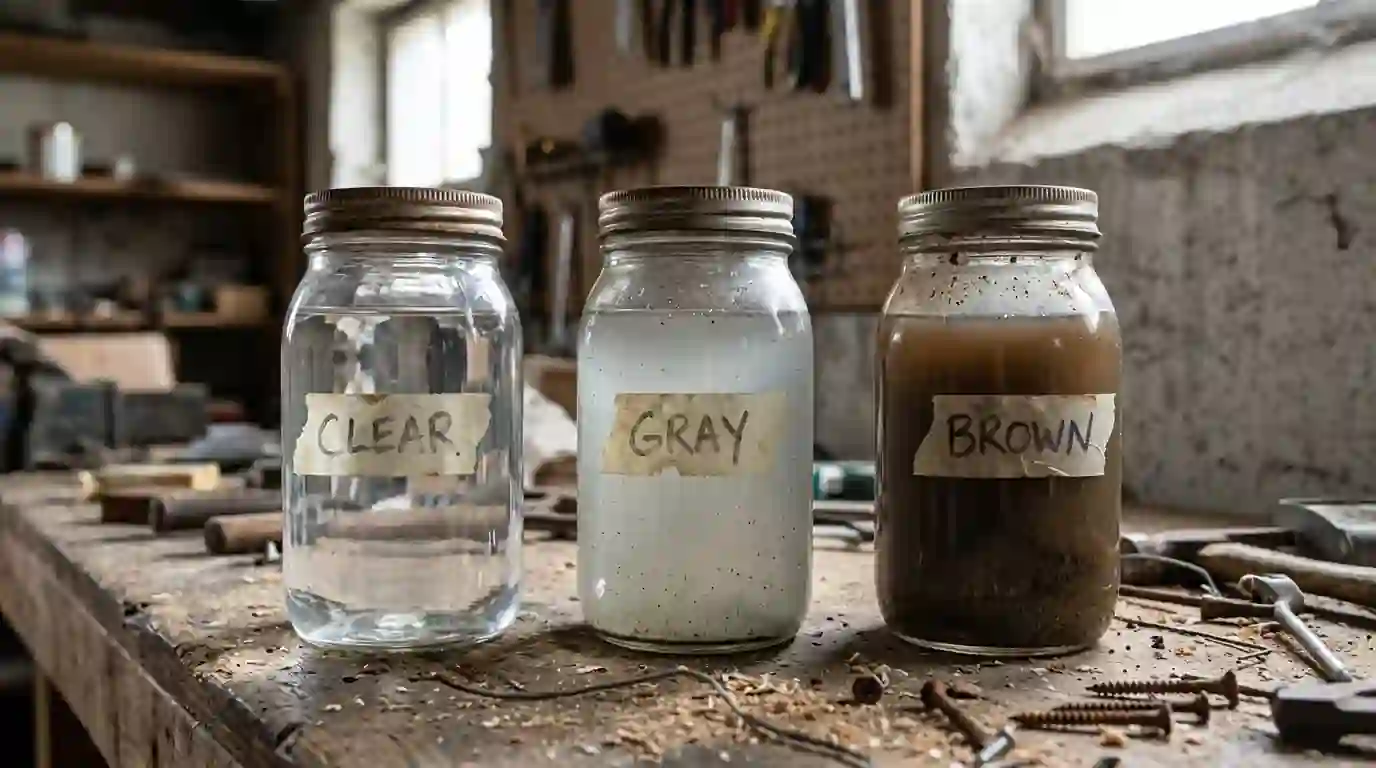
Category 2: gray water
Gray water carries contaminants that can make people sick: washing machine and dishwasher discharge, toilet water without feces, aquarium water, water from a sump pump failure. Porous materials it soaks are often cleaned or removed rather than just dried, and surfaces are sanitized.
A typical example is a washer or dishwasher leak.
Category 3: black water
Black water is grossly contaminated: sewage, toilet overflow with feces, and floodwater from rivers, the sea or surface runoff. Porous materials it touches, including drywall, carpet, pad and insulation, are removed and bagged. Crews work in protective gear and keep the area closed off. See sewage backups and flood damage.
Why clean water doesn't stay clean
Water that starts clean picks up whatever it sits on: dust, dirt, the backing of carpet, the paper of drywall. Given time and warmth, bacteria grow in it. That's why a Category 1 leak left for a day or two is often treated as Category 2, and a Category 2 left long enough can reach Category 3.
It's one more reason extraction should start the same day.
What the category changes about the job
| Category 1 | Category 2 | Category 3 | |
|---|---|---|---|
| Typical source | Supply line, rain through a window | Washer, dishwasher, toilet tank | Sewage, floodwater, toilet bowl |
| Carpet and pad | Carpet often dried, pad often replaced | Often cleaned or replaced | Removed |
| Drywall | Often dried in place | Cleaned or cut out | Cut out above the water line |
| Published price per sq ft | About $3.50 | About $5.25 | About $7.50 |
The published prices come from a national cost guide (Angi data as published by SERVPRO, 2026) and are for planning, not a quote.
Staying safe around gray and black water
Wear waterproof boots and gloves if you have to be near it, keep children and pets away and wash your hands afterward. Don't use a household vacuum on it, don't try to save soaked cushions or rugs, and keep the door to the affected room closed so it isn't tracked through the home.
If anyone in the home is pregnant, very young, elderly or has a weak immune system, it's a good reason to stay elsewhere until cleanup is done.
What gets recorded for your claim
The category is written into the job record with the reason: the source, the time the water sat and what it touched. Photos of the source back it up. That record is what explains to an adjuster why a floor was removed instead of dried, which is often the biggest line in the estimate.
Examples from typical calls
A dishwasher supply line bursting overnight is clean water at first, but by morning it has sat on the subfloor for hours. A toilet overflow with a clog is bowl water. A cellar that fills during a cloudburst is sewer water even if it looks clear. Each of those changes what we remove and how we clean, and it's written into the job record.
When categories mix
One job can have more than one category. A clean supply-line leak that runs into a basement with a floor drain backup is handled at the worse of the two where they met. We map which rooms took which water so clean areas aren't treated as contaminated, and the reverse.
How the category is decided
By the source and the time. We ask where the water came from, what it passed through and how long it has been sitting, and we look at the materials. When in doubt, we treat it as the more contaminated category, because the cost of guessing wrong is a health risk or mold later.
Water category questions
What people ask about the labels.
Tank water is clean. Bowl water with waste is Category 3. Bowl water without waste is usually treated as Category 2.
Rain through a window or roof is usually clean. Floodwater that crossed the ground is Category 3.
Often, if extracted within a day. The pad is usually replaced.
It carries detergent, soil and lint, so it's handled as gray water.
Not coverage itself, but it changes what's removed and what the job costs.
It's not recommended. It needs protective gear and removal of porous materials.
The restoration company, based on the source, time and materials, and it's recorded for your claim.
Water on the floor and unsure what kind?
Call and tell us where it came from. We answer 24/7.