Guide: drying
How long water damage drying takes, and why it varies
Drying ends when the readings say so, not on a set day. Here's what makes one job take three days and another take two weeks.
By Wallace Blackwell, Restoration Guides Editor
Quick answer
Drying after water damage in a New York, NY home typically takes several days for drywall and carpet and longer for plaster, masonry, hardwood and concrete, because dense materials give up water slowly. The job is finished when every logged moisture reading matches a dry reference from the same material, not after a fixed number of days.
Materials set the pace
Drywall, carpet and framing lumber give up water fairly quickly once air is moving and the air is dry. Hardwood, plaster on lath, brick and concrete are dense, and they hold water deep inside. They dry from the surface inward, which takes longer.
In a prewar apartment with plaster walls and oak floors, a job that would take three or four days in a new building can run a week or more.
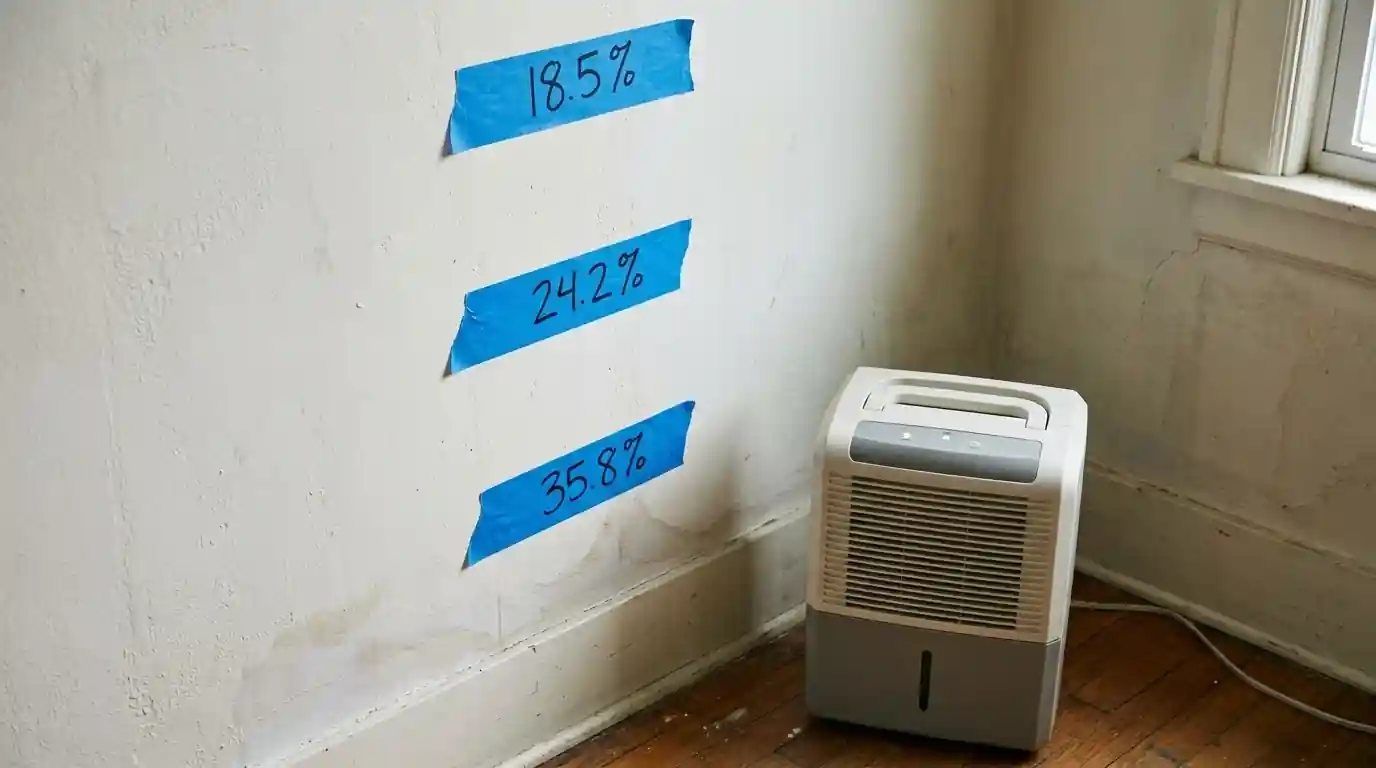
What else slows drying
Time wet before drying started, because water has had time to soak deeper. Contaminated water, because removal comes first. Humid weather, which makes dehumidifiers work harder. Closed cavities, where air can't reach the water until they're opened. And equipment being switched off overnight, which resets progress.
How drying is measured
On the first visit we take readings on the wet materials and on the same materials in a dry part of the home. Those dry readings are the target. Every day, the wet points are read again and logged. When they match the target, that area is dry. See structural drying for the equipment side.
Typical timelines
A clean water leak caught early in a drywall room often dries in three to five days. A basement slab or masonry wall can take a week or more. Hardwood dried in place can take one to two weeks. These are rough ranges; the log is what counts.
For floors specifically, our hardwood floor page explains why sanding too early causes trouble later.
Why rushing costs more
Closing a wall that's still wet traps water behind new paint or drywall. The stain comes back, the paint bubbles and mold can start. Refinishing a floor before it settles leaves it crowned. Every shortcut on drying shows up later as a second repair.
What the equipment does
Dehumidifiers pull water out of the air so the air can take more water out of the materials. Air movers push that dry air across wet surfaces and into cavities, so the materials release moisture faster. Specialized mats and panels pull water up through hardwood floors.
The amount of equipment is set by the size of the rooms, the materials and how wet they are, not by a rule of thumb, and it's moved or reduced as areas dry.
Living with drying equipment
It's noisy and it runs day and night. We place it to keep bedrooms usable where we can, keep cords out of walkways and ask you to keep children and pets away from it. It draws steady power, so we plan circuits in older apartments to avoid tripping breakers.
If something needs to move, call us rather than shifting it yourself; a machine pointed the wrong way can stall a whole wall.
When drying stalls
If readings stop improving, something is feeding the water: a leak that's still active, a wet cavity the air isn't reaching, or wet material underneath that should have been opened or removed. A stalled log is a signal to look again, not to add days.
Drying in winter versus summer
Winter air in a heated apartment is dry, which helps. Summer air in the city is humid, so dehumidifiers work harder and drying often takes longer. Basements are slow in any season because concrete and block hold water and stay cool.
We plan for the season on the first visit, so the timeline you're given reflects the weather as well as the materials.
Why some rooms finish before others
Drying is tracked point by point, so a drywall bedroom can finish days before a plaster hallway or a concrete basement in the same job. Equipment is moved out of rooms as they test dry, which is why the setup shrinks over the week rather than disappearing all at once.
How you know it's done
Ask for the drying log. It should show each reading point, the dry reference and the daily numbers moving toward it. When every point has matched, the equipment comes out and repairs can start. If you're told it's dry without numbers, ask for them.
Drying time questions
What people ask with fans running.
Please don't. Drying slows when it's off and the job runs longer.
Dehumidifiers give off heat, and warm air holds more moisture, which helps drying.
Daily, logged with the same points each time.
Keep doors and windows as the crew sets them, and keep the equipment running.
Plaster and masonry hold water deep inside and dry slowly.
Not until the floor under it tests dry.
The readings. Ask for the log.
Wondering if your home is really dry?
Call and we'll take readings. We answer 24/7.